Analytical thinking Normal Reading Fiction Worksheets for Ages 7-8
4 filtered results
-
From - To
Enhance your child's analytical thinking skills with our engaging Normal Reading Fiction Worksheets designed specifically for ages 7-8. These interactive worksheets are perfect for young learners, promoting critical thinking and comprehension through fun and relatable stories. Each worksheet encourages students to make connections, ask questions, and analyze character motivations and story elements, fostering a deeper understanding of fictional texts. Ideal for classroom use or at-home learning, these resources ensure that children develop essential reading and reasoning abilities. Empower your child to explore literature confidently while honing their analytical skills in a playful and supportive environment. Download today and spark their love for reading!
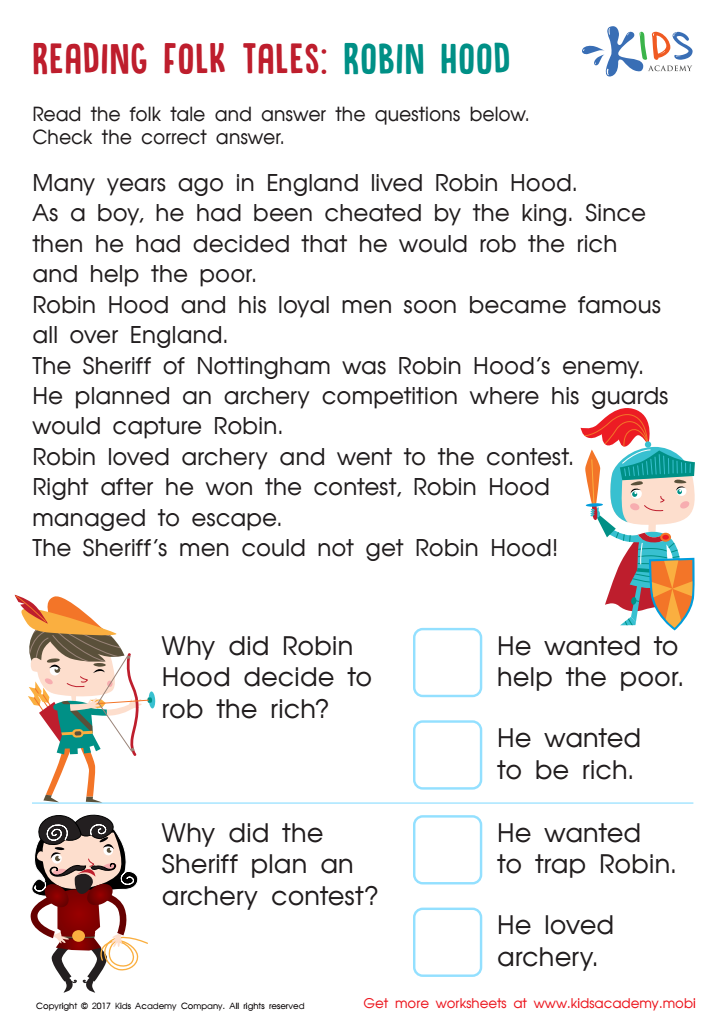
Robin Hood Folktale Worksheet
 Assign to My Students
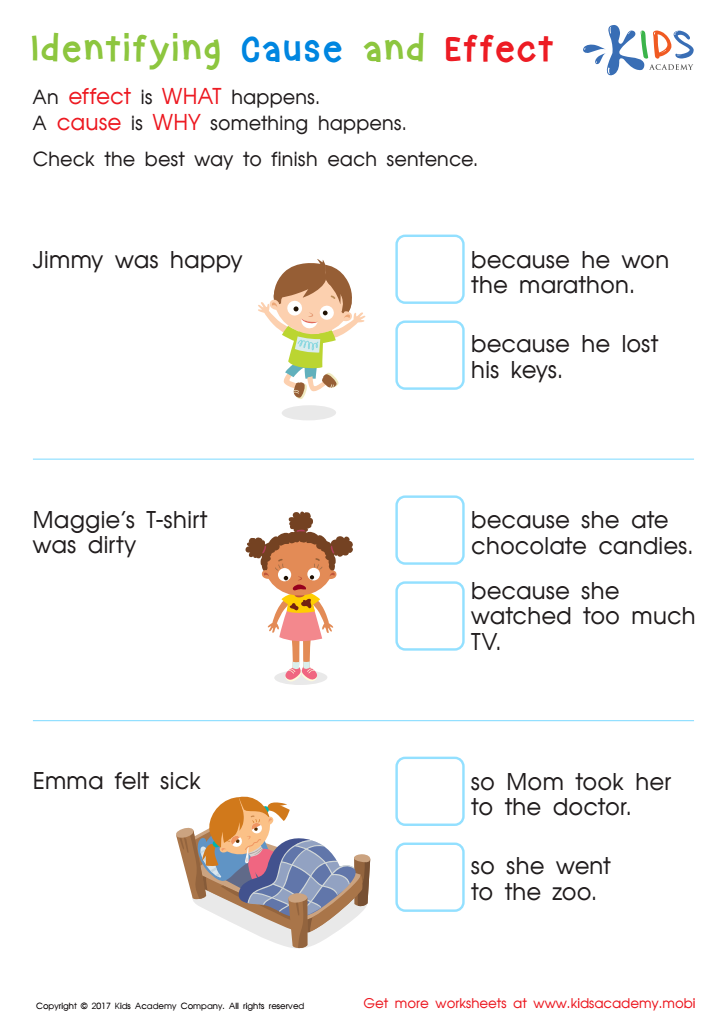
Indentifying Cause and Effect Worksheet
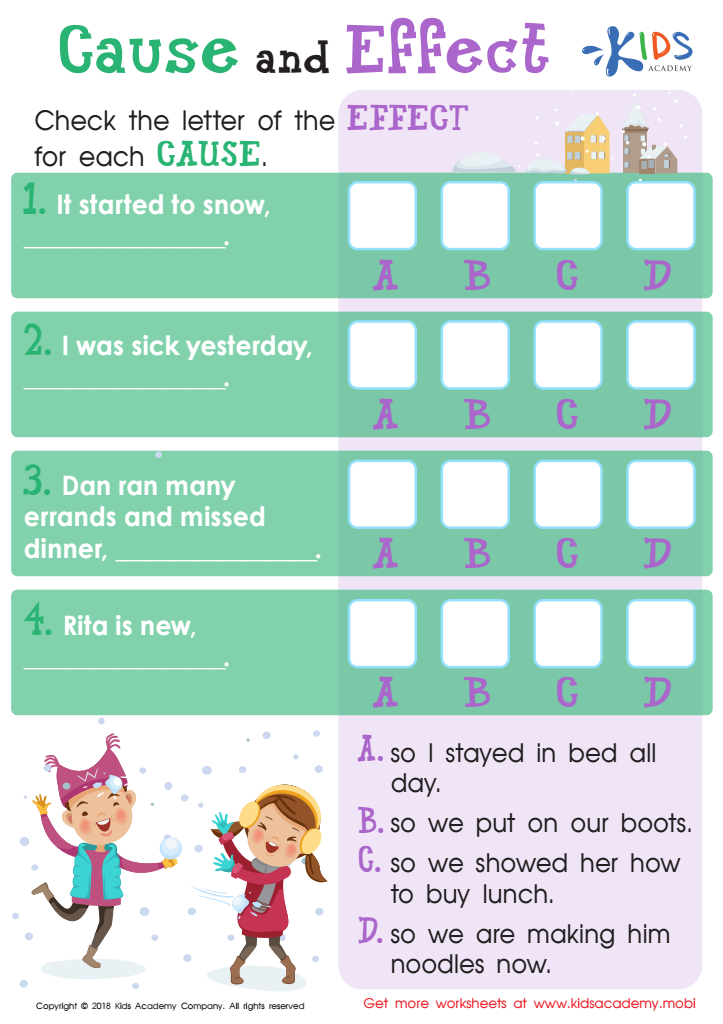
Cause and Effect Worksheet
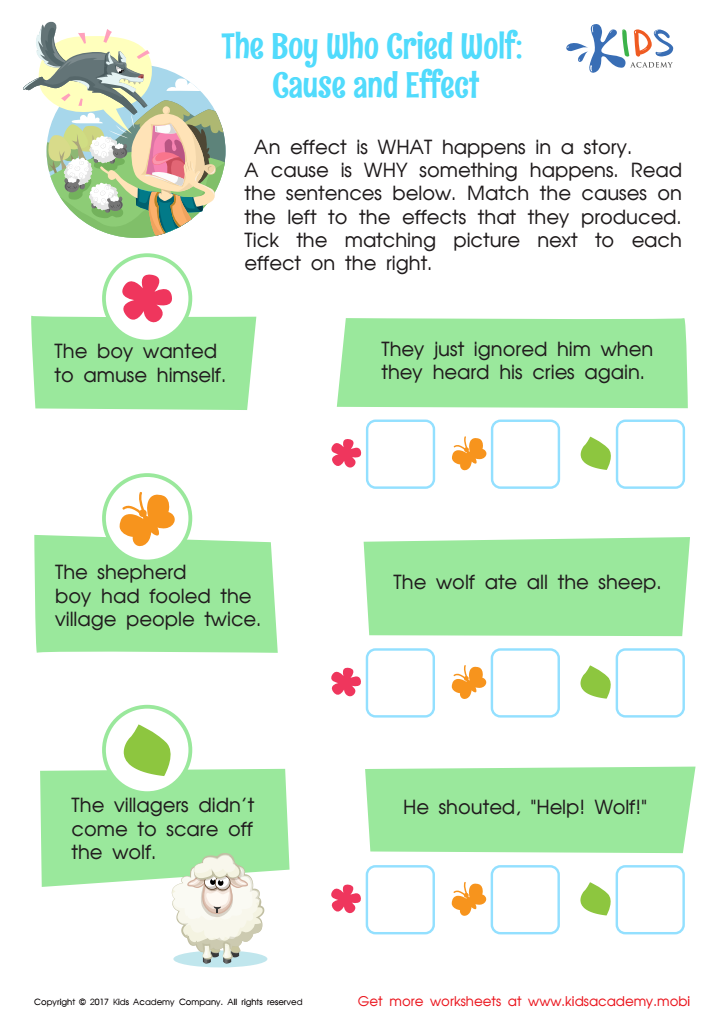
The Boy Who Cried Wolf: Cause and Effect Worksheet







Analytical thinking in reading fiction for ages 7-8 is crucial for fostering a child's cognitive and emotional development. At this age, children begin to challenge their perspectives, and engaging with fictional narratives cultivates their critical thinking skills. It encourages them to analyze characters, plot developments, and motivations, exposing them to diverse viewpoints and moral dilemmas.
Parents and teachers should prioritize nurturing these skills as they pave the way for deeper comprehension and engagement with literature. Analytical thinking promotes creativity and the ability to reason, as children learn to make connections between texts and real-world scenarios. This age marks a pivotal shift in their intellectual growth, where inquiry and interpretation take center stage.
Additionally, embracing analytical thinking prepares children for higher academic expectations. By encouraging discussions about a story’s themes, characters, and decisions, adults can help develop their communication skills and confidence in expressing opinions and interpretations.
Ultimately, the impact of fostering analytical thinking extends beyond individual reading sessions; it helps shape empathetic, informed, and thoughtful individuals. By investing in this skill through fiction, parents and teachers are equipping children with essential tools for lifelong learning and problem-solving.







