Sight words recognition Normal Sight Words Worksheets for Ages 7-8
3 filtered results
Difficulty Level
Grade
Age
-
From - To
Subject
Activity
Standards
Help your child master essential reading skills with our “Sight Words Recognition Normal Sight Words Worksheets” designed for ages 7-8. Our engaging worksheets use fun activities to enhance word recognition, a crucial step towards fluent reading. Kids will confidently identify high-frequency sight words, improving their reading speed and comprehension. Perfect for both classroom and home learning, these worksheets provide targeted practice that makes learning enjoyable. Elevate your child's reading abilities today with our expertly crafted resources. Visit Kids Academy to download and print your worksheets now!
Favorites
With answer key
Interactive
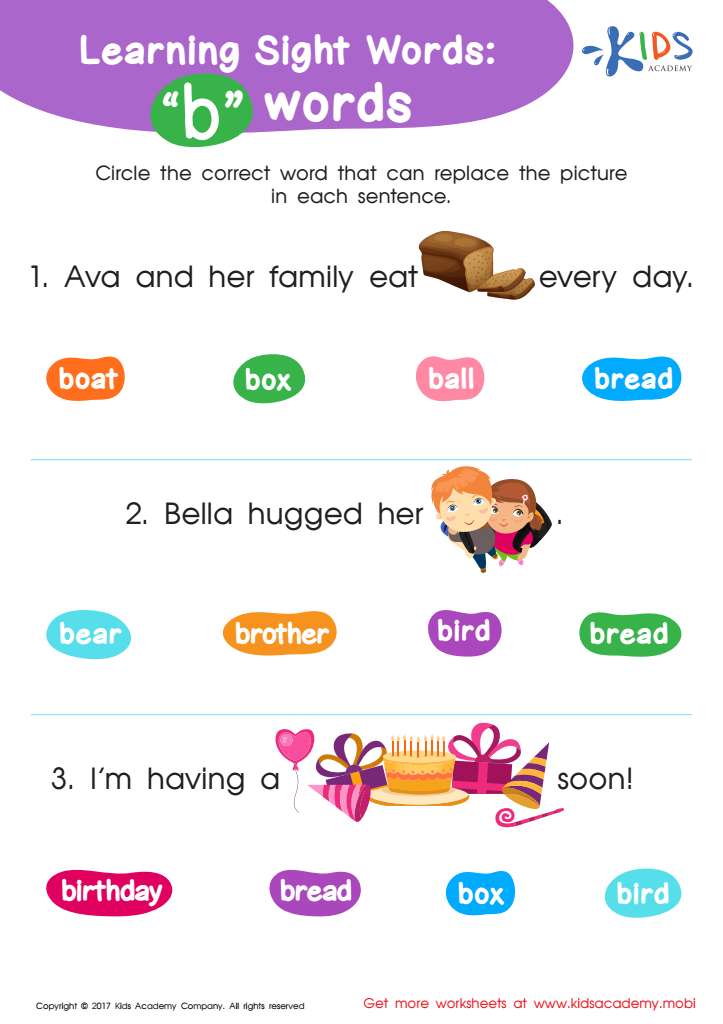
Sight Words Free Worksheet – B Words
This free 2nd grade sight words worksheet – b words – is a great way to help your child expand their sight word repertoire. They can read through each sentence, using the context and illustrations as clues to pick the right answer. Offer your child a quick practice session for even more learning!
 Assign to My Students
Sight Words Free Worksheet – B Words
Worksheet



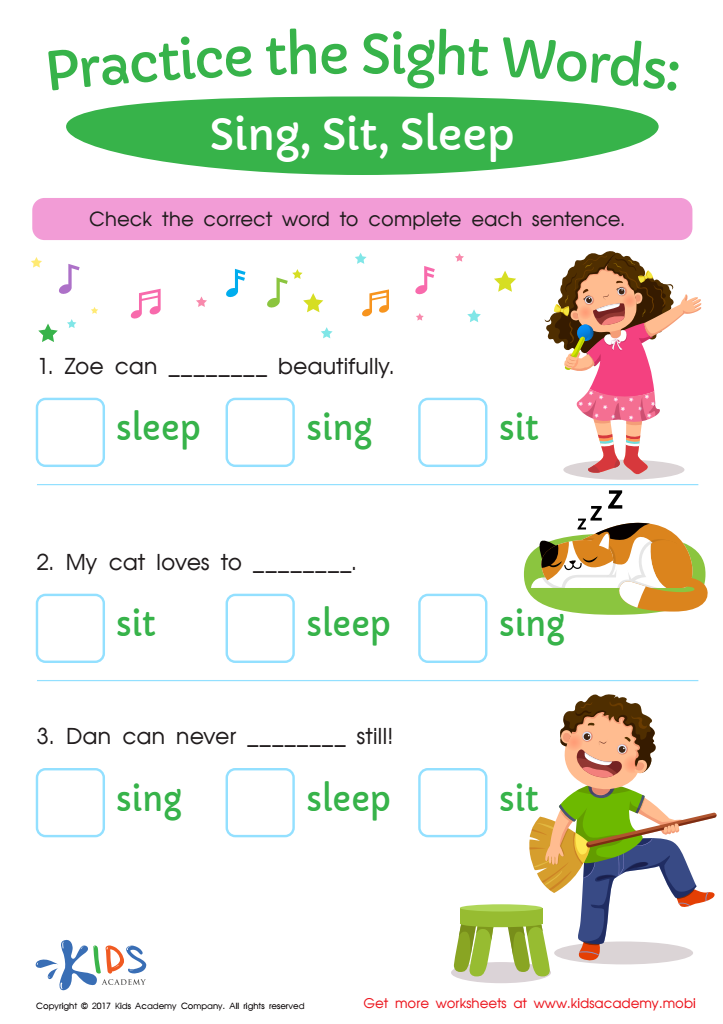
Sing, Sit, Sleep Sight Words Worksheet
Practice sight words with this printable worksheet featuring sing, sit, sleep! Confusing at first, these words can be mastered with the help of simple sentences and fun illustrations.
Sing, Sit, Sleep Sight Words Worksheet
Worksheet
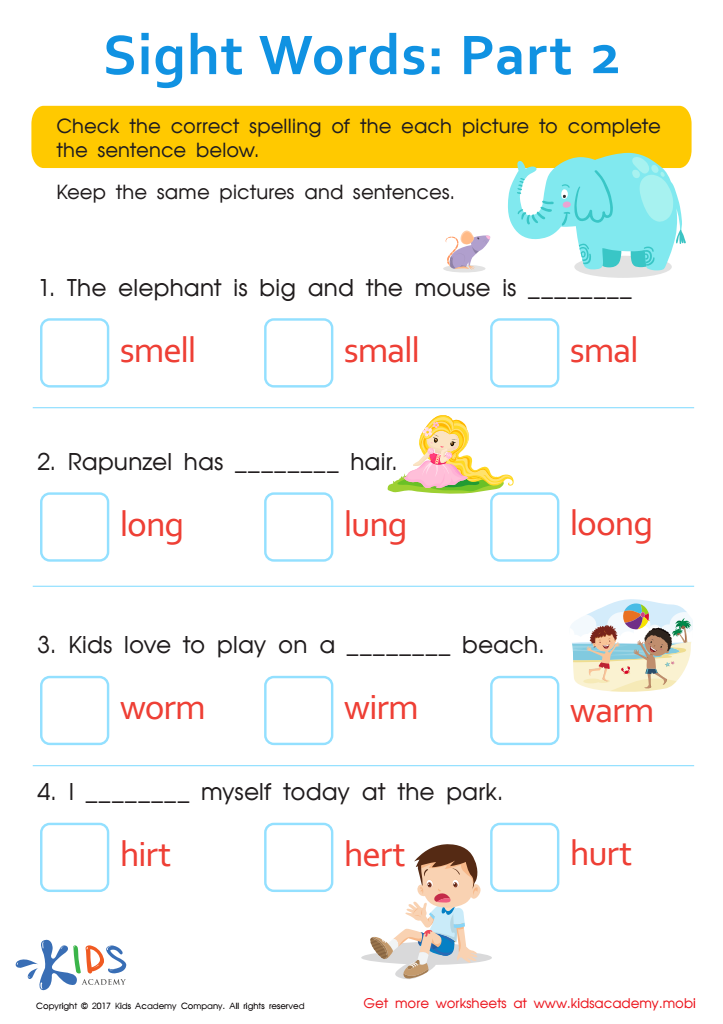
Sight Words Worksheet
This 3rd grade worksheet strengthens fluency and spelling in just a few minutes! Kids will read a sentence and fill in each blank with the correct sight word. Enjoy watching their skills grow!
Sight Words Worksheet
Worksheet
Join Kids Academy for Free
Who is primarily going to use this learning content?








Sight word recognition plays a crucial role in early literacy development, especially for children aged 7-8. These words frequently appear in texts and do not always follow standard phonetic patterns, making them challenging to sound out. By consistently recognizing sight words, students can achieve several key educational milestones.
Firstly, understanding sight words enhances reading fluency. When children can effortlessly recognize these words, they can focus on comprehending the text rather than decoding each word, leading to smoother and more efficient reading. This fluency fosters a love for reading, encouraging kids to read more often.
Additionally, sight word recognition contributes to building a stronger foundational vocabulary. Many sight words are high-frequency words that students will encounter regularly, both in academic settings and in everyday life. Knowing these words gives children confidence and a sense of accomplishment.
Furthermore, fluency in sight words can assist in the development of writing skills. When children can recognize and spell these common words with ease, their writing becomes clearer and more precise. They can focus on using creative language and constructing more complex sentences, vital skills for academic success.
Overall, parents and teachers should emphasize sight words because they lay the groundwork for proficient reading and writing, setting the stage for subsequent educational achievements and lifelong literacy.