Animal Classification Normal Animals Worksheets for Ages 7-8
3 filtered results
-
From - To
Discover our engaging "Animal Classification Normal Animals Worksheets" designed specifically for children aged 7-8. These worksheets introduce young learners to the fascinating world of animal classification, helping them identify and categorize various species through fun activities and illustrations. Students will explore different animal groups, understand their characteristics, and practice critical thinking skills as they complete various tasks. Ideal for home or classroom use, these worksheets align with educational standards and promote interactive learning. Foster curiosity about nature while enhancing reading and comprehension skills. Download the worksheets today and embark on an exciting journey through the animal kingdom!
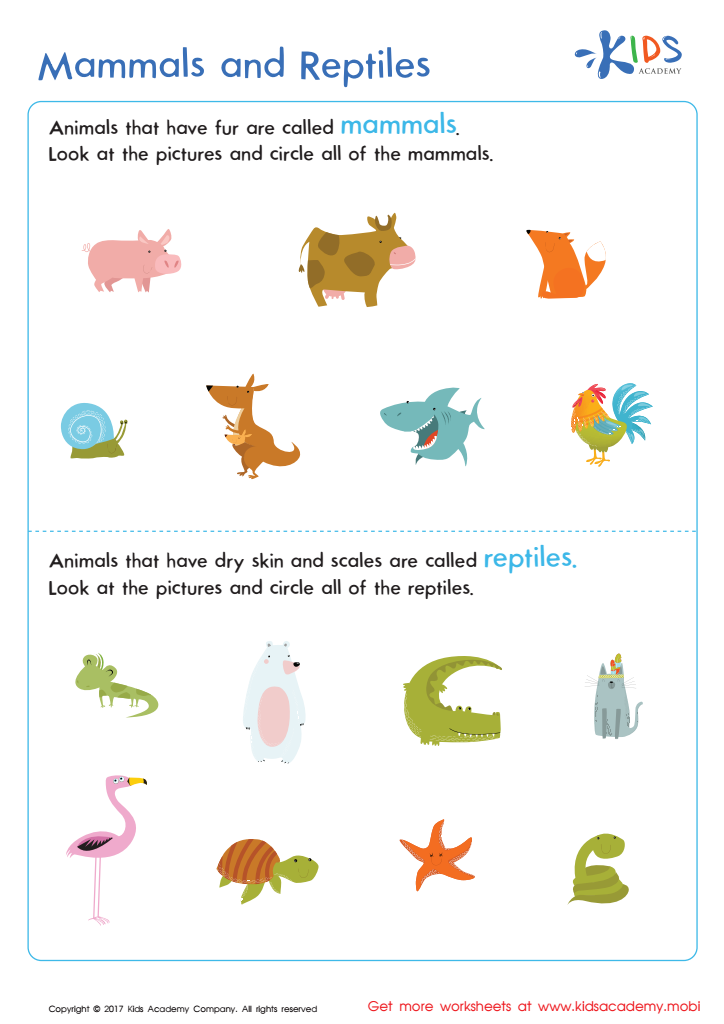
Mammals and Reptiles Worksheet
 Assign to My Students
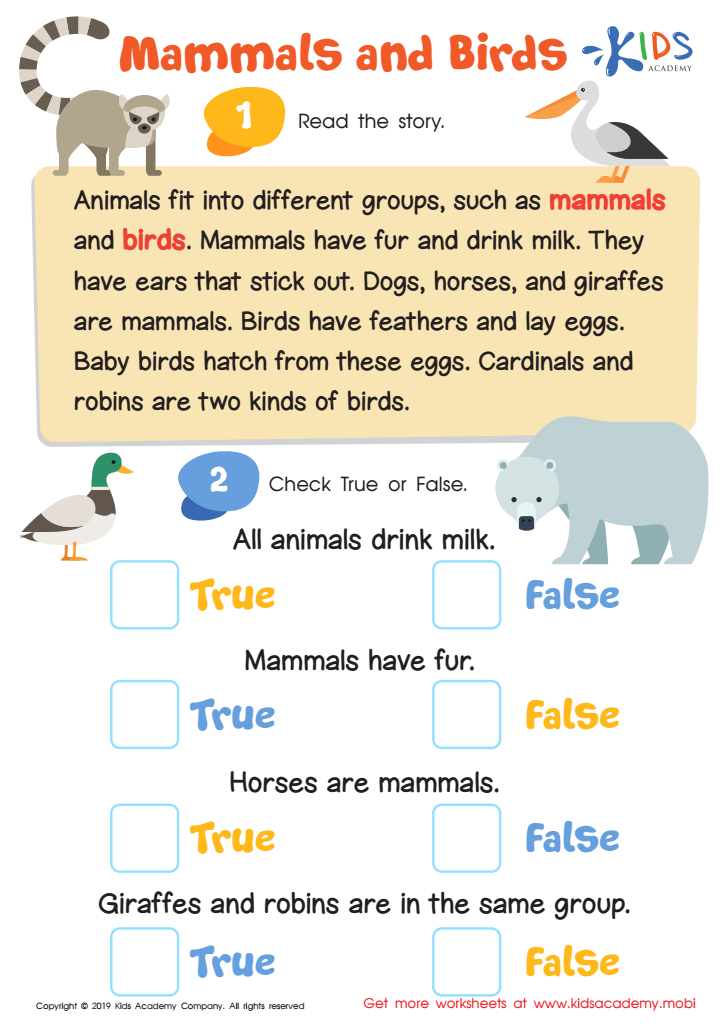
Mammals and Birds Worksheet
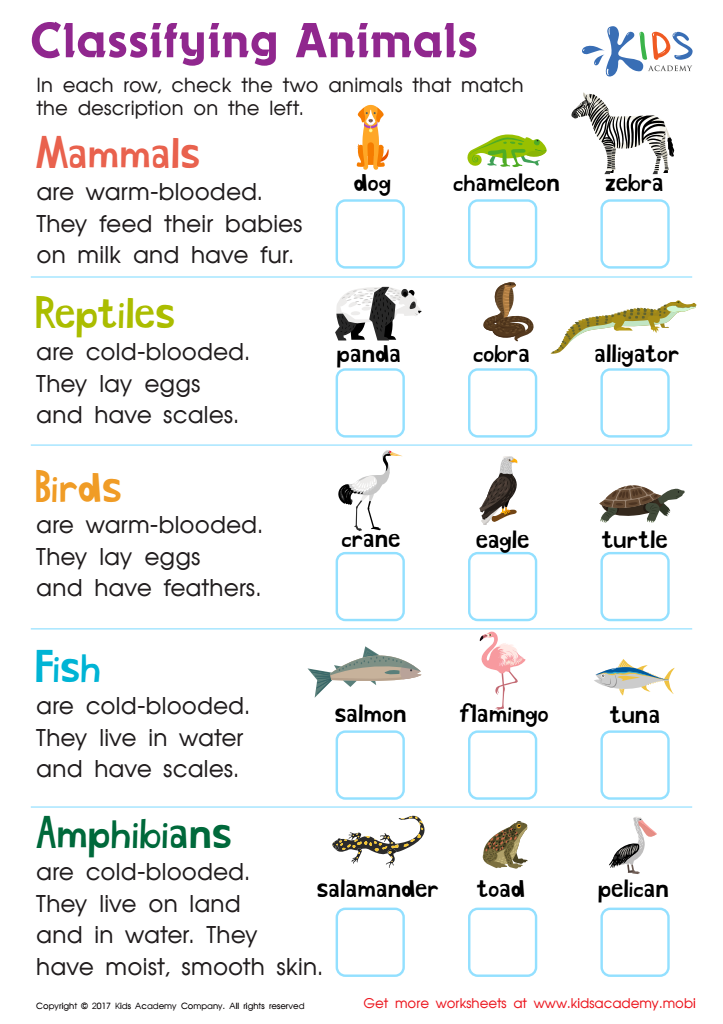
Classifying Animals Worksheet








Animal classification is crucial for children aged 7-8, as it fosters a deeper understanding of the natural world. By teaching kids about normal animals, we introduce them to fascinating concepts like habitats, characteristics, and behaviors. This knowledge not only enriches their scientific literacy but also enhances critical thinking skills. When children categorize animals into groups such as mammals, birds, reptiles, and amphibians, they learn to recognize patterns and make connections, promoting cognitive development.
Moreover, understanding animal classification can instill a sense of responsibility towards the environment. As children learn about different species, they begin to appreciate biodiversity and the importance of conservation. This awareness can motivate them to become advocates for wildlife protection and take part in sustainable practices.
Additionally, engaging with animal classification is a fun and interactive way for parents and teachers to encourage collaboration and communication. Activities like sorting animals, creating charts, or participating in nature walks can foster teamwork and social skills.
In essence, prioritizing animal classification helps create curious, caring, and informed young individuals who recognize their role within the ecosystem and empowers them to value and protect the world around them.








