
Understanding pollination Normal Science Worksheets for Ages 7-8
3 filtered results
Difficulty Level
Grade
Age
-
From - To
Subject
Activity
Standards
Explore the fascinating world of pollination with our "Understanding Pollination Normal Science Worksheets" designed for kids ages 7-8! These engaging worksheets cultivate young learners' understanding of how plants reproduce and the critical role of pollinators. Each worksheet features interactive activities that make learning fun and accessible, including coloring pages, matching games, and fill-in-the-blank exercises. Ideal for classroom or home use, these resources support STEM education and foster curiosity about nature. With vibrant illustrations and straightforward explanations, children will develop a foundational knowledge of pollination while enhancing their literacy and problem-solving skills. Dive into the wonders of nature today!
Favorites
With answer key
Interactive
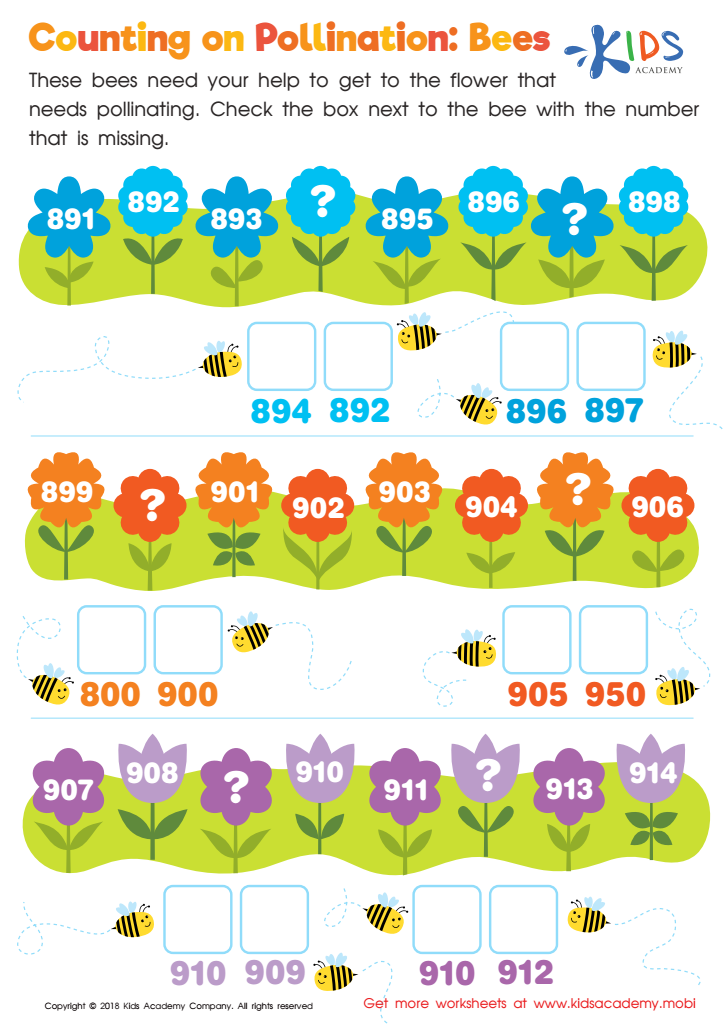
Counting on Pollination: Bees Worksheet
This downloadable worksheet helps kids improve their math skills while having fun - they'll help the bees pollinate the flowers by finding the missing number. It's an entertaining way to practice number patterns, sequences and number line skills, aiding in fast and efficient math computations.
 Assign to My Students
Counting on Pollination: Bees Worksheet
Worksheet
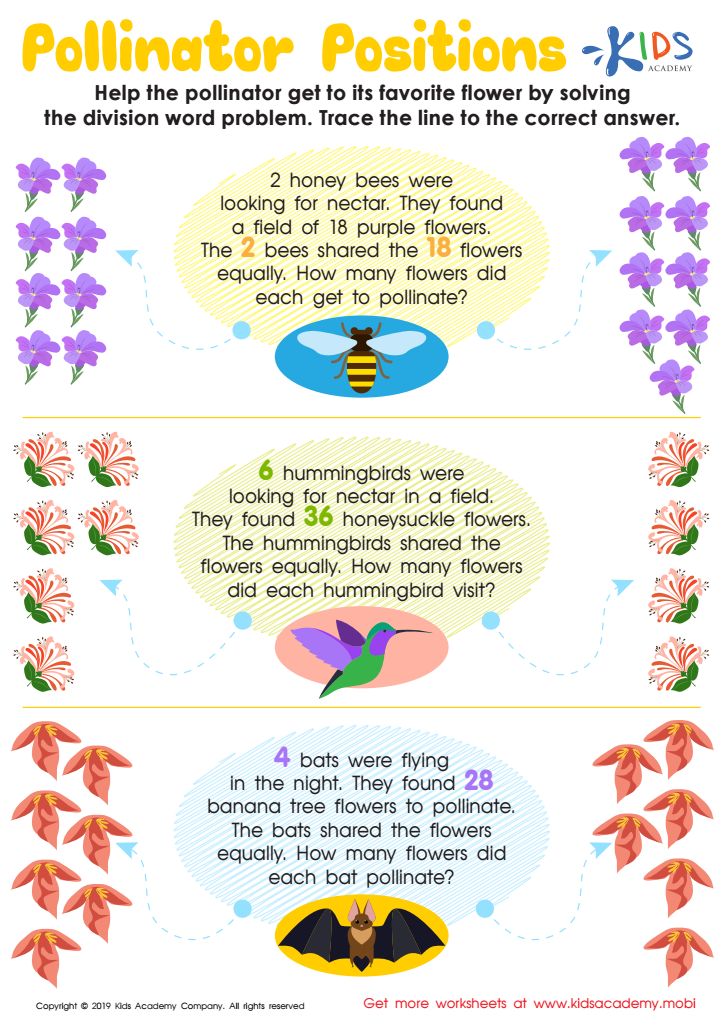
Pollinator Positions Worksheet
Kids will love learning about pollinators and how vital they are. Help their favorite friends get to the right flowers with this fun PDF. Children can solve the problems without even knowing they're doing division; just read the word problems and use the highlighted numbers. Finish by tracing the lines to the correct quotient!
Pollinator Positions Worksheet
Worksheet
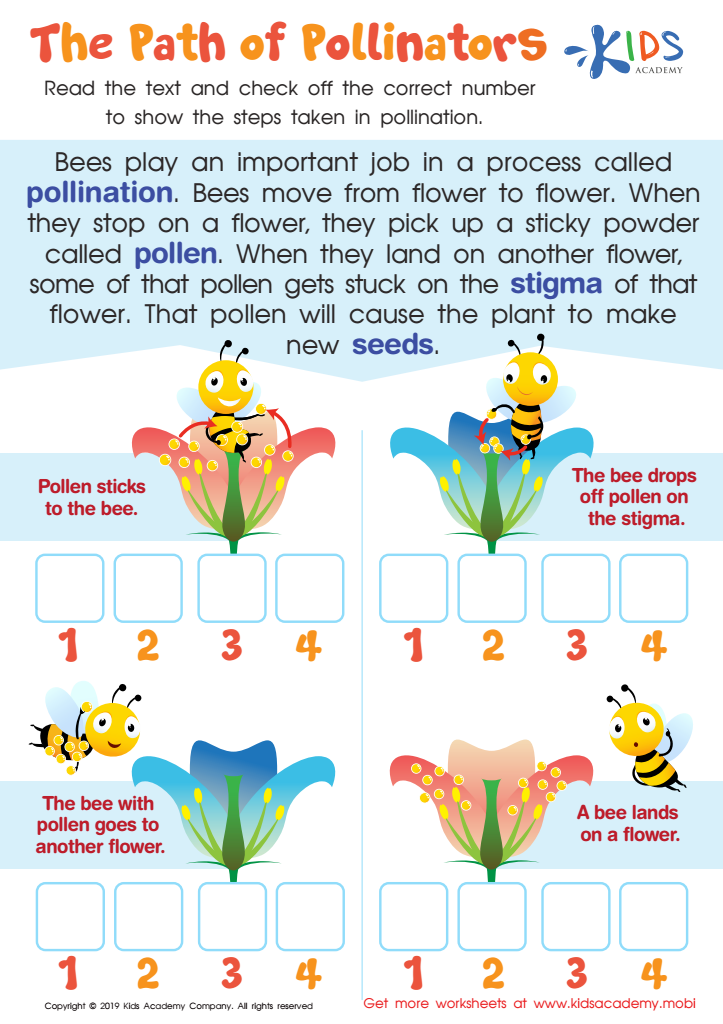
The Path of Pollinators Worksheet
Bees play a vital role in pollination: they transfer pollen between flowers, allowing them to produce new seeds. Without bees, we'd have less flowers and vegetation. Explain the process to your students and have them check off the right number to show the steps in pollination.
The Path of Pollinators Worksheet
Worksheet
Join Kids Academy for Free
Who is primarily going to use this learning content?



.jpg)


Understanding pollination is crucial for parents and teachers guiding young learners, as it connects children to fundamental concepts in nature and science. Pollination is an essential ecological process that allows plants to reproduce, which directly impacts the food we eat and the health of our environment. At ages 7-8, children are naturally curious, making this the perfect time to foster that interest in science and the environment.
Learning about pollination can help children understand the roles of different organisms, such as bees, butterflies, and even the wind, in supporting plant life and sustaining ecosystems. This knowledge encourages appreciation for biodiversity and the environment, fostering a sense of responsibility towards conservation efforts.
Additionally, introducing topics like pollination enhances critical thinking and observation skills, as children engage in hands-on activities such as planting flowers or tracking insect visits. These experiences not only reinforce scientific concepts but also promote teamwork and communication as students work together to explore and discover. Ultimately, by nurturing an understanding of pollination, parents and teachers empower children to become informed, proactive citizens who appreciate the intricacies of nature and its vital processes.







