Visual Perception Skills Normal Science Worksheets for Ages 7-8
3 filtered results
-
From - To
Enhance your child's learning experience with our "Visual Perception Skills Normal Science Worksheets" designed specifically for ages 7-8. These engaging worksheets help young learners develop essential visual perception skills, fostering their ability to interpret and analyze visual information in a scientific context. Through a variety of fun and interactive activities, kids will sharpen their observation skills, improve their attention to detail, and boost their critical thinking. Perfect for at-home practice or classroom use, our worksheets make learning science enjoyable and effective. Explore the world of science while nurturing foundational skills essential for future educational success! Visit us today and start exploring!
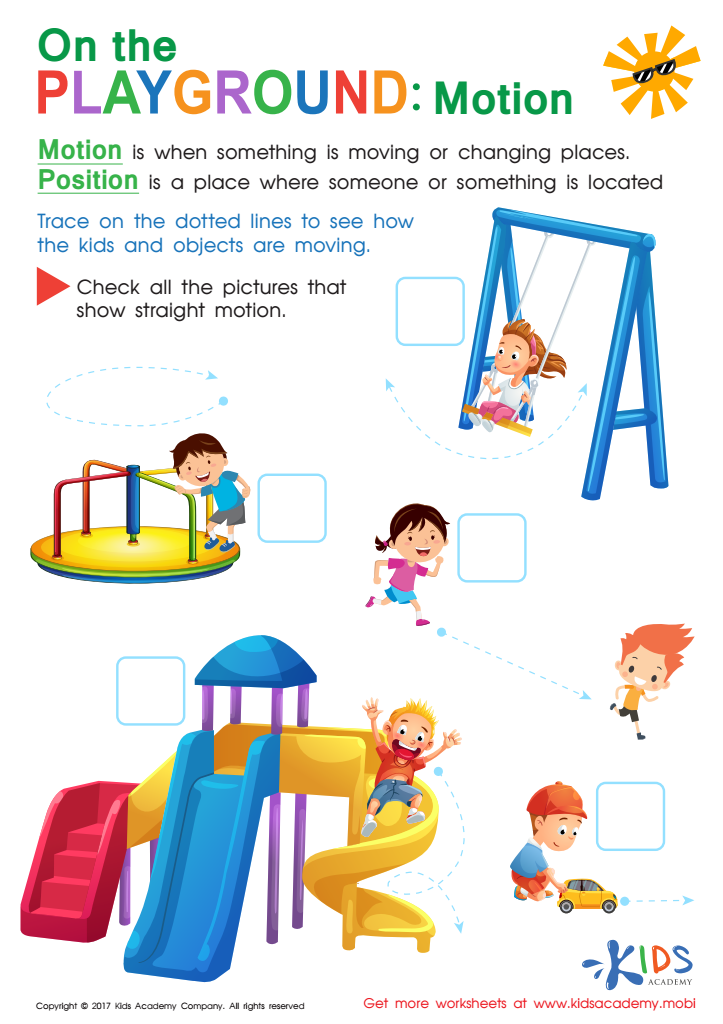
Position and Motion Worksheet
 Assign to My Students
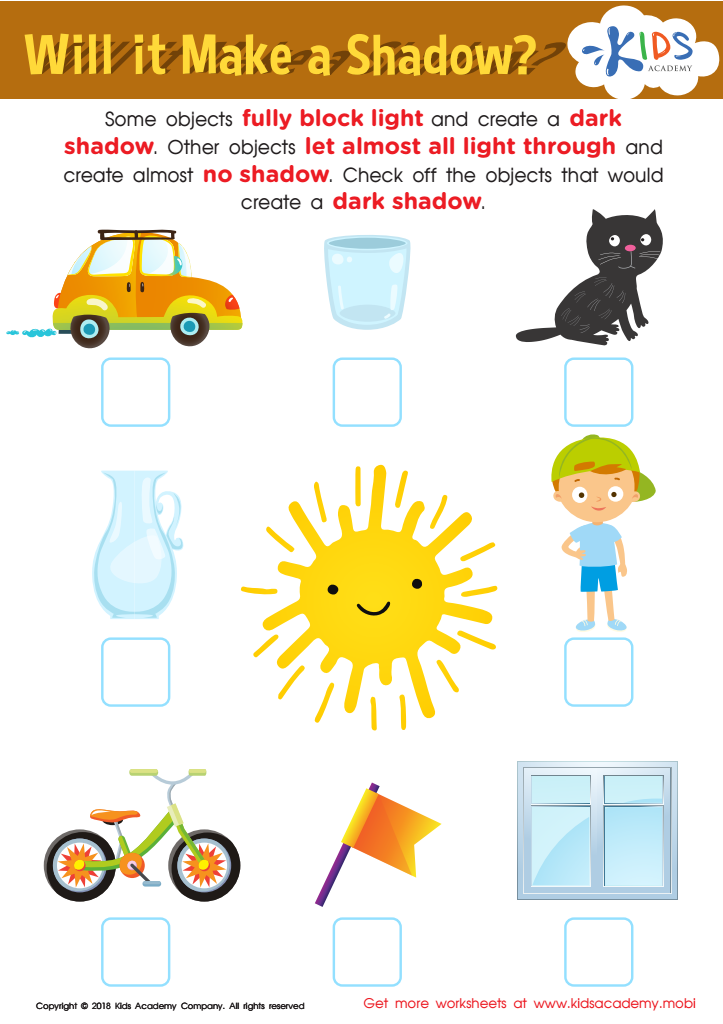
Will It Make a Shadow? Worksheet
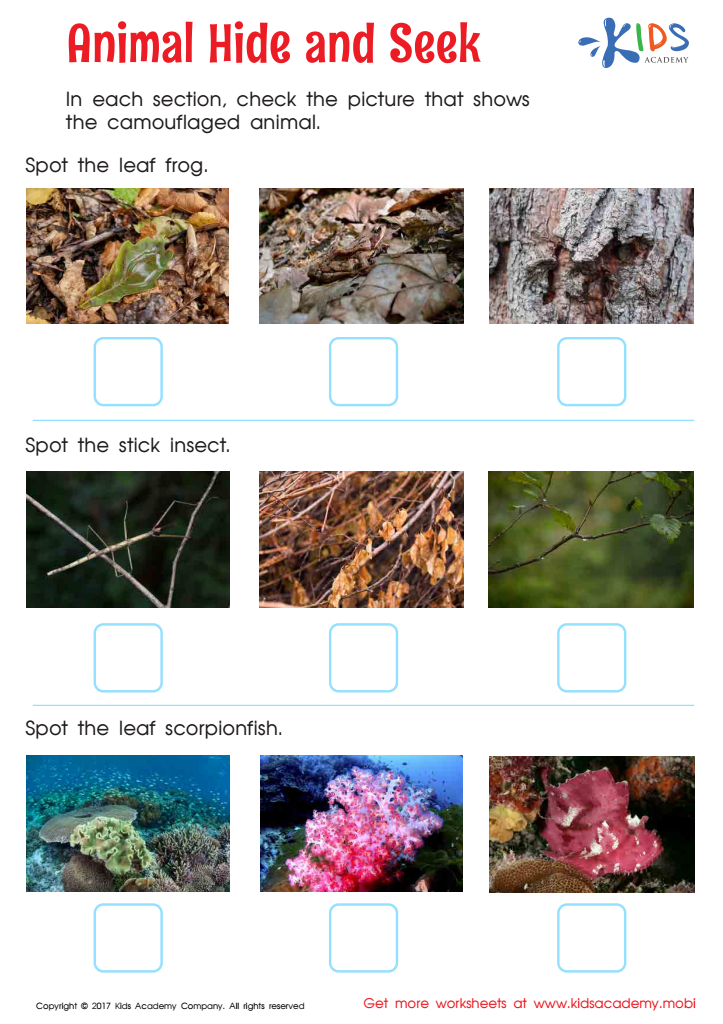
Animal Hide and Seek Worksheet






Visual perception skills are crucial for children aged 7-8 as these skills form the foundation for learning and everyday functioning. At this age, children engage in various academic tasks, including reading, writing, and problem-solving, all of which rely on the ability to perceive, interpret, and understand visual information effectively.
Parents and teachers should recognize that strong visual perception skills can significantly impact a child's academic success and self-confidence. These skills involve recognizing patterns, distinguishing between similar shapes, and visualizing objects in their environment. For instance, being able to clearly see the differences between letters and numbers can enhance a child's reading and math abilities, leading to better comprehension and performance in school.
Moreover, mastery of visual perception skills fosters deeper engagement in learning activities and can stimulate cognitive development and creativity. It also helps in building spatial awareness, critical for physical activities and future STEM-related tasks.
By prioritizing activities that enhance visual perception—such as puzzles, games, and even art projects—parents and teachers create a supportive environment that nurtures essential skills, preparing children for future academic challenges and everyday encounters in a visually-rich world. Hence, ensuring adequate development of these skills at this stage is vital for holistic growth and learning.







