
Understanding ecosystems Normal Our Planet and Environment Worksheets for Ages 7-8
4 filtered results
Difficulty Level
Grade
Age
-
From - To
Subject
Activity
Standards
Explore our "Understanding Ecosystems" worksheets designed for children ages 7-8! These engaging and educational resources help young learners discover the delicate balance of nature. Students will dive into the components of ecosystems, from plants and animals to their habitats. With a variety of activities, including coloring, matching, and fill-in-the-blank exercises, children will strengthen their grasp of environmental concepts while having fun. Ideal for classroom use or at-home learning, these worksheets promote critical thinking and creativity. Foster a love for our planet and empower kids to become environmentally conscious citizens. Start your journey of ecological discovery today!
Favorites
With answer key
Interactive
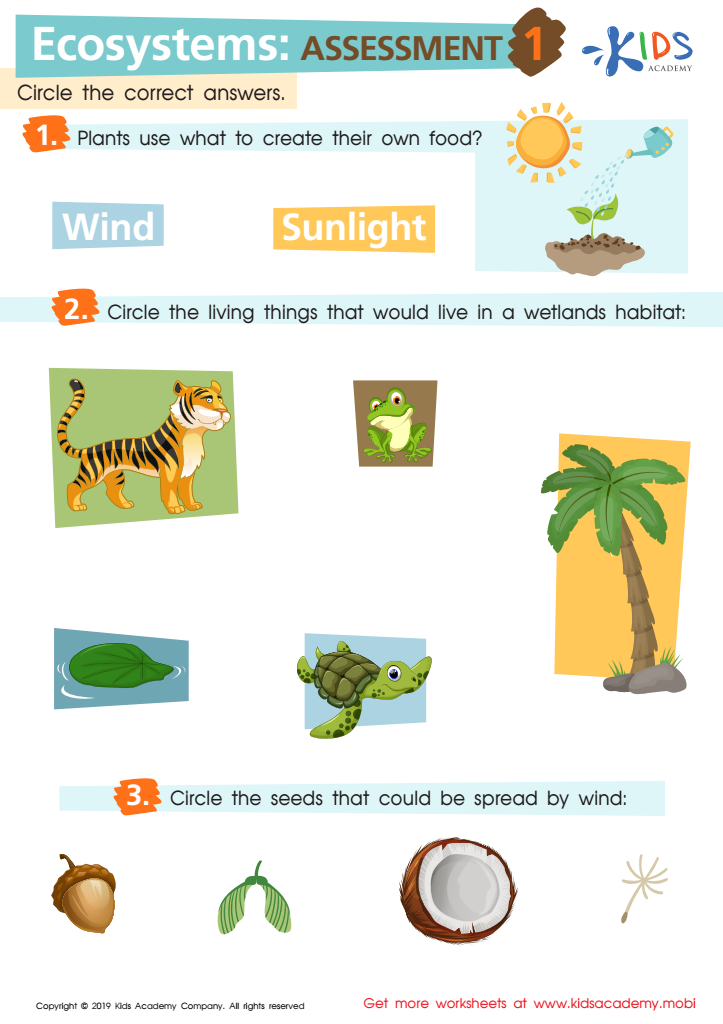
Ecosystems: Assessment 1 Worksheet
Before starting the worksheet, remind your child of the basics of the ecosystem, e.g. plants need light and winds carry small seeds. Encourage them to identify the images in the colorful printout. Ask them the questions and help them circle the correct answers.
 Assign to My Students
Ecosystems: Assessment 1 Worksheet
Worksheet
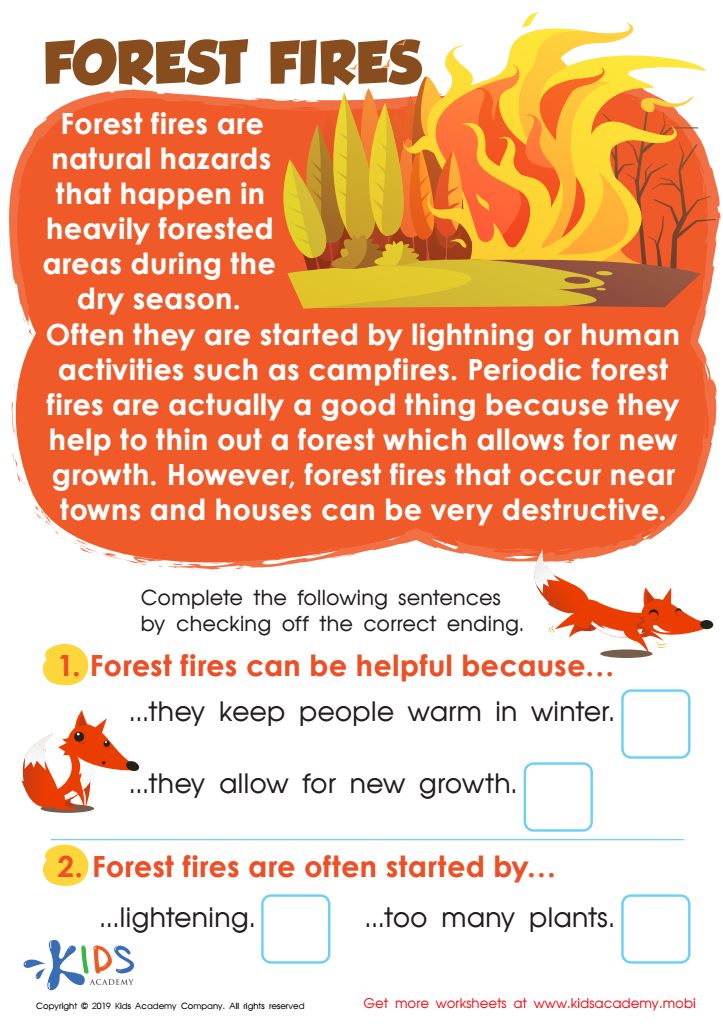
Forest Fires Worksheet
This free worksheet helps kids learn about forest fires. It encourages critical thinking by allowing them to answer multiple-choice questions. It is an important opportunity for children to develop reading skills, as understanding text is essential for further academic success. Download the PDF to give them the chance to practice comprehension and strengthen their knowledge.
Forest Fires Worksheet
Worksheet
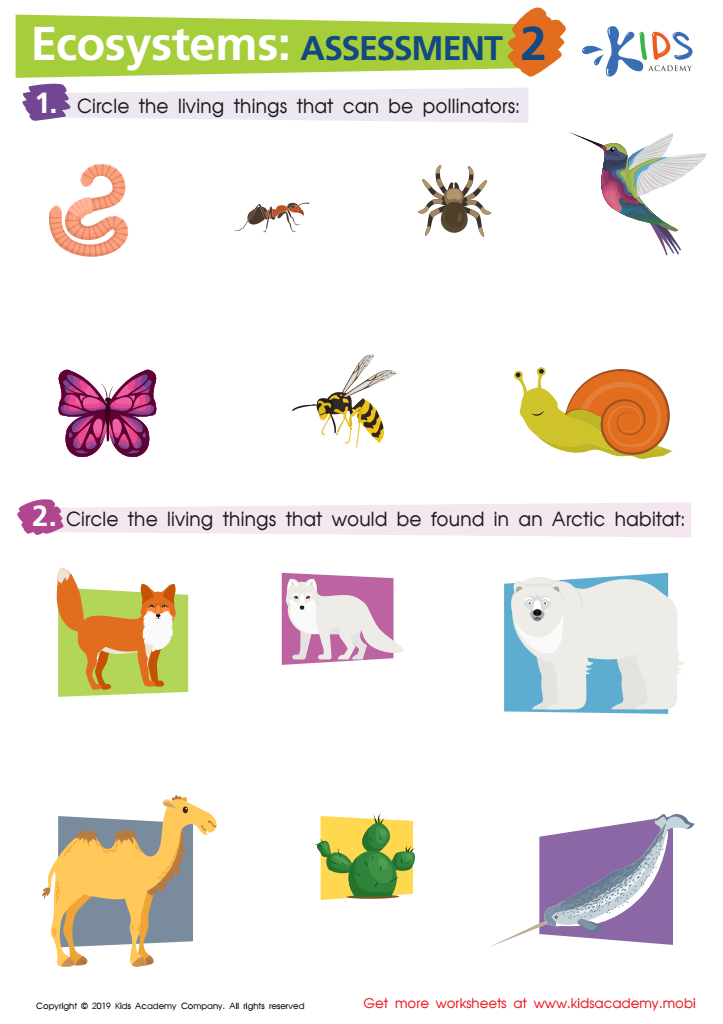
Ecosystems: Assessment 2 Worksheet
Pollinators are living or non-living things that help pollen spread. Test your child's knowledge of the ecosystem with this worksheet. Point out animals in the picture, then ask the simple questions. Help your child circle the right answers.
Ecosystems: Assessment 2 Worksheet
Worksheet
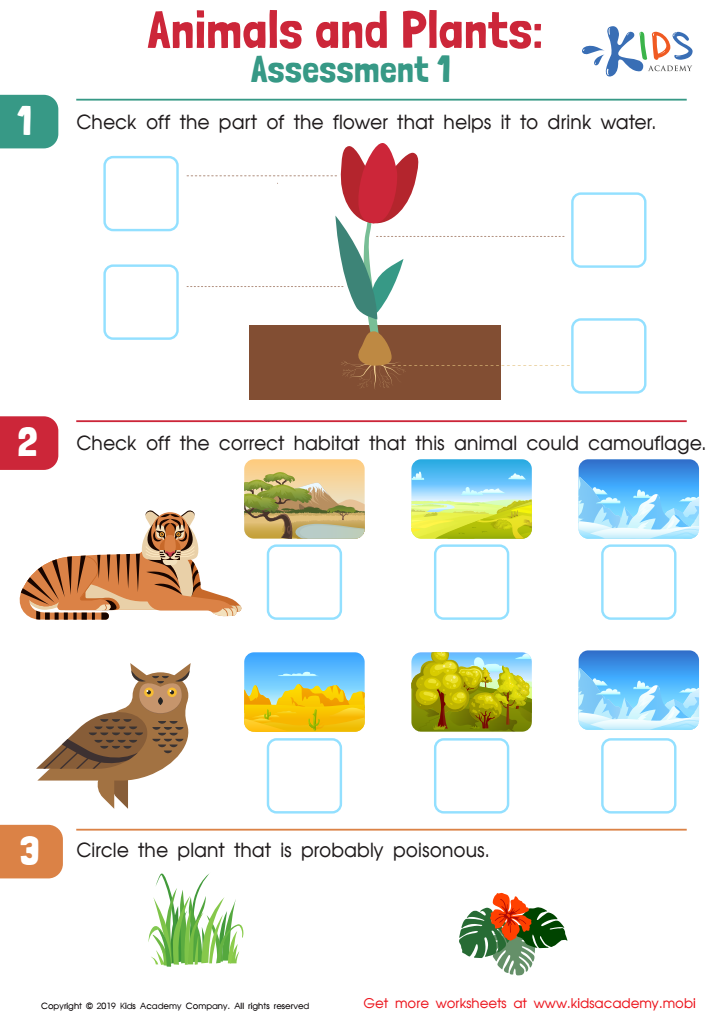
Animals and Plants: Assessment 1 Worksheet
Do you want to easily assess your child's understanding of basic science concepts? This colorful PDF offers a free opportunity for them to test their knowledge about parts of a flower, poisonous plants, animal habitats and more! Bright pictures make it fun and easy for you to see what they know.
Animals and Plants: Assessment 1 Worksheet
Worksheet
Join Kids Academy for Free
Who is primarily going to use this learning content?




Understanding ecosystems is crucial for children ages 7-8 as it lays the foundation for their awareness and appreciation of our planet. Parents and teachers should care about this topic because it helps young learners recognize the intricate connections between living organisms and their environments. By engaging with concepts about ecosystems, children develop critical thinking skills as they learn to identify the importance of biodiversity, resource cycles, and food chains.
Furthermore, fostering an early interest in ecosystems encourages compassion and responsibility towards nature. Children begin to understand the impact of human actions on their surroundings, promoting environmental stewardship. This knowledge can lead to more conscientious habits, such as recycling or conserving water.
Additionally, integrating ecosystem education into the curriculum supports various learning styles and subjects, including science, art, and social studies. It stimulates curiosity and inspires creative projects, such as building mini-ecosystems or participating in local conservation efforts.
In essence, understanding ecosystems is more than just a science lesson; it is about nurturing informed, active citizens. Equipping children with this knowledge prepares them to address future global challenges, fostering a sense of connectivity and respect for the natural world. This, ultimately, contributes to a healthier planet for generations to come.







