Spatial awareness Normal Space Worksheets for Ages 7-8
3 filtered results
-
From - To
Enhance your child's spatial awareness with our engaging Normal Space Worksheets designed for ages 7-8! These worksheets promote essential skills through fun activities that challenge young minds to think about shapes, sizes, positions, and distances. Ideal for enhancing critical thinking and problem-solving abilities, our resources help students visualize and navigate their environment more effectively. Each worksheet is tailored to encourage creativity while reinforcing concepts in a playful manner, making learning enjoyable. Perfect for both classroom use and homeschooling, our spatial awareness worksheets are an invaluable tool in building foundational skills for future academic success. Explore the wonders of space today!
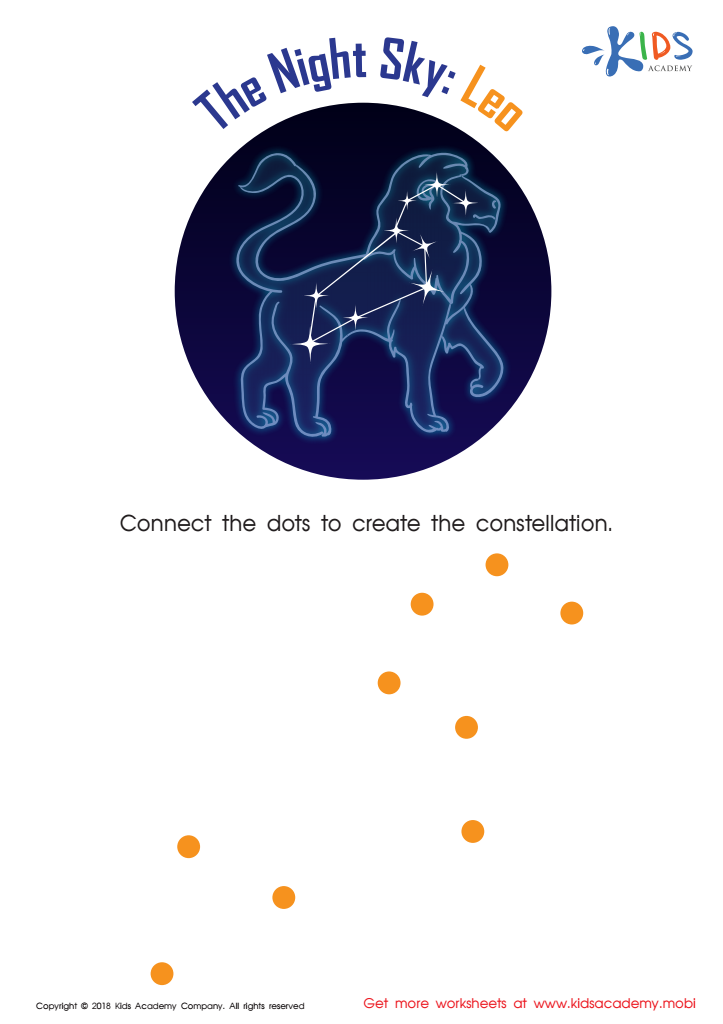
The Night Sky: Leo Worksheet
 Assign to My Students
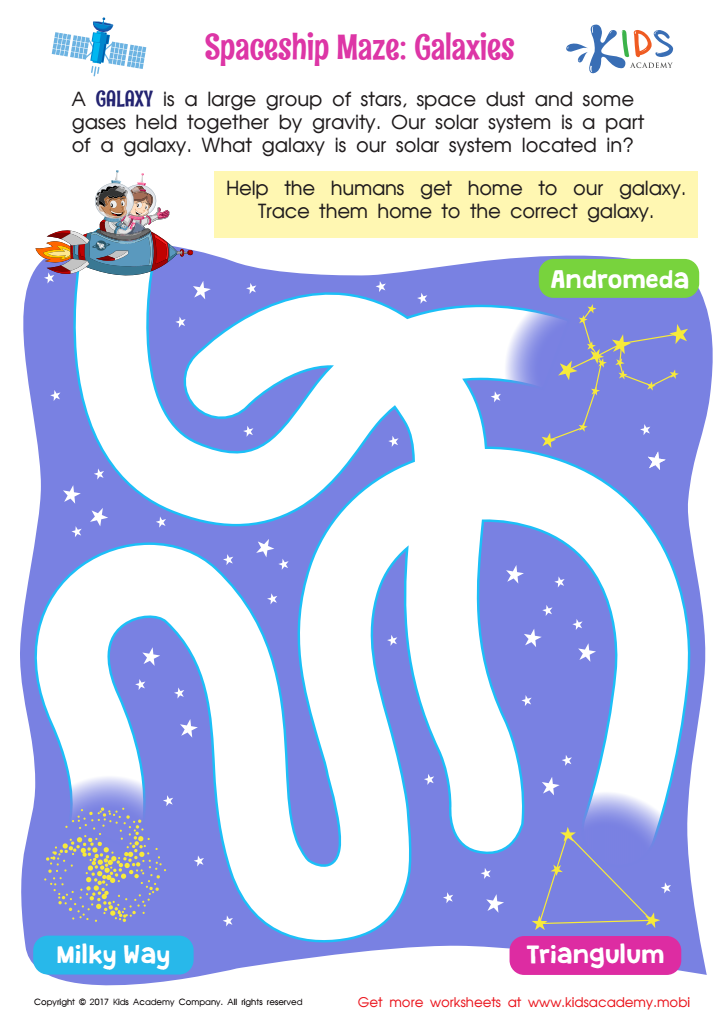
Spaceship Maze: Galaxies Worksheet
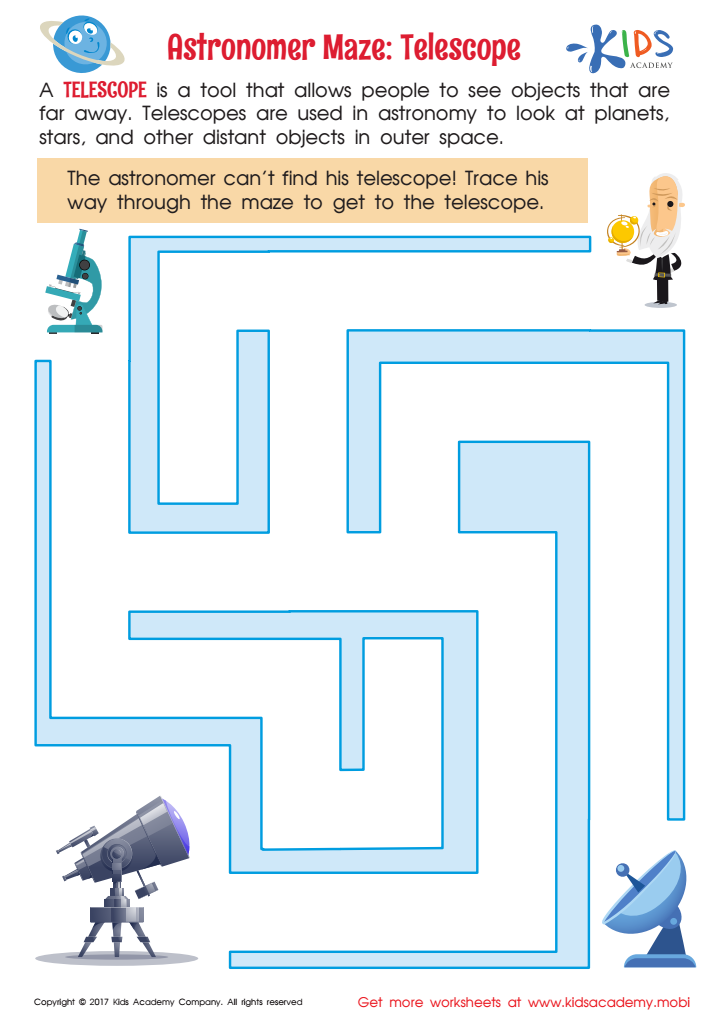
Astronomer Maze: Telescope Worksheet







Spatial awareness is a crucial developmental milestone for children aged 7-8, significantly impacting their learning and daily interactions. At this stage, kids increasingly engage in more complex math, reading, and science concepts that require them to understand space, shape, and direction. For example, grasping geometry relies heavily on recognizing spatial relationships, which aids problem-solving and critical thinking skills.
Parents and teachers should care about nurturing normal space spatial awareness because it enhances children's ability to navigate their environments safely and independently. Strong spatial skills help kids understand and interpret visual information, essential for learning in subjects such as geography and art. Furthermore, these skills contribute to physical coordination and confidence in activities like sports, where spatial reasoning is vital for gameplay and strategy.
Encouraging activities like puzzles, building blocks, or navigate maps not only fosters cognitive growth but also promotes social interaction and communication among peers. Such collaborative play scenarios bolster teamwork skills and help build friendships. By prioritizing spatial awareness through engaging, playful experiences, parents and teachers significantly contribute to children's overall cognitive development and lifelong learning abilities.







