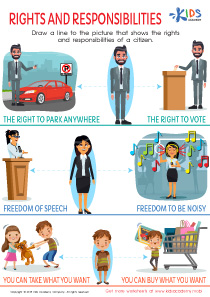
Understanding laws Normal Governance and Civics Worksheets for Ages 7-8
3 filtered results
-
From - To
Introduce young learners to the fundamentals of governance and civics with our "Understanding Laws" worksheets, specifically designed for children aged 7-8. These educational resources from Kids Academy help students grasp the significance of laws, rules, and their role in society. Engaging activities and clear explanations enable youngsters to develop critical thinking and foster respectful social interactions. Perfect for both classroom and at-home learning, the worksheets encourage curiosity and a sense of civic duty from an early age. Start building the foundation of responsible citizenship in a fun and approachable way with our expertly crafted worksheets.
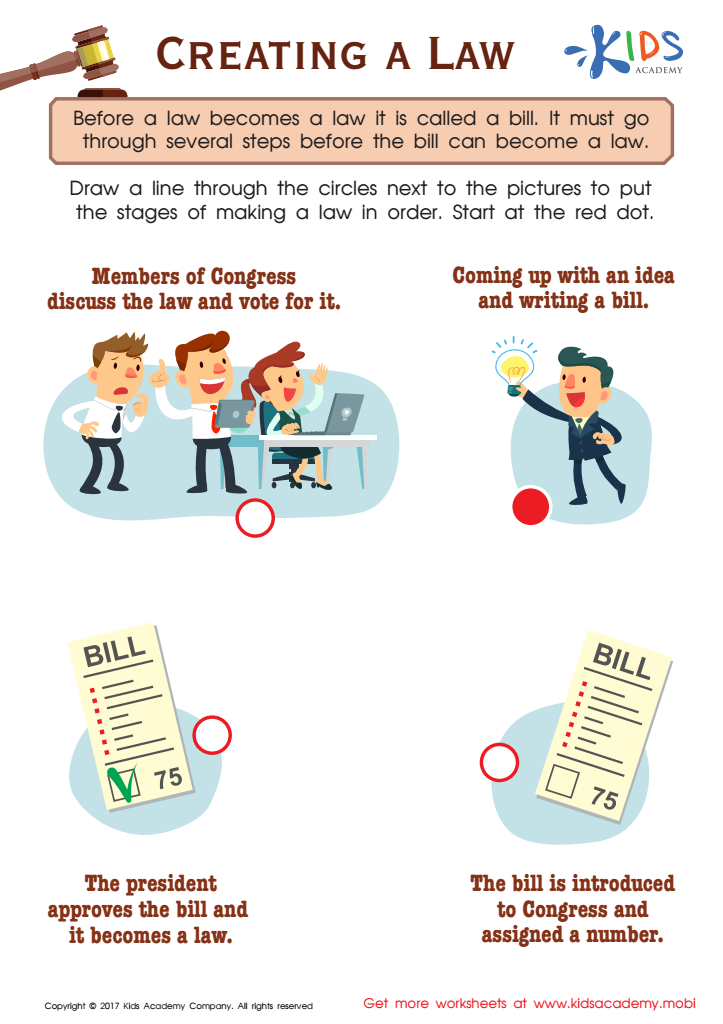
Creating a Law Worksheet
 Assign to My Students
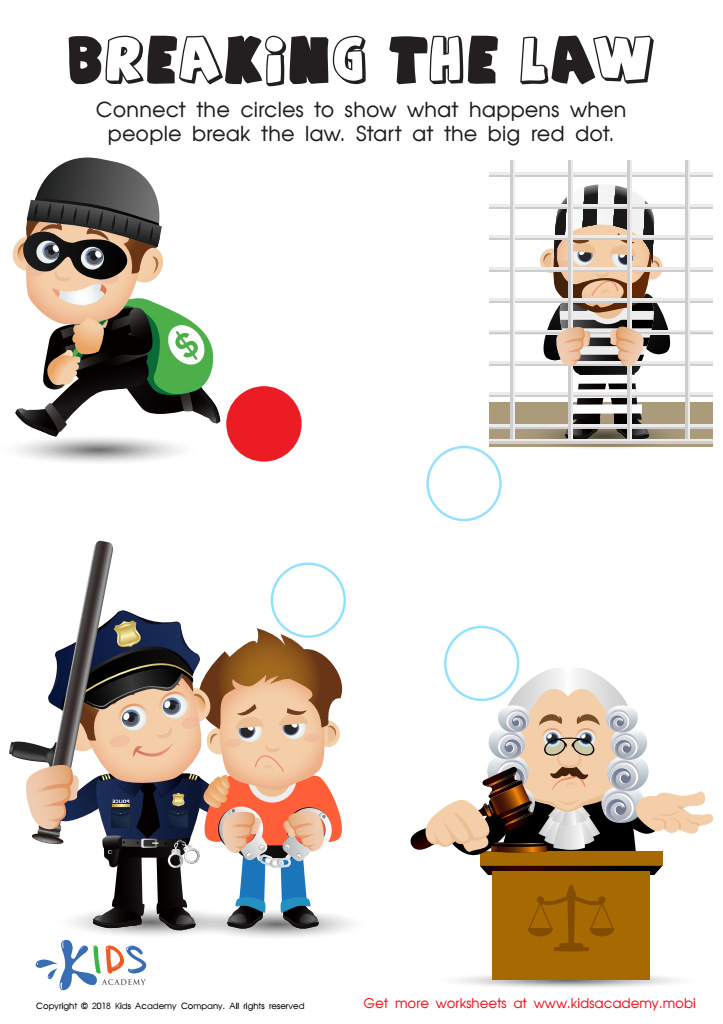
Breaking the Law Worksheet
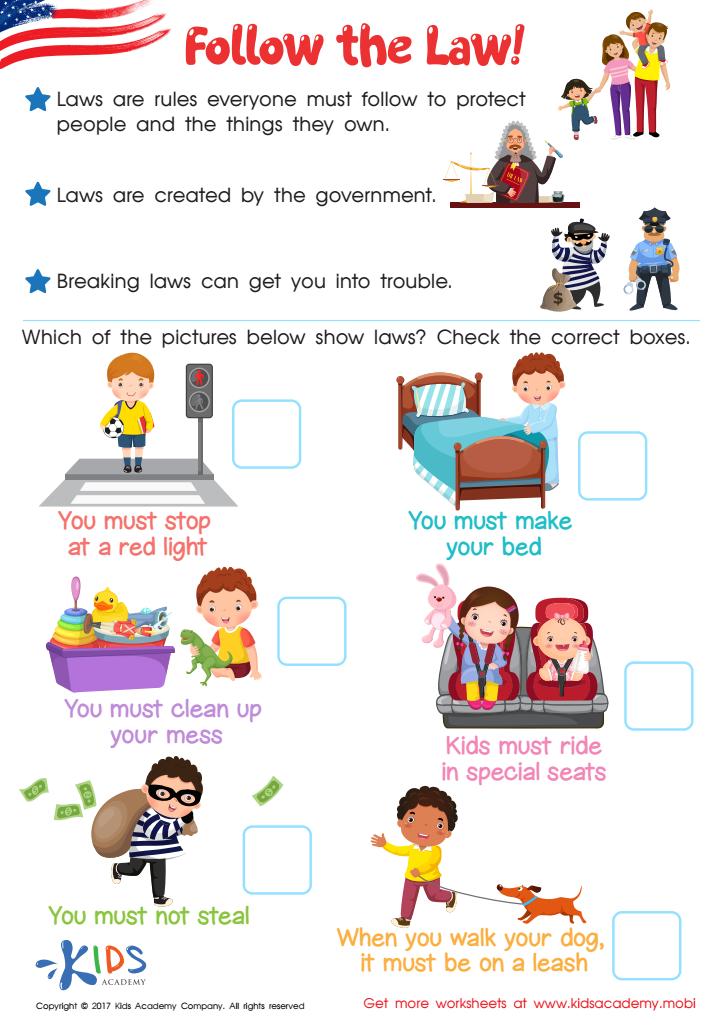
Follow the Law Worksheet


Understanding laws, governance, and civics from an early age lays the foundation for responsible and informed citizenship. Children between the ages of 7 and 8 are developing critical thinking and social awareness. Introducing them to the basic principles of how rules and laws help keep communities safe, fair, and organized fosters respect for authority and social order. It encourages them to appreciate rights and responsibilities, which can translate to better behavior and stronger ethical decisions.
Teaching young children about governance and civics galvanizes their sense of justice and equity. Awareness of these principles at an early age promotes empathy and inclusiveness, as they begin to understand that laws are designed to protect and respect everyone, regardless of differences. This formative education also helps demystify complex governmental systems, making the idea of participation more accessible as they grow older.
By prioritizing civic education, parents and teachers set children on a path toward active and engaged citizenship. They equip future voters and leaders with the tools necessary to advocate for positive change in their communities and beyond. Therefore, understanding these aspects contributes significantly to personal development, societal harmony, and the nurturing of a well-informed, responsible, and proactive generation.