Cultural awareness Normal History Worksheets for Ages 7-8
4 filtered results
-
From - To
Enhance cultural understanding in your 7-8-year-olds with our engaging Cultural Awareness Normal History Worksheets. Designed to enrich social studies lessons, these worksheets introduce young learners to diverse cultures, traditions, and histories from around the globe. With a variety of activities and interactive questions, students will explore significant cultural contributions and practices while developing critical thinking skills. Each worksheet is tailored to be age-appropriate, ensuring an enjoyable learning experience that promotes respect and appreciation for differences. Ideal for classroom use or at-home learning, our worksheets foster awareness and empathy, preparing children to thrive in a multicultural world. Start exploring today!
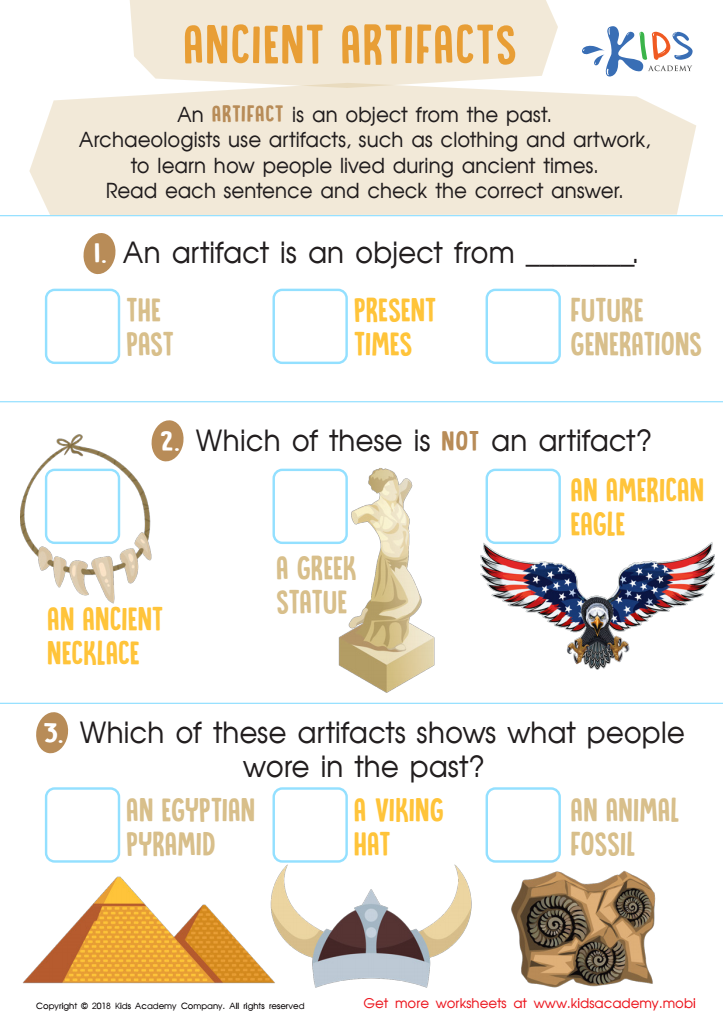
Ancient Artifacts Worksheet
 Assign to My Students
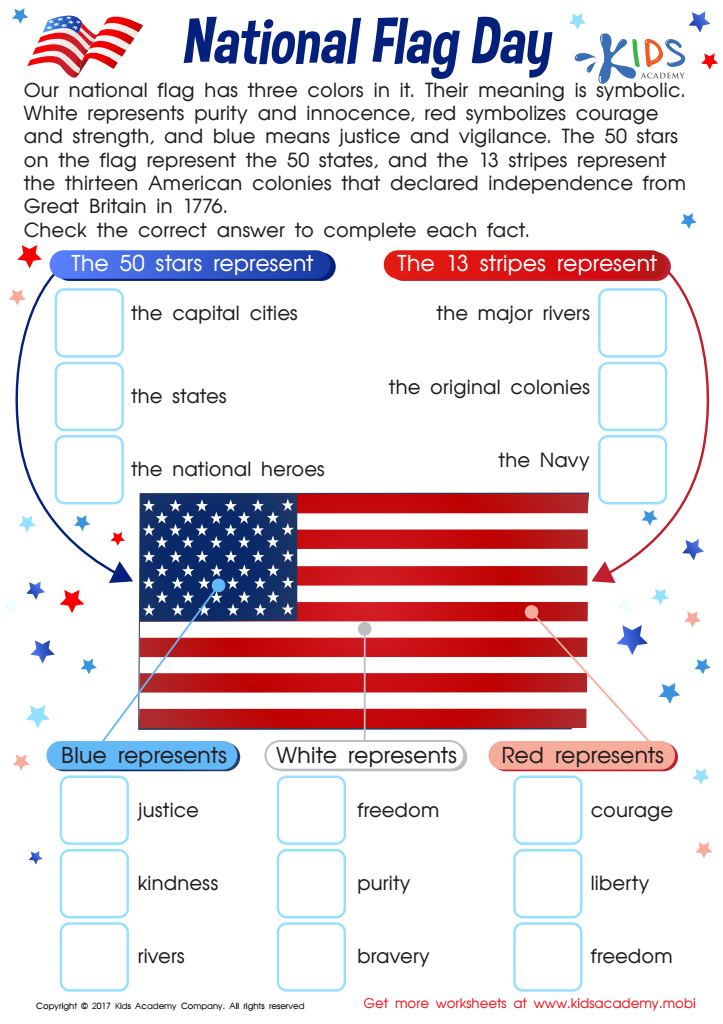
US National Flag Day Worksheet
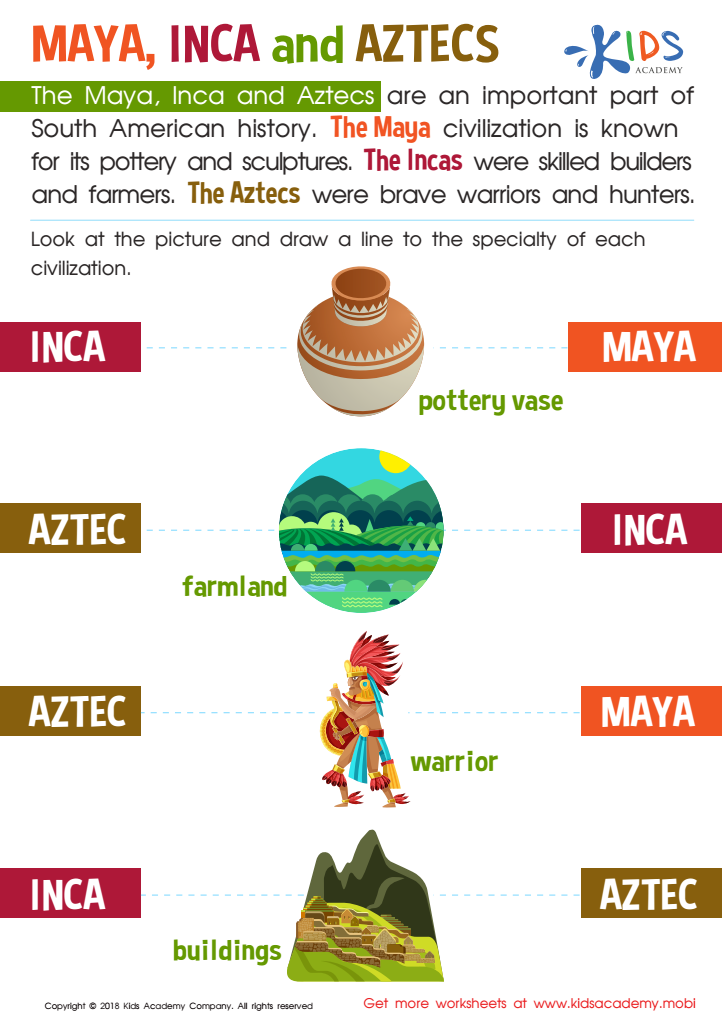
Maya, Inca and Aztecs Worksheet
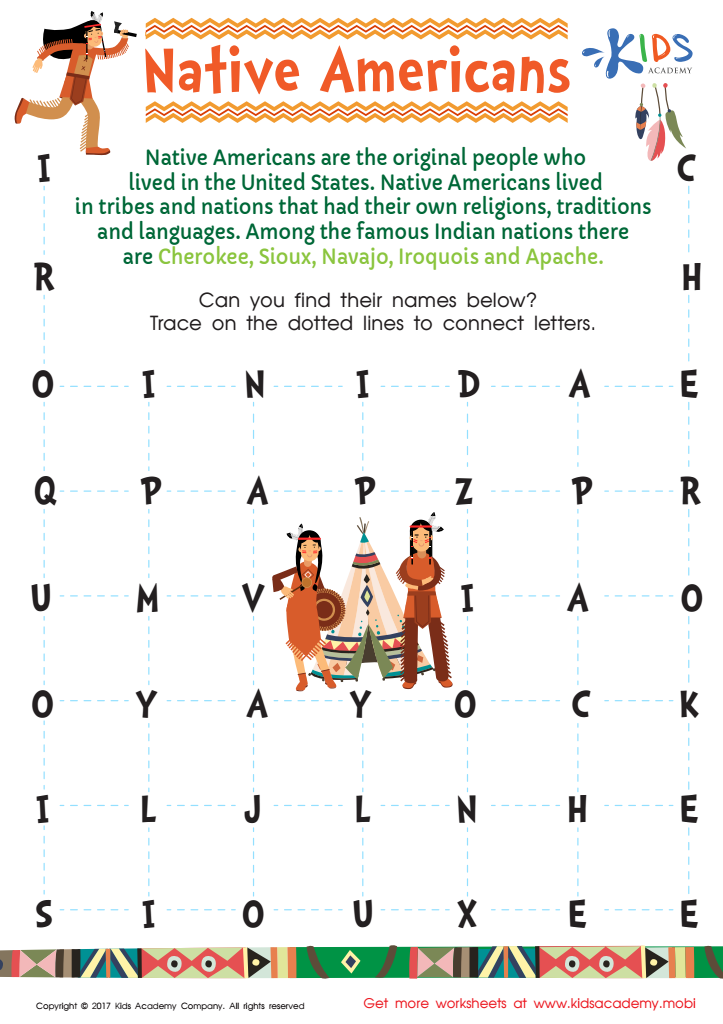
Native American Word Search Printable







Parents and teachers should prioritize cultural awareness and a solid understanding of normal history for children aged 7-8 because these concepts lay the foundation for a respectful and inclusive society. At this age, children are developing their identities and understanding their place in the world. Introducing them to diverse cultures can foster empathy, curiosity, and appreciation for differences, which are essential skills in our increasingly interconnected global community.
Cultural awareness helps children recognize that their own experiences exist within a wider context, strengthening their sense of belonging while acknowledging the value of perspectives different from their own. By learning about various traditions, practices, and historical narratives, children develop critical thinking skills, enabling them to question stereotypes and challenge biases.
Moreover, educating children about normal history—which encompasses a balanced view of events, figures, and cultures—empowers students with knowledge about both notable achievements and significant challenges faced by different communities. This understanding promotes a more equitable view of history, enriching discussions in classrooms and homes. Overall, fostering cultural awareness and normal history in early education supports character development, encourages a sense of responsibility, and prepares children to be active, informed citizens committed to cooperation and mutual respect.