
Analytical thinking Normal Social Studies Worksheets for Ages 7-8
3 filtered results
Difficulty Level
Grade
Age
-
From - To
Subject
Activity
Standards
Discover our engaging and comprehensive Analytical Thinking Normal Social Studies Worksheets designed specifically for children ages 7-8. These resources help young learners develop critical analytical skills through fun activities that encourage problem-solving and logical reasoning. Each worksheet is aligned with age-appropriate social studies topics, promoting an understanding of society, culture, and geography while enhancing cognitive abilities. Perfect for classroom use or at-home learning, our printable worksheets make it easy for parents and teachers to foster intellectual growth. Encourage your child’s curiosity and boost their analytical thinking skills today with our thoughtfully crafted materials!
Favorites
With answer key
Interactive
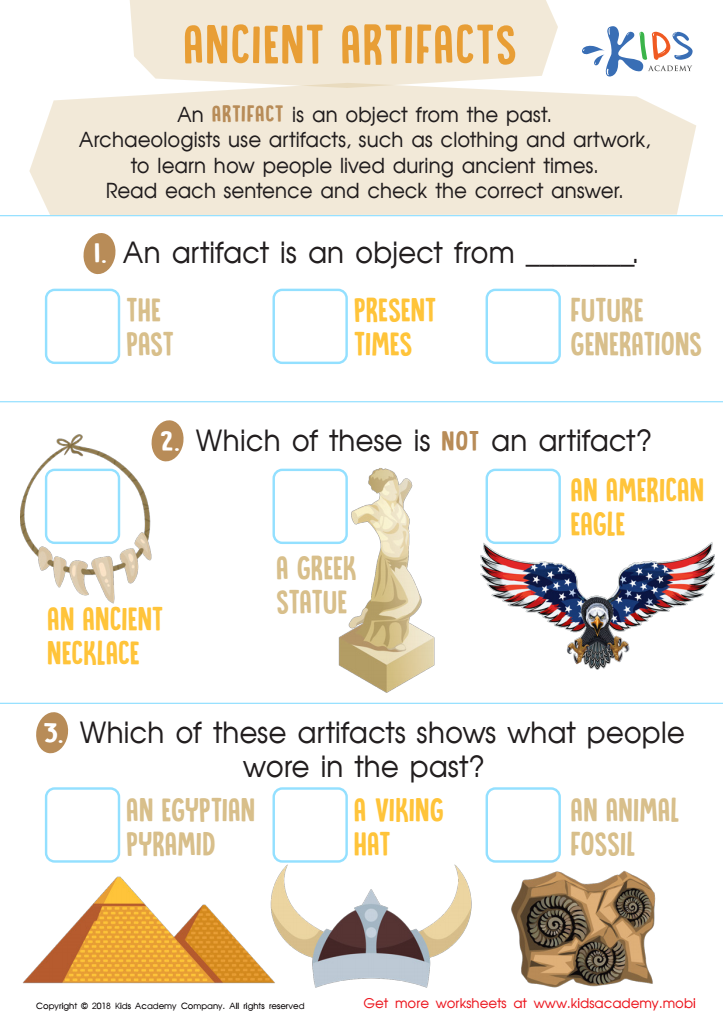
Ancient Artifacts Worksheet
This free worksheet helps kids understand ancient artifacts, from statues to necklaces to fossils. They'll read comprehension questions and select answers from multiple choice options, with pictures to help them grasp the concept. It's a great way for children to learn about artifacts and what they may look like.
 Assign to My Students
Ancient Artifacts Worksheet
Worksheet
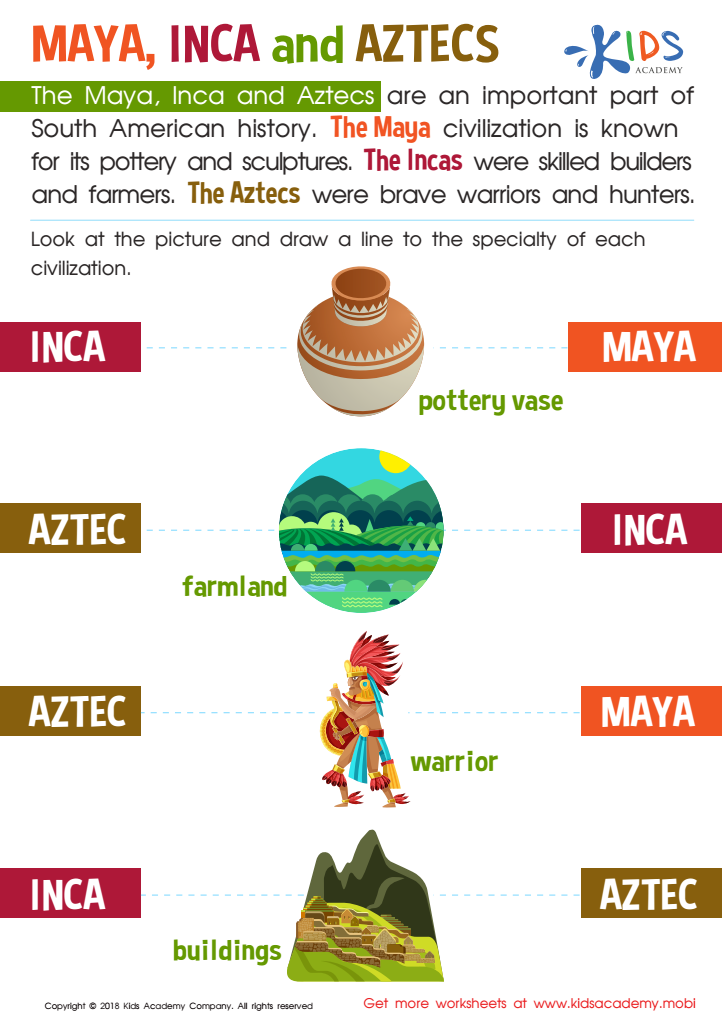
Maya, Inca and Aztecs Worksheet
This worksheet introduces your child to the thrilling histories of the Mayan, Incan and Aztec cultures, teaching them about their warriors, sculptors and farmers. With traceable lines and colorful imagery, they'll connect each culture with its correct associated picture - great for cementing concepts!
Maya, Inca and Aztecs Worksheet
Worksheet
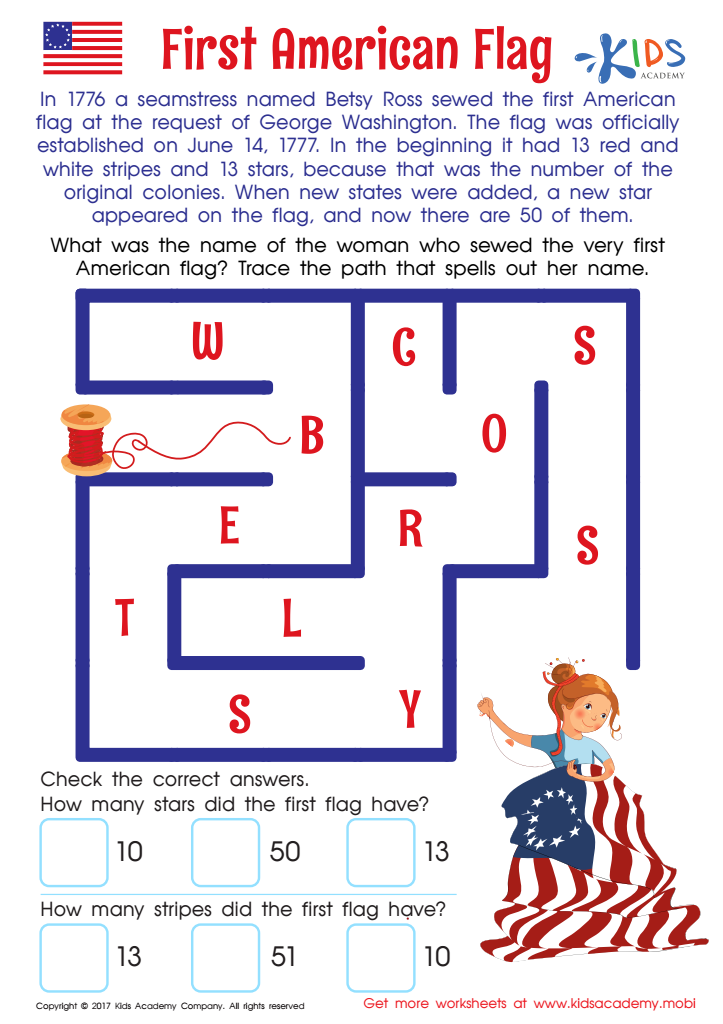
First American Flag Worksheet
Betsy Ross sewed the first American flag at the request of George Washington. This worksheet helps kids learn about this milestone in U.S. history, plus the design and origins of the flag.
First American Flag Worksheet
Worksheet
Join Kids Academy for Free
Who is primarily going to use this learning content?








Analytical thinking is a critical skill that equips young learners with the ability to evaluate information, solve problems, and make informed decisions. In Social Studies for ages 7-8, introducing analytical thinking allows children to understand their place in the world, examining diverse cultures, histories, and community roles. It fosters curiosity, encouraging students to ask questions about societal structure, governance, and global interconnections.
For parents and teachers, fostering analytical thinking in young learners can lead to engaged and informed citizens. This age group is naturally curious; encouraging them to think critically about social issues cultivates a sense of responsibility and empowers them to voice their opinions and engage in discussions. Activities such as analyzing maps, evaluating the impact of historical events, or exploring the concept of fairness in community decision-making not only enhance their understanding but also build skills essential for their future education.
Furthermore, analytical thinking helps children develop empathy as they learn to consider different perspectives. This skill set supports academic growth and improves emotional intelligence, making it vital for their overall development. Thus, prioritizing analytical thinking in Social Studies can lay a strong foundation for children's cognitive and social competencies, fostering a more thoughtful and connected future generation.








