Geographic knowledge Normal Social Studies Worksheets for Ages 7-8
3 filtered results
Difficulty Level
Grade
Age
-
From - To
Subject
Activity
Standards
Our "Geographic Knowledge Normal Social Studies Worksheets for Ages 7-8" are designed to engage young minds and foster a love for geography. Ideal for 2nd-grade students, these vibrant and thoughtfully crafted worksheets cover essential topics such as map reading, countries, landmarks, and physical features. Each worksheet is interactive and encourages exploration, critical thinking, and comprehension skills. With varying levels of difficulty, they ensure a progressive learning experience that matches the child’s pace. Perfect for both classroom and home settings, these worksheets make geography fun and accessible, laying a strong foundation for future learning. Start exploring the world today!
Favorites
With answer key
Interactive
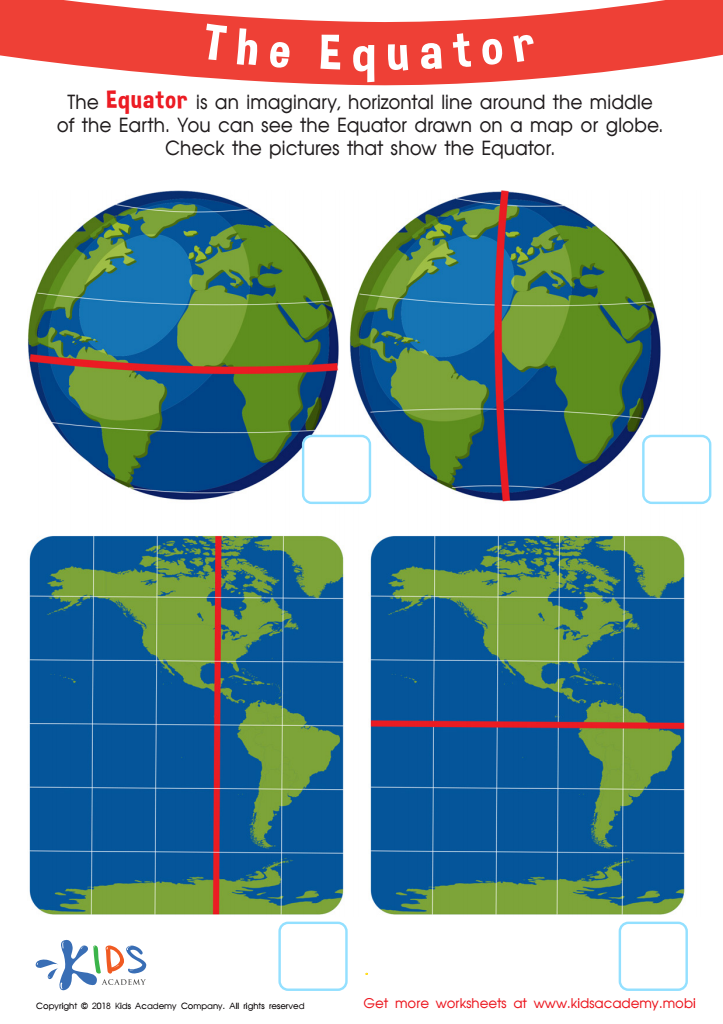
The Equator Worksheet
Young geographers can learn about the Equator with this free, colorful worksheet! They will understand the concept better with picture representation: what the Equator may look like if the Earth could be seen in its entirety, and then check off which one is accurate on a flat world map.
The Equator Worksheet
Worksheet
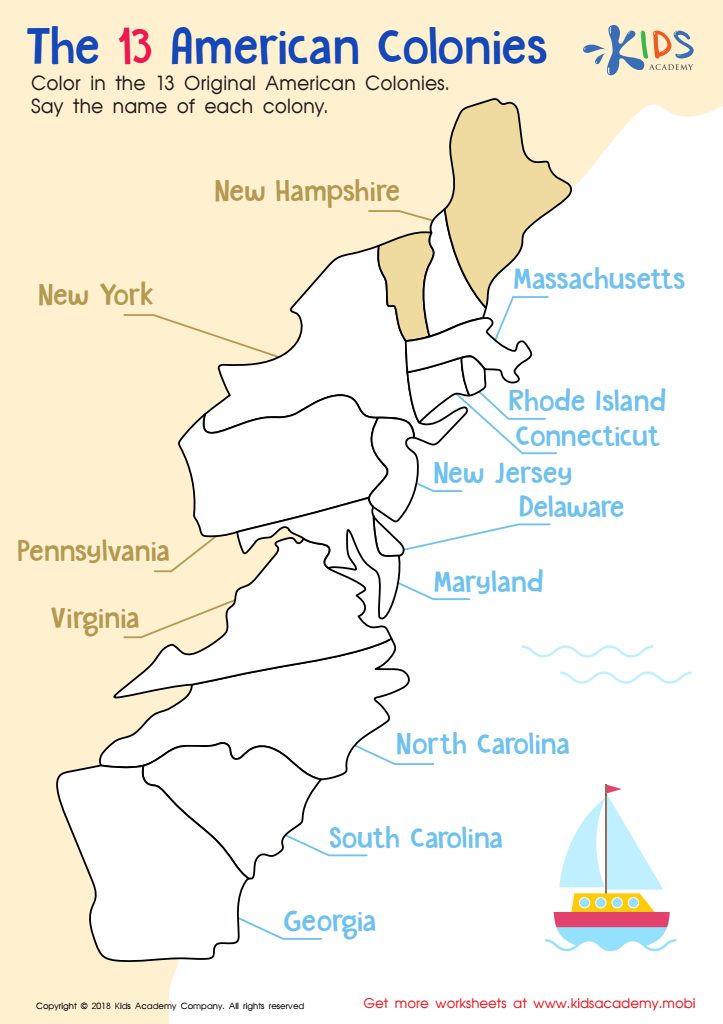
The 13 American Colonies Worksheet
Ensure kids are knowledgeable in maths, English, science, history, and geography. Test their American knowledge: Can they name the 13 Original American Colonies? Use the worksheet; have them color each colony and name it out loud.
Download (PDF)
 Assign to My Students
Assign to My Students
The 13 American Colonies Worksheet
Worksheet
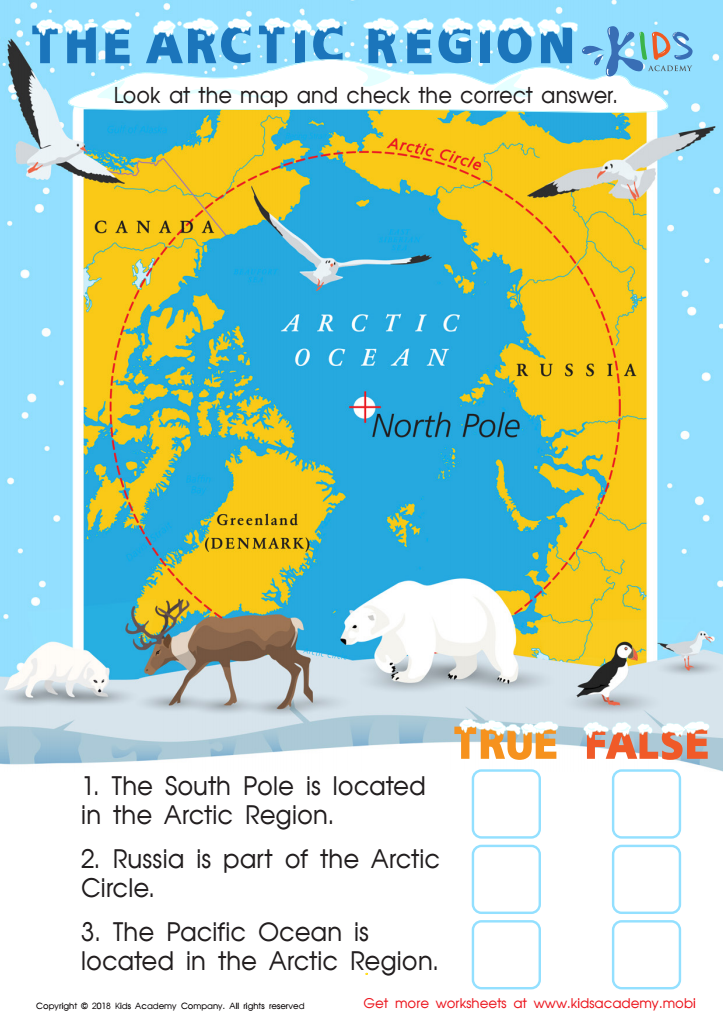
The Arctic Region Worksheet
Kids who love geography will enjoy this worksheet. On the printout there's a map. Show your child the landmarks and read them aloud. Have them take note of the locations. Then, ask them to answer the questions at the bottom using the map; check the answers.
The Arctic Region Worksheet
Worksheet
Join Kids Academy for Free
Who is primarily going to use this learning content?








Geographic knowledge holds significant importance for children aged 7-8, and both parents and teachers should prioritize it as part of the normal Social Studies curriculum. Firstly, understanding geography helps children develop spatial awareness and contextual thinking. By learning about different locations, physical features, and environments, students cultivate a sense of how various places are connected and how they relate to their immediate surroundings.
Furthermore, geographic knowledge fosters cultural awareness and empathy. As children explore diverse regions and the people living in them, they build an appreciation for cultural differences and global diversity. This early exposure promotes tolerance and broad-mindedness, crucial traits for the multicultural world they will grow to engage with.
Moreover, geography supports the development of critical thinking skills. Learning to read maps, interpret data, and understand geographical terms encourages analytical thinking and problem-solving. These skills are fundamental to various academic and real-life contexts.
Finally, a solid geographic foundation helps young learners understand critical global issues like climate change, resource distribution, and economic disparities. This early knowledge empowers them to become informed global citizens, conscious of how their actions impact the world.
In essence, ensuring geographic knowledge for 7-8-year-olds builds intellectual competencies, nurtures cultural empathy, and drives an informed, responsible worldview, all essential for their holistic development.