Map reading Normal Social Studies Worksheets for Ages 7-8
3 filtered results
-
From - To
Enhance your child's understanding of geography and navigation with our "Map Reading Normal Social Studies Worksheets for Ages 7-8." These engaging and interactive worksheets are designed to teach young learners essential map skills, including reading legends, identifying symbols, and understanding scale. Each activity promotes critical thinking through fun exercises that reinforce knowledge of maps and their real-world applications. Perfect for classroom use or homeschool settings, our worksheets help children develop spatial awareness and boost their confidence in using maps effectively. Explore the exciting world of geography with our thoughtfully crafted resources, ensuring a solid foundation in social studies for your budding young explorers!
 Assign to My Students
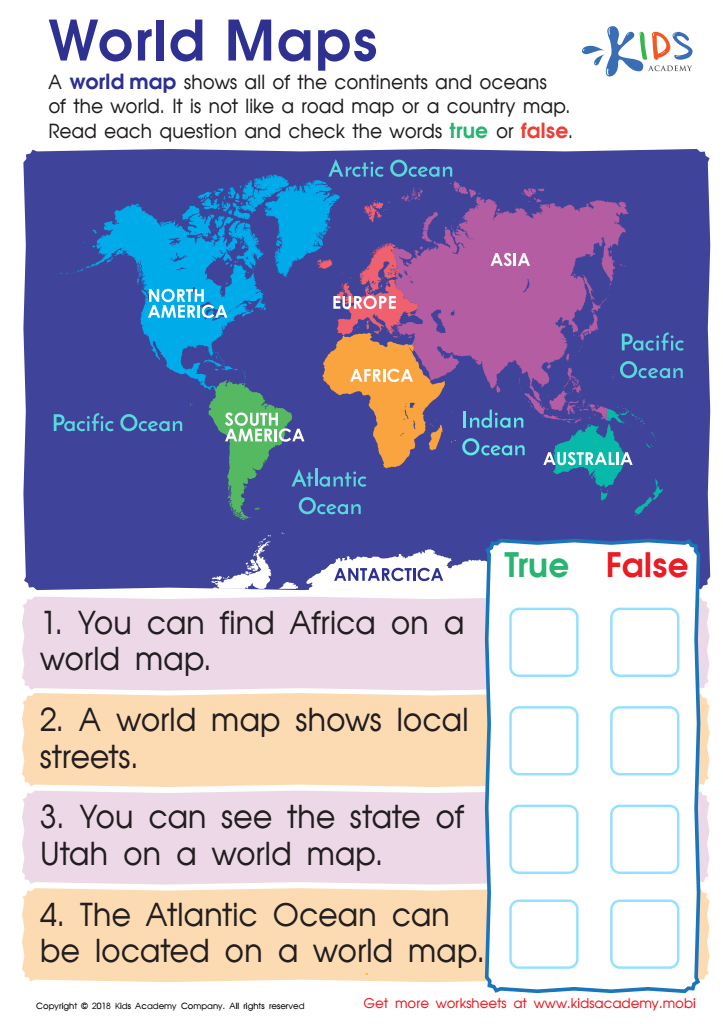
World Maps Worksheet
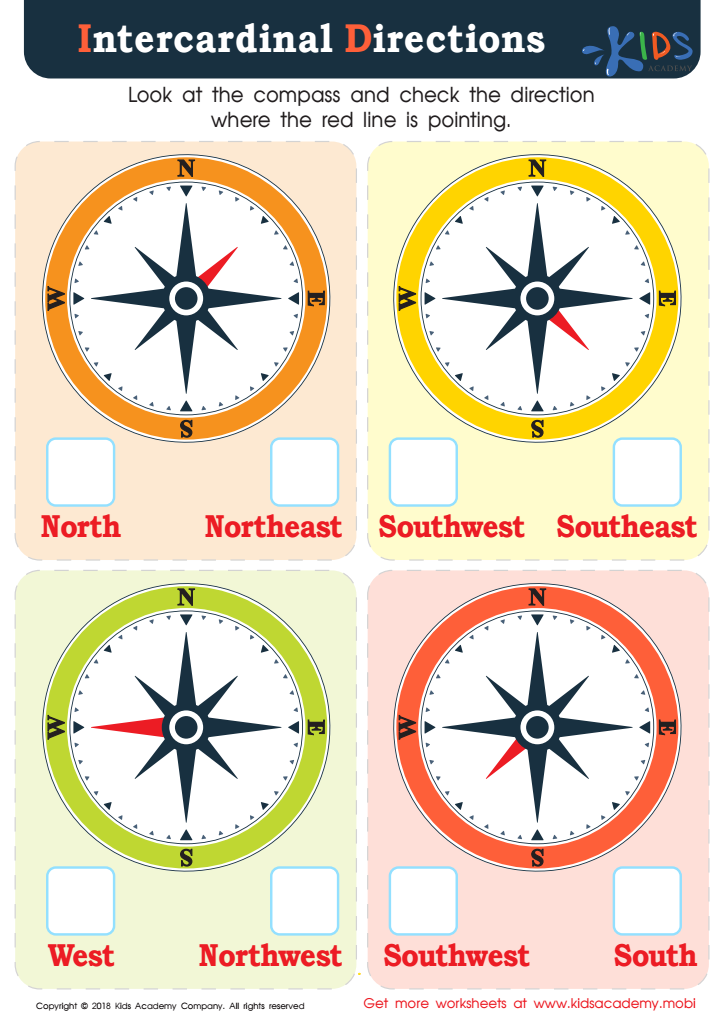
Intercardinal Directions Worksheet






Map reading is an essential skill that serves as a foundation for understanding geography and social studies, particularly for children ages 7-8. At this age, children are beginning to develop critical thinking and spatial awareness, which are vital for their cognitive growth. Learning to read maps teaches students how to interpret symbols, scales, and directions, fostering skills that are valuable across various subjects.
Parents and teachers should care about map reading because it enhances a child’s ability to navigate the world around them, instilling a sense of curiosity and adventure. Understanding maps encourages exploration and cultural awareness, with students learning about different communities, environments, and geographical features. This comprehension fosters respect for diversity and promotes responsible citizenship.
Furthermore, mastery of map reading boosts problem-solving and analytical skills. As children practice these skills, they gain confidence and independence in how they understand and interact with their surroundings. In our increasingly globalized world, these competencies are more important than ever. By supporting map reading in social studies, educators and parents prepare children not only for academic success but also for navigating life’s complexities with a well-rounded perspective.