Vowel Recognition Normal Grammar Worksheets for Ages 7-8
3 filtered results
-
From - To
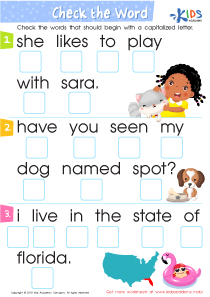
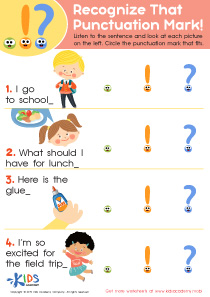
Enhance your child's language skills with our engaging Vowel Recognition Normal Grammar Worksheets for Ages 7-8! These carefully crafted worksheets are designed to support early learners in identifying and mastering vowels, a fundamental aspect of reading and writing. With a variety of fun activities, young students will practice recognizing vowel sounds, improving their phonemic awareness and building a solid foundation for future literacy skills. Each worksheet is visually appealing and incorporates interactive elements to keep kids motivated. Ideal for classroom settings or at-home learning, these resources ensure a positive and enjoyable experience while learning the fundamental building blocks of grammar.
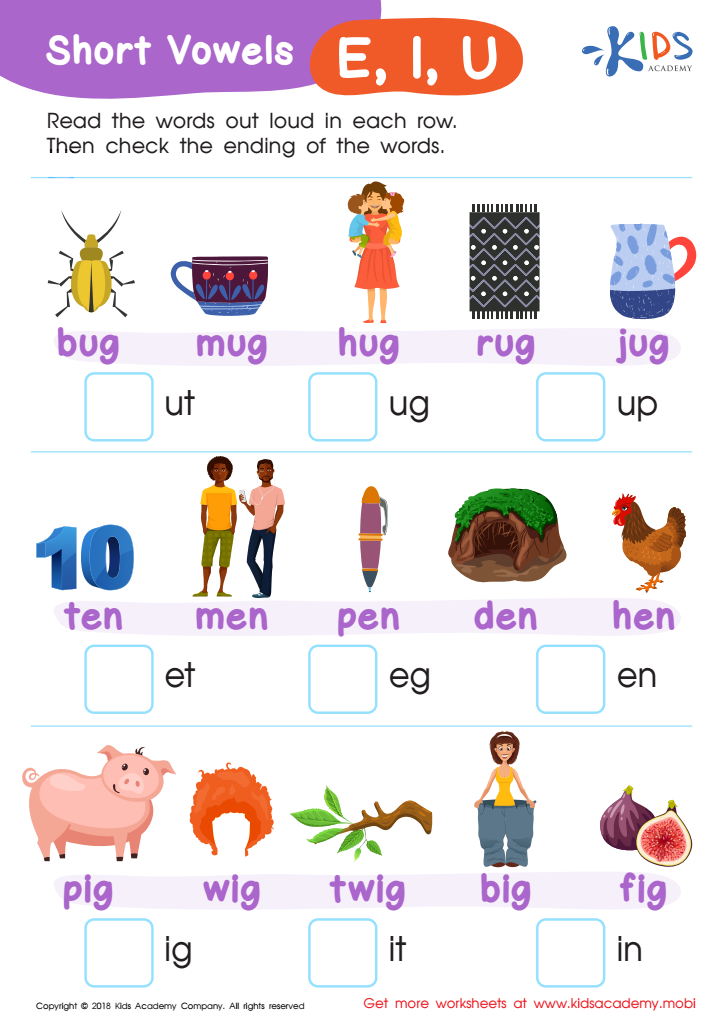
Short Vowels /e/, /i/, and /u/ Worksheet
 Assign to My Students
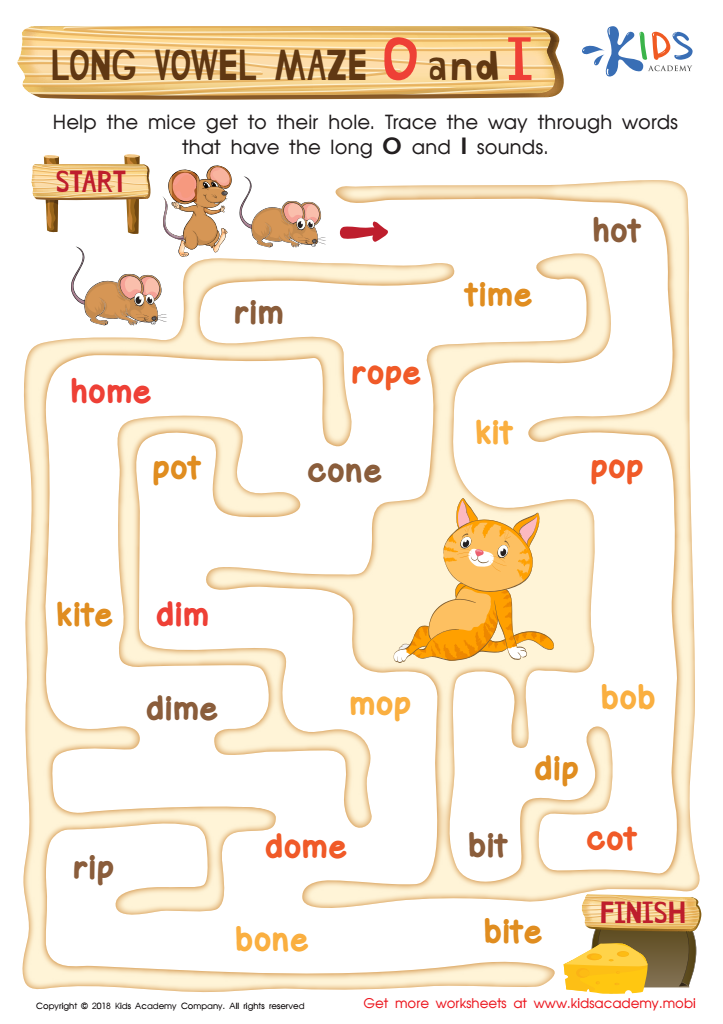
Long Vowel Maze /o/ and /i/ Worksheet
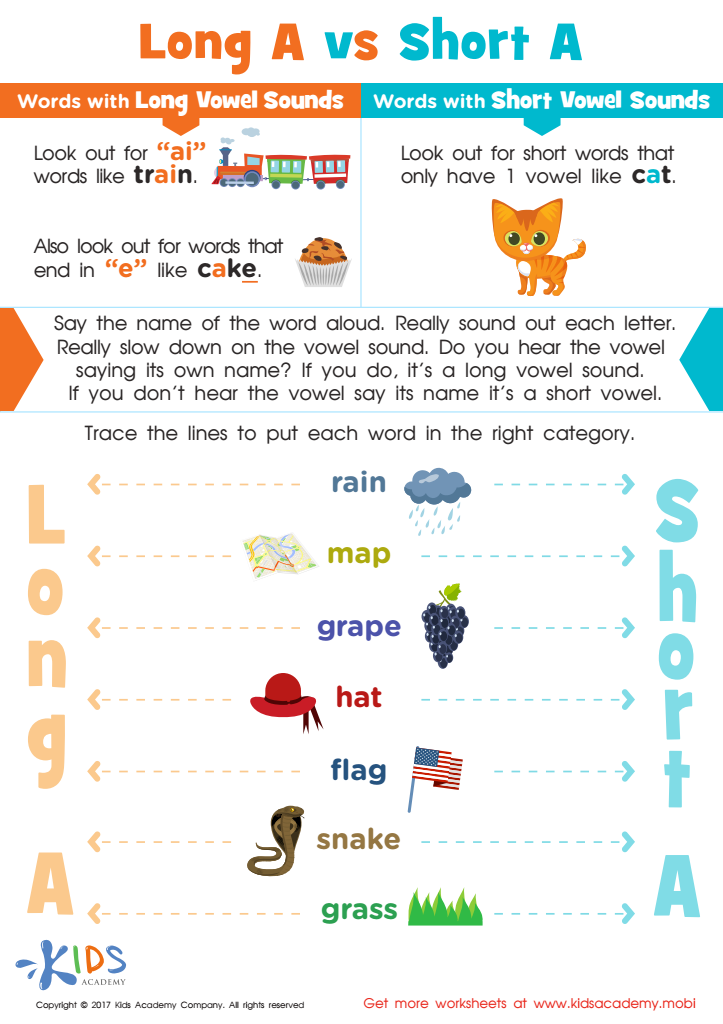
Long and Short Vowel A Spelling Worksheet







Vowel recognition is a fundamental aspect of literacy development for children aged 7-8. At this stage, children refine their reading and writing skills, and the mastery of vowels plays a crucial role in their understanding of phonics, which is essential for decoding words. Vowel recognition helps children differentiate between similar-sounding words, enhancing their reading fluency and comprehension.
Furthermore, recognizing vowels enables children to improve their spelling skills, as many words are dependent on the correct usage of vowels. This skill also contributes to their overall vocabulary development, allowing them to expand their language and express their ideas more effectively.
For parents and teachers, focusing on vowel recognition creates a strong linguistic foundation that can reduce future learning challenges. Engaging children with interactive and fun activities focused on vowels can transform their reading experience, encouraging a love for books and lifelong learning. As literacy skills emerge, it fosters confidence and critical thinking, essential abilities for academic success.
In summary, prioritizing vowel recognition in children ages 7-8 is crucial for their literacy journey, making it a key concern for both parents and teachers, who play pivotal roles in shaping effective learning experiences.