Fine Motor Skills Normal Letter E Worksheets for Ages 7-9
3 filtered results
Difficulty Level
Grade
Age
-
From - To
Subject
Activity
Standards
Our Fine Motor Skills Normal Letter E Worksheets for Ages 7-9 are expertly designed to help children develop essential handwriting and fine motor skills. These engaging and educational worksheets focus on practicing the uppercase and lowercase letter E through tracing, writing, and fun activities. By working through these exercises, children will improve their pen control, hand-eye coordination, and overall dexterity. Perfect for early grade learners, these worksheets support literacy development and fine motor precision, laying a strong foundation for successful writing skills. Boost your child's confidence and handwriting proficiency today with our specially crafted Letter E worksheets!
Favorites
With answer key
Interactive
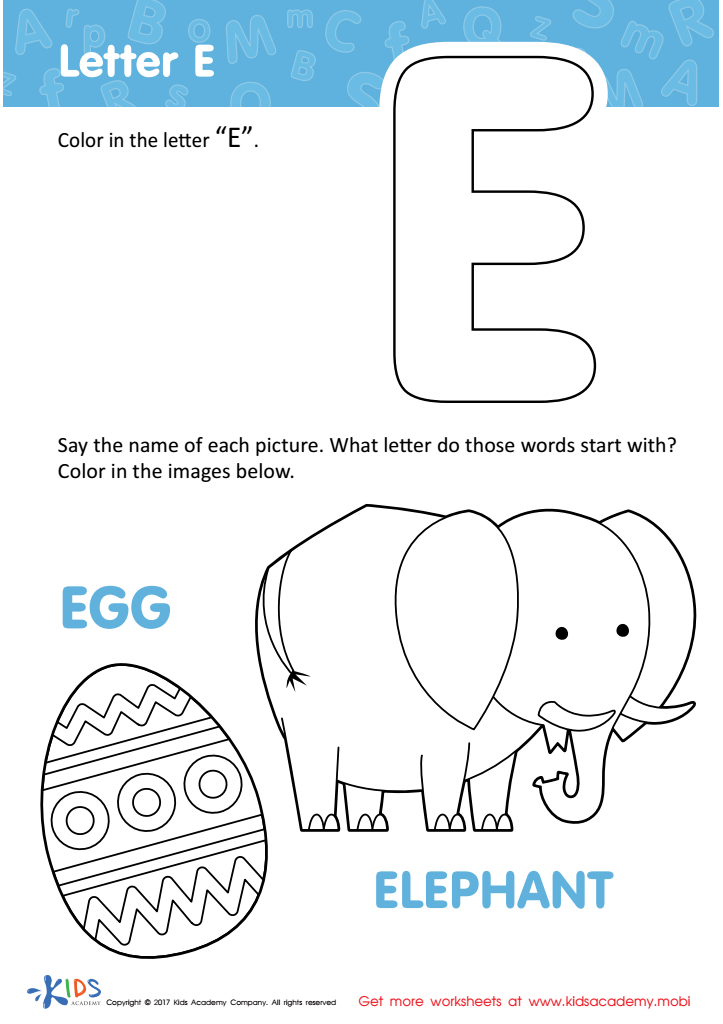
Letter E Coloring Sheet
Coloring pages are great for teaching kids the alphabet and words! This "E" page features a cute elephant and Easter egg. Kids will love it and learn the letter "E" at the same time. 80 words
Download (PDF)
 Assign to My Students
Assign to My Students
Letter E Coloring Sheet
Worksheet
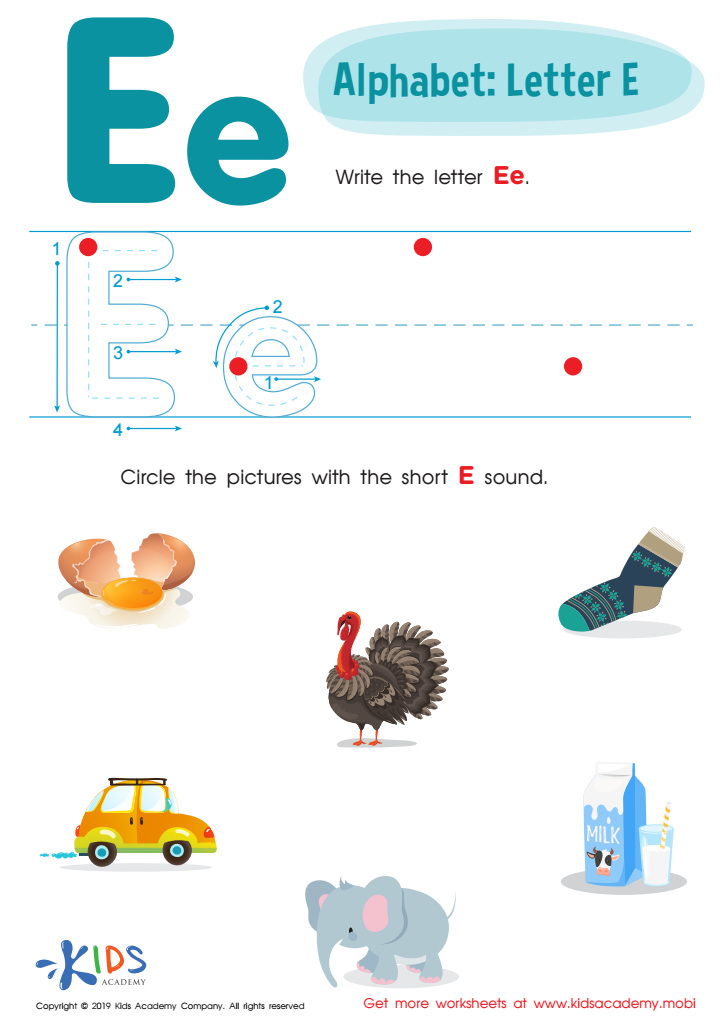
Letter E Tracing Worksheet
Students trace and write uppercase and lowercase letter E. They sound out "E" words, choosing those with short "E" sounds. Preschoolers identify the difference between the 'E' sounds in words like "egg" and "turkey." A tracing sheet helps them to understand.
Letter E Tracing Worksheet
Worksheet

Letter E Tracing Page
Trace and write the uppercase and lowercase "E" starting at the big red dot. Complete words to perfect letter writing. Egg and Elephant must be written carefully. More alphabet worksheets for kindergarten are available for download to spend more time with your children learning.
Letter E Tracing Page
Worksheet
Join Kids Academy for Free
Who is primarily going to use this learning content?






Fine motor skills are crucial for children aged 7-9, as they significantly impact their daily activities and overall development. At this age, children's ability to use small muscles in their hands and fingers is essential for performing various tasks, such as writing, cutting with scissors, and tying shoelaces. Proper development of these skills greatly enhances their ability to perform academically and in daily routines.
For parents and teachers, paying attention to fine motor skills can lead to early detection of any developmental delays or difficulties a child may have. The formation of the normal letter "E," for example, is a foundational aspect of handwriting. If a child struggles with properly forming letters, it might indicate problems with hand-eye coordination or muscular strength, which requires targeted intervention.
Encouraging activities that promote fine motor skills, like drawing, playing with clay, or using tweezers, can help children improve their dexterity and precision. This, in turn, boosts their confidence, as proficiency in these skills leads to better performance in school and daily tasks. In sum, emphasizing the development of fine motor skills is essential to ensuring that children build a strong foundation for future learning and practical abilities.