
Handwriting Skills Normal Letter Recognition Worksheets for Ages 7-9
5 filtered results
Difficulty Level
Grade
Age
-
From - To
Subject
Activity
Standards
Boost your child's handwriting proficiency with our "Handwriting Skills Normal Letter Recognition Worksheets" designed for ages 7-9. These engaging and educational printables focus on reinforcing letter recognition while enhancing fine motor skills. Perfect for in-class activities or home practice, our worksheets offer a variety of exercises to improve writing fluency and accuracy. Each sheet provides fun and interactive methods for tracing, writing, and identifying letters, promoting confidence and skill growth. Empower young learners with the tools to excel in handwriting, making writing tasks enjoyable and effective with our expertly crafted resources.
Favorites
With answer key
Interactive
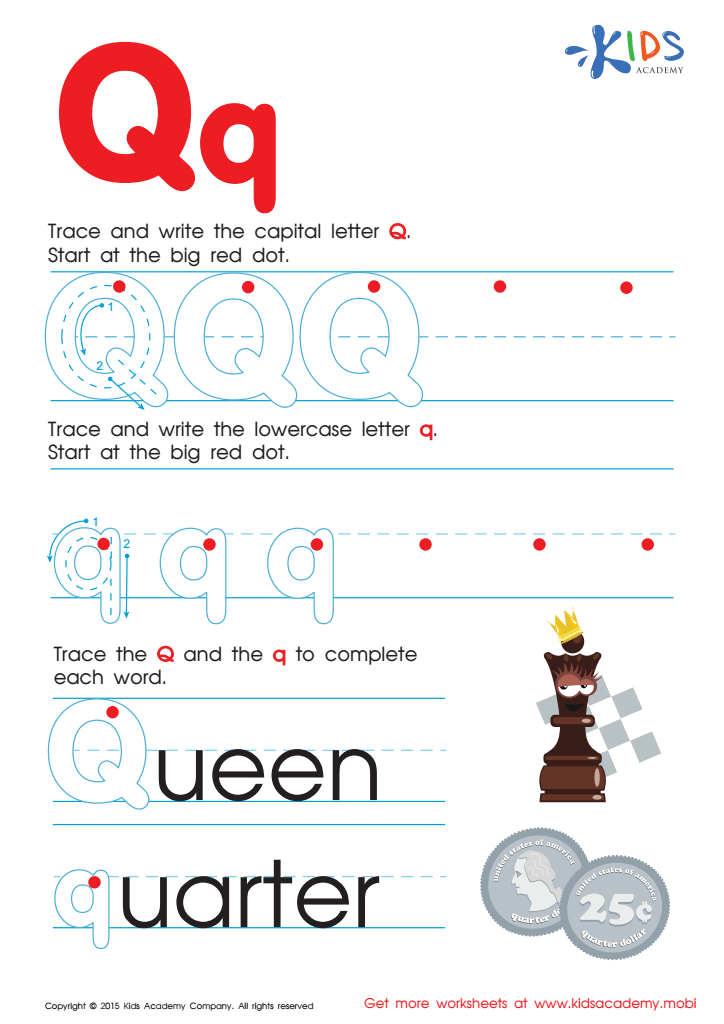
Letter Q Tracing Page
Learn the letter "Q"! Trace and write it a few times in upper and lowercase. Then help the Queen by writing her initial letter. Finally, write "quarters" and practice with more alphabet worksheets.
 Assign to My Students
Letter Q Tracing Page
Worksheet
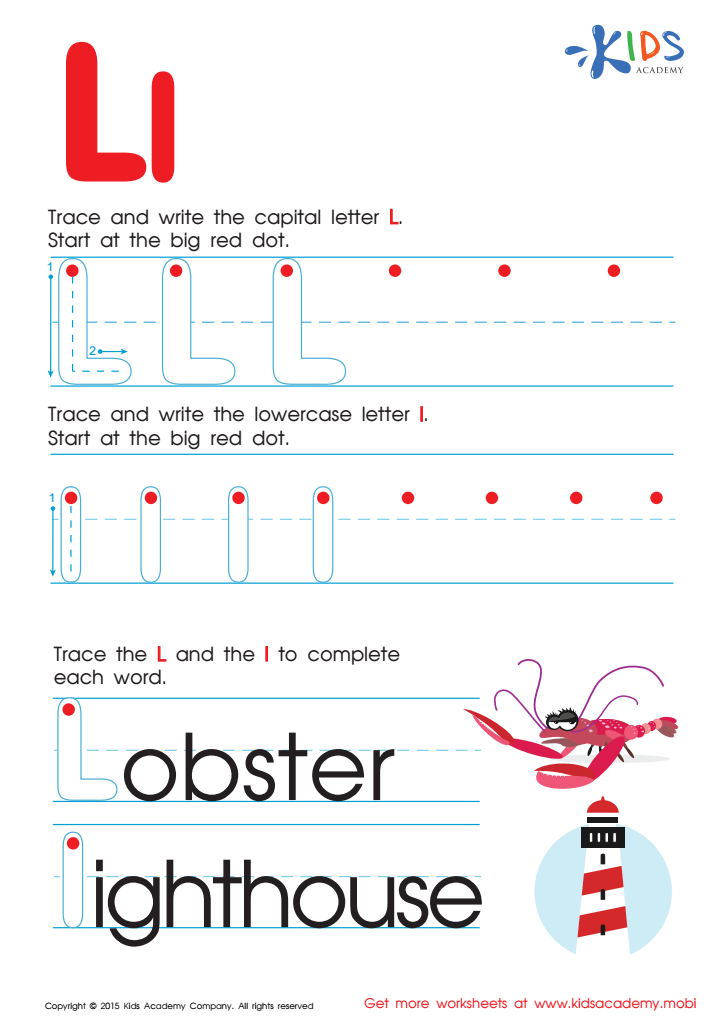
Letter L Tracing Page
Trace uppercase and lowercase letters to practice writing. Pay attention to the lowercase letters, like the "L", that are not as tall as an uppercase "I" or as short as a lowercase "i". Words like "lobster" and "lighthouse" are waiting to be completed. Enjoy!
Letter L Tracing Page
Worksheet
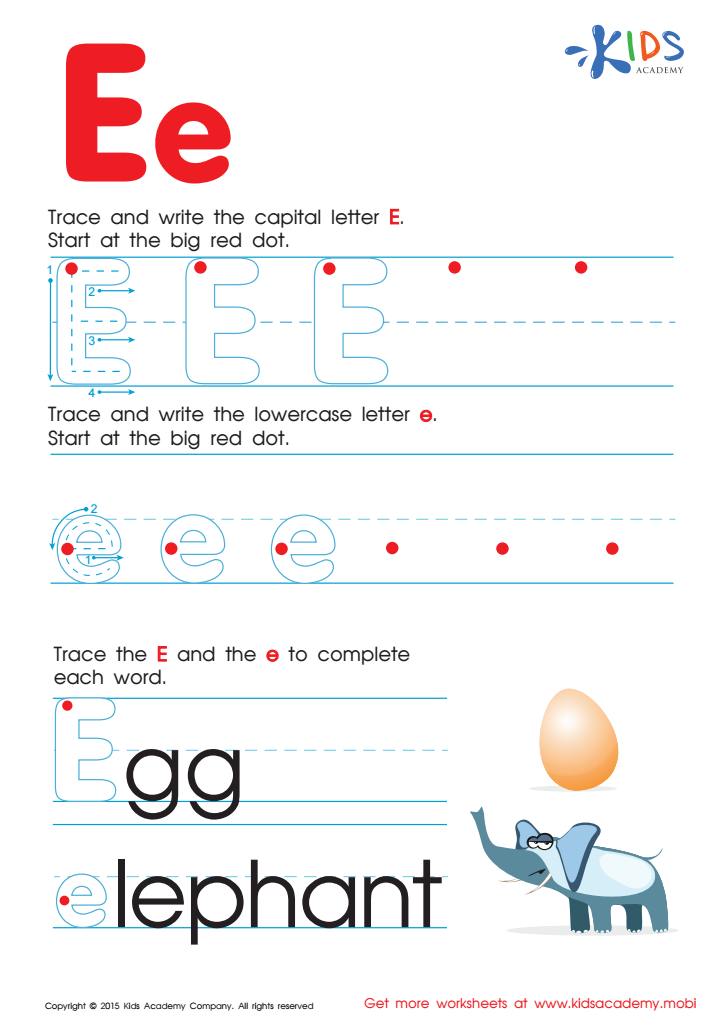
Letter E Tracing Page
Trace and write the uppercase and lowercase "E" starting at the big red dot. Complete words to perfect letter writing. Egg and Elephant must be written carefully. More alphabet worksheets for kindergarten are available for download to spend more time with your children learning.
Letter E Tracing Page
Worksheet
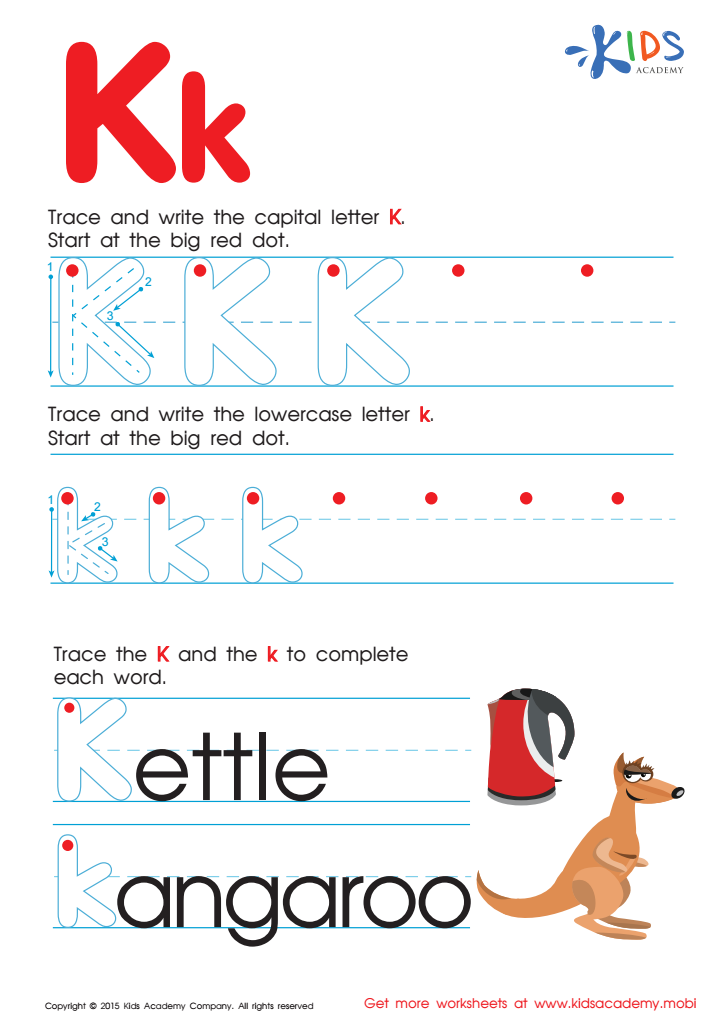
Letter K Tracing Page
Trace and write the letter K; start at the big red dot. Use it to complete words like "Kettle" and "Kangaroo". Visit Kids Academy for more free alphabet worksheets for kindergarten.
Letter K Tracing Page
Worksheet
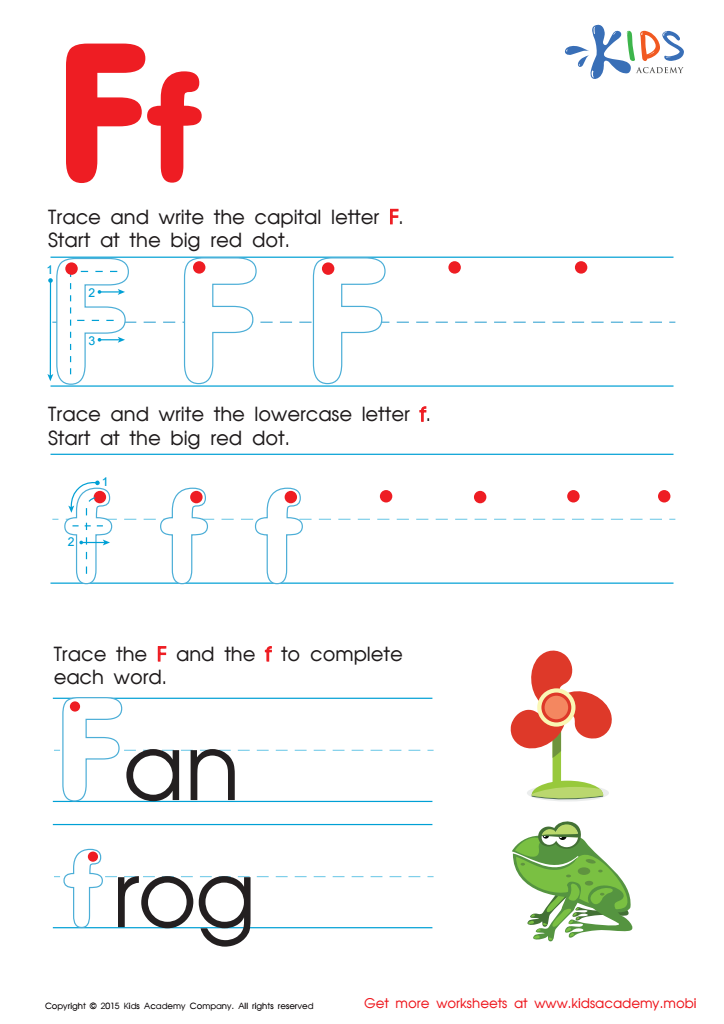
Letter F Tracing Page
Trace "F" with your pencil! Start at the red dot and draw lines — it's fun! Check it out — it looks great! Keep practicing to make it even better. Then, try completing words. Help out the broken fan and funny frog! Get free alphabet worksheets and activities for your kids. Come see our new tracing pages!
Letter F Tracing Page
Worksheet
Join Kids Academy for Free
Who is primarily going to use this learning content?








Handwriting skills and normal letter recognition for ages 7-9 are crucial for forming a solid academic foundation. At this age, children transition from 'learning to write' to 'writing to learn,' making clear handwriting vital for effective communication and learning. Proper handwriting helps children express their thoughts more efficiently, freeing cognitive resources to focus on higher-level activities like comprehension and problem-solving.
Proficiency in handwriting also plays a significant role in literacy development. Recognizing and writing letters correctly enhances children's reading skills, as forming letters improves their ability to recognize those letters when reading. Well-formed handwriting practices reinforce phonics lessons and aid in quicker word identification, critical for developing fluent reading, which is pivotal by third grade.
In addition, mastering legible handwriting boosts self-esteem and confidence. Children who write well often take greater pride in their work, fostering a positive attitude toward school and learning. This pride can lead to increased motivation and a greater willingness to tackle complex tasks.
Lastly, legible handwriting and letter recognition are essential for standardized testing and digital communication. Even as technology integrates into education, handwriting remains critical for note-taking and fast information processing, fundamental skills for lifelong learning.








