
Phonics practice Normal Letter Recognition Worksheets for Ages 7-9
3 filtered results
Difficulty Level
Grade
Age
-
From - To
Subject
Activity
Standards
Enhance your child's reading skills with our Phonics Practice Normal Letter Recognition Worksheets designed specifically for ages 7-9. These engaging worksheets combine phonics with letter recognition, helping young learners strengthen their understanding of letters and sound connections. The activities are crafted to boost their confidence in reading and writing, making learning fun and interactive. Ideal for both classroom and at-home use, these worksheets cater to various learning styles and offer a comprehensive approach to developing literacy skills. Explore our collection and watch your child flourish as they master letter recognition through exciting, educational activities. Start their reading journey today!
Favorites
With answer key
Interactive
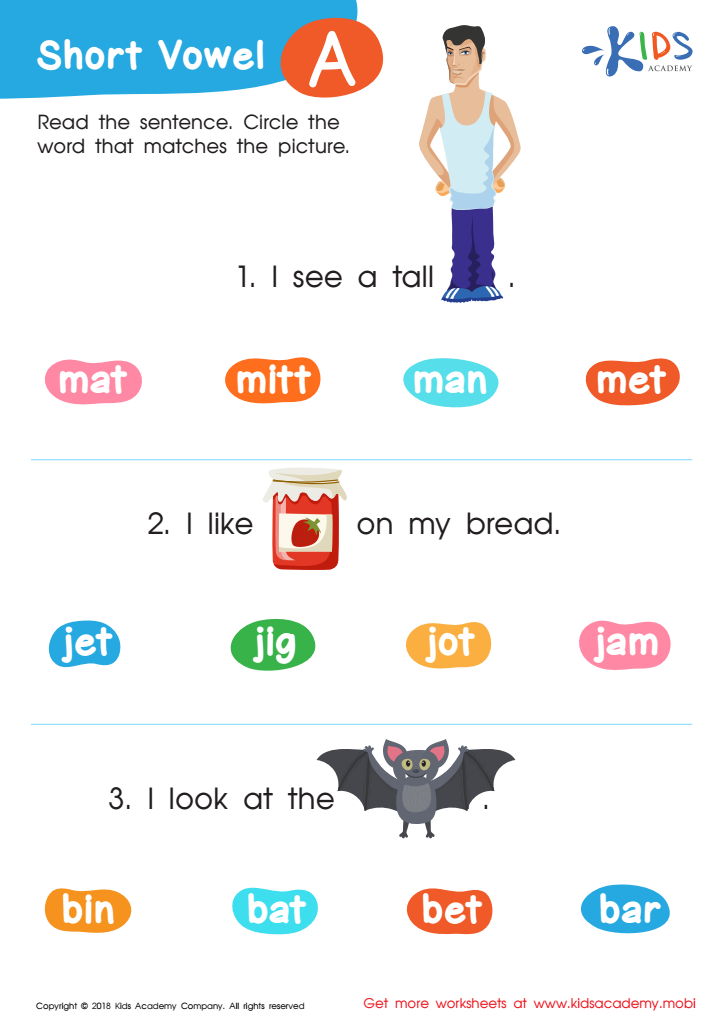
Short Vowel /a/ Worksheet
This free PDF helps new readers use sight words and pictures to read basic sentences. Then, they use accompanying word choices to find the correct word with the short a vowel sound. A key early reading skill, discriminating between short vowel sounds can be tricky in monosyllabic words, so use this PDF to help your reader reinforce it.
Short Vowel /a/ Worksheet
Worksheet
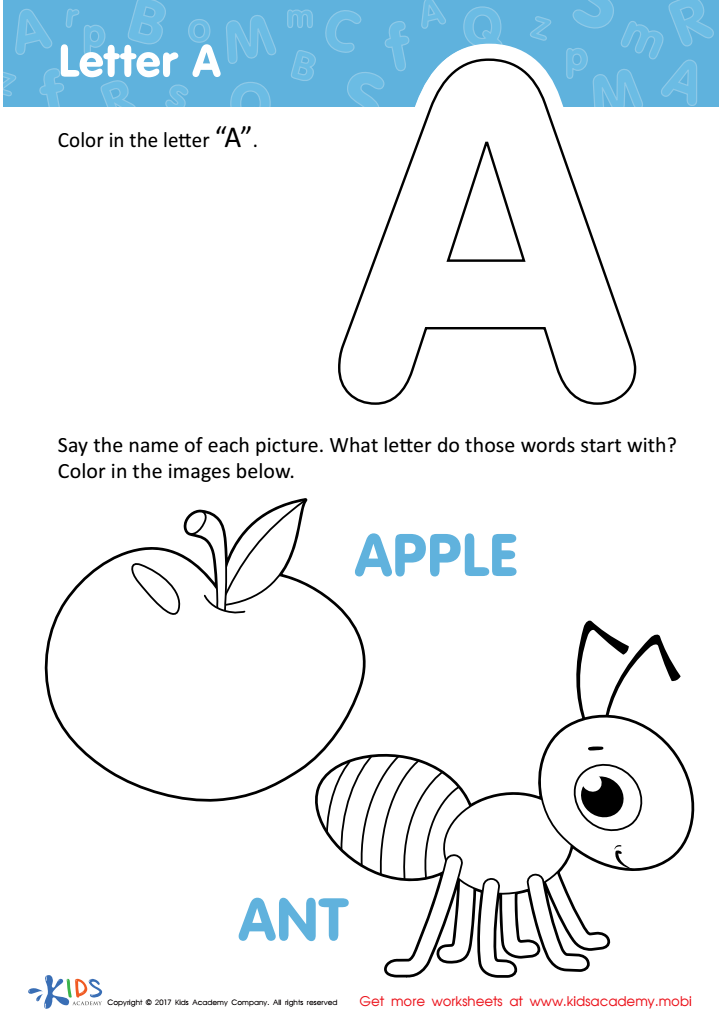
Letter A Coloring Sheet
This letter "A" coloring page is great for introducing kids to the alphabet! Let them exercise their creativity while they learn to recognize letters and sounds - it's a fun and easy way to help them get started.
Download (PDF)
 Assign to My Students
Assign to My Students
Letter A Coloring Sheet
Worksheet
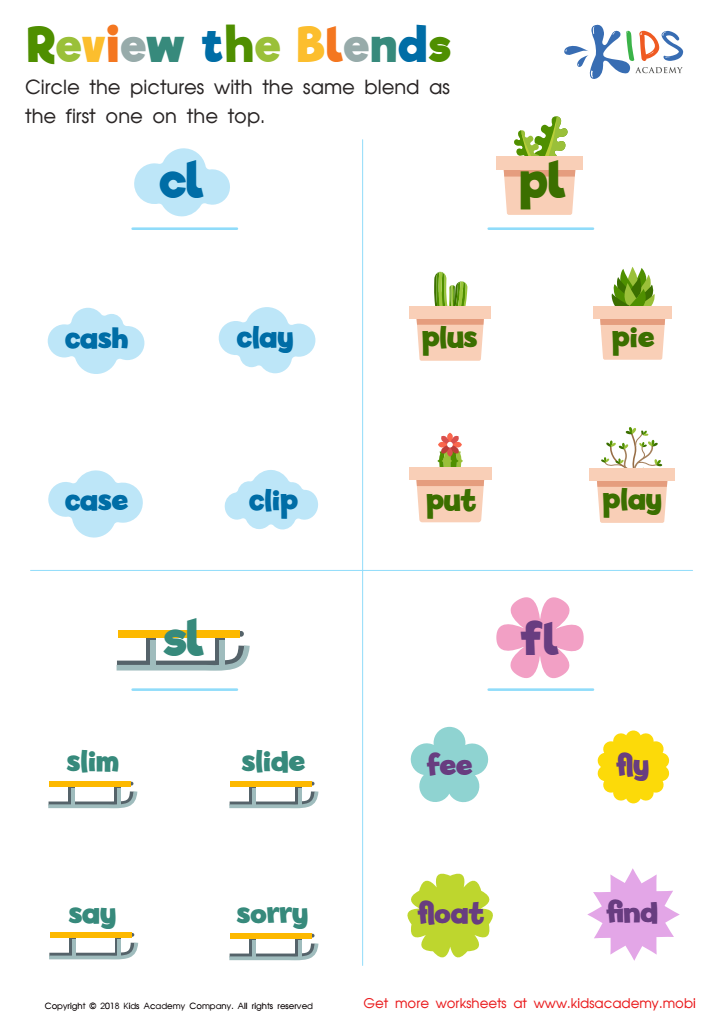
Review the Blends Worksheet
Consonant blends are two or three consonants that make a sound when pronounced together. L-blends like cl, bl, sl, fl and 3-letter blends like str, slp are common. This phonics worksheet helps early readers identify words containing two letter L-blends. Students must circle the words then read them aloud.
Review the Blends Worksheet
Worksheet
Join Kids Academy for Free
Who is primarily going to use this learning content?








Phonics practice and letter recognition are crucial components of literacy development for ages 7-9. At this stage, children are refining their reading and writing skills, making it essential for parents and teachers to prioritize phonics instruction.
Phonics provides children with the ability to decode words, which lays the foundation for fluent reading. As children learn the relationship between letters and sounds, they become empowered readers who can tackle age-appropriate texts confidently. Efficient word recognition aids comprehension; if students stumble over decoding, they’re less likely to grasp the meaning of the material.
Moreover, strong letter recognition skills help children in spelling and writing. As they encounter new vocabulary, a firm grasp on phonics allows them to use their knowledge to incorporate words into their own writing. This cultivates a love for language and supports their overall communication skills.
Lastly, struggling with phonics can lead to frustration and decreased motivation. Continuous phonics practice fosters a positive learning environment, encouraging perseverance. By supporting phonics and letter recognition, parents and teachers equip children with the critical tools needed for academic success and a lifelong appreciation for reading. Therefore, emphasizing phonics during these formative years is essential for fostering confident, capable learners.








