
Vocabulary enhancement Normal Long Vowels Worksheets for Ages 7-9
7 filtered results
Difficulty Level
Grade
Age
-
From - To
Subject
Activity
Standards
Enhance your child's vocabulary with our engaging Normal Long Vowels Worksheets designed for ages 7-9. These worksheets provide a fun and interactive way for young learners to explore long vowel sounds within various words. Each activity encourages word recognition and reinforces phonetic awareness, essential skills for reading and writing. Ideal for classroom use or at-home practice, these worksheets include various exercises like word searches, fill-in-the-blanks, and matching games. By using these resources, children will not only improve their vocabulary but also develop a deeper understanding of language patterns and meanings. Equip your child with strong language skills today!
Favorites
With answer key
Interactive
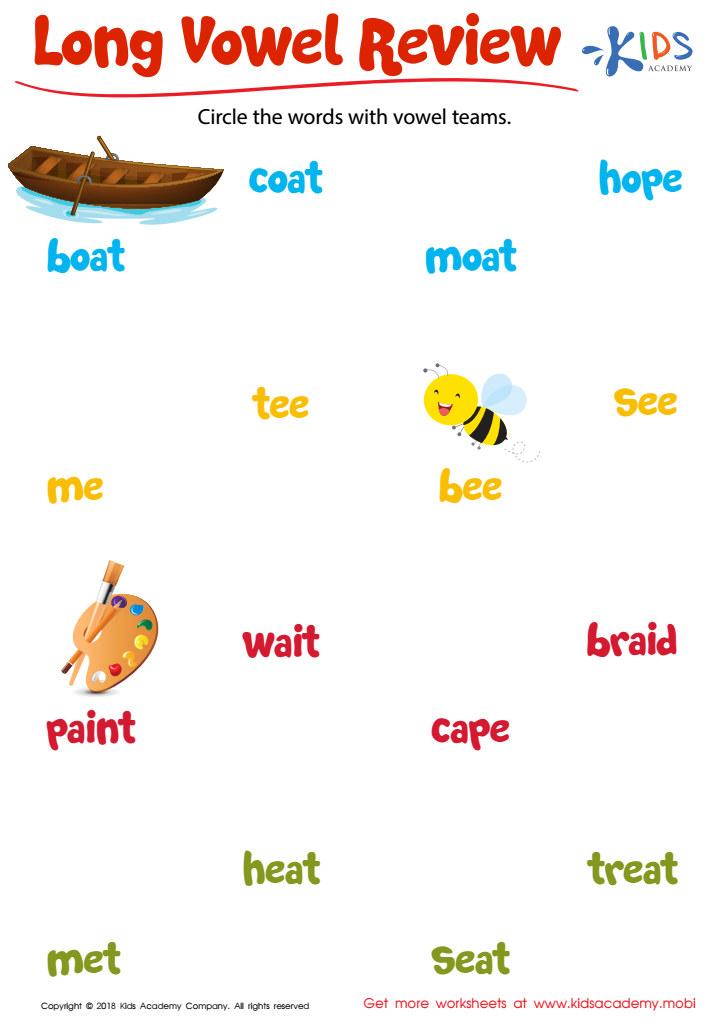
Long Vowel Review Worksheet
Vowel teams like "ea" and "ai" help us make words, and understanding these patterns aids emerging readers in becoming more fluent. This review worksheet has students finding words with vowel teams that make the long vowel sound, and helps them recognize high-frequency words.
 Assign to My Students
Long Vowel Review Worksheet
Worksheet
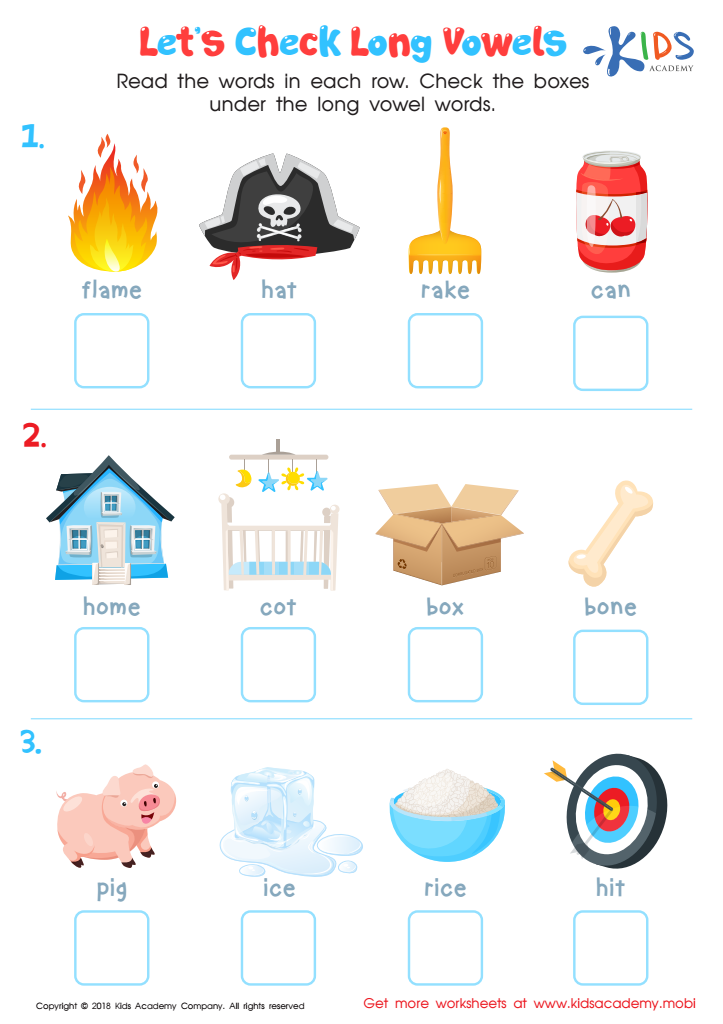
Let's Check Long Vowels: Assessment Worksheet
This worksheet helps your child identify objects and learn long vowel sounds. Ask them to say the names of the four objects in each row. Then, help them check the boxes to confirm they know the long vowel sounds. This will help them develop their reading skills.
Let's Check Long Vowels: Assessment Worksheet
Worksheet
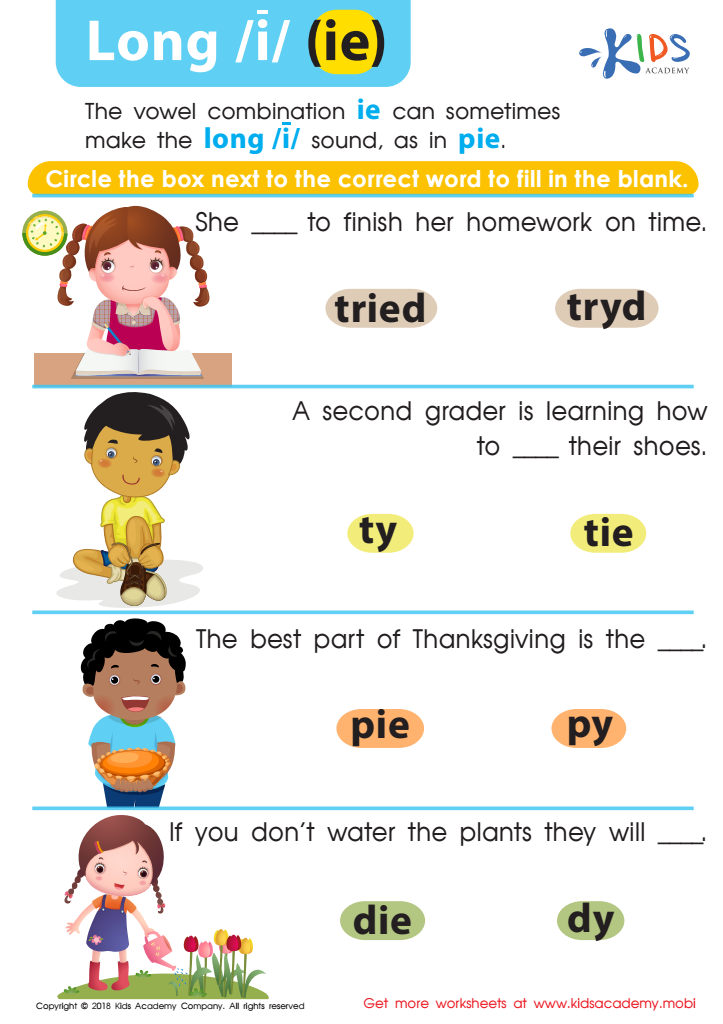
Reading: Long I and IE Worksheet
Have your child list words with the long /i/ sound (eg. 'pie'), and if needed, help them out with some examples. Read each word in the worksheet together and check their answer by having them circle the correct word.
Reading: Long I and IE Worksheet
Worksheet
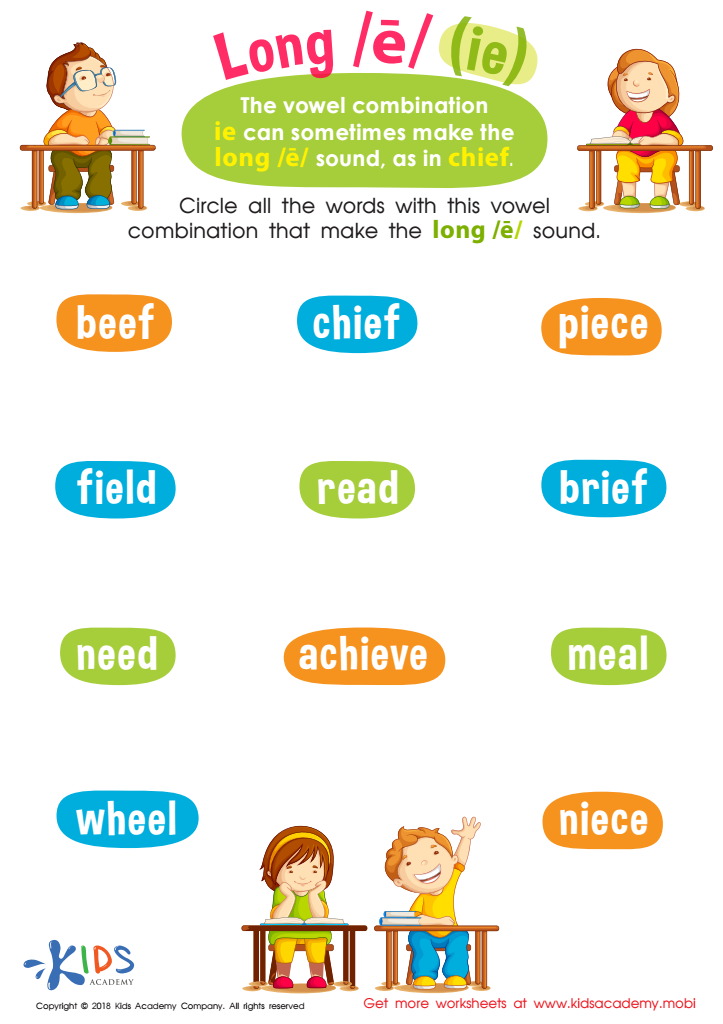
Reading: Long E and IE Worksheet
Ask your child to name some words with the long /e/ sound they hear every day. Then, read aloud all the words in the worksheet with them. Ask them to circle the words containing ie that make this sound.
Reading: Long E and IE Worksheet
Worksheet
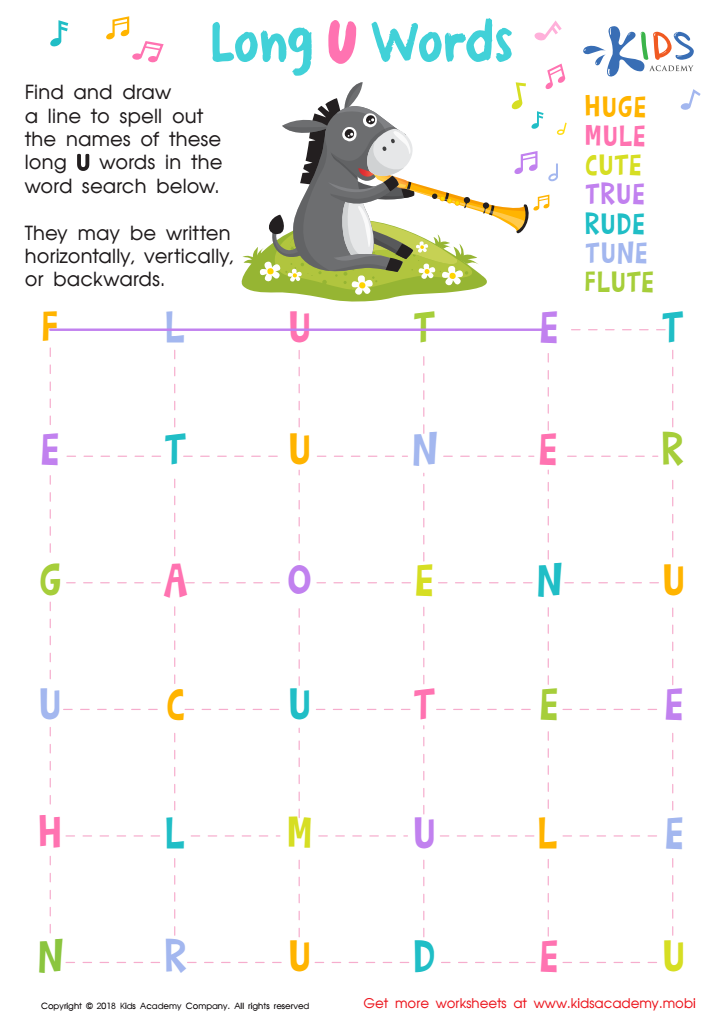
Long /u/ Words Worksheet
Your child needs to learn phonetics to enunciate and differentiate words. This fun worksheet encourages them to find and draw lines connecting the long 'U' words in the word search. Help them read the words on the right side of the picture, then look for them in the word search (horizontally, backwards or vertically).
Long /u/ Words Worksheet
Worksheet
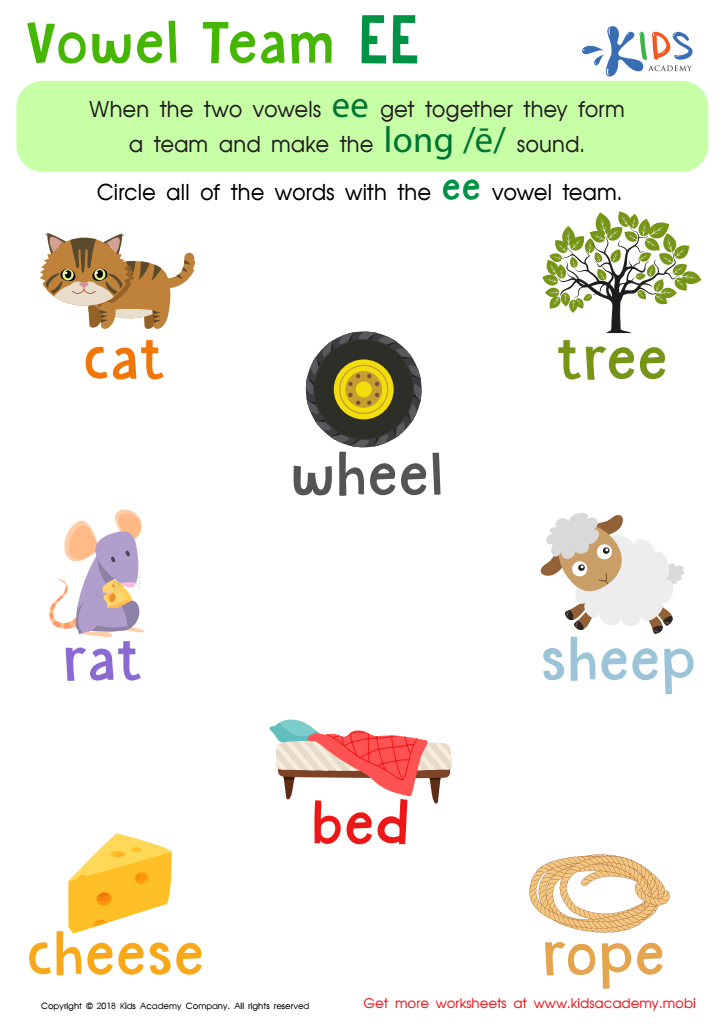
Reading: Vowel Team EE Worksheet
This worksheet is perfect for helping young learners master the /ee/ vowel team. It shows the first vowel with a long sound and the second vowel silent. It also provides pictures for unfamiliar words for readers of all levels. It's an ideal resource for teaching phonics skills.
Reading: Vowel Team EE Worksheet
Worksheet
Join Kids Academy for Free
Who is primarily going to use this learning content?



Vocabulary enhancement, particularly focusing on normal long vowels, is crucial for children aged 7-9 because it lays the foundational stones for effective communication, reading comprehension, and overall literacy development. At this age, children are transitioning from learning to read to reading to learn. A strong vocabulary enriches their understanding of text, allowing them to grasp complex ideas, follow narratives, and engage with various subjects more deeply.
Long vowels often represent critical phonics patterns, and recognizing them helps children decode words effectively. Proficient vocabulary skills increase students' confidence in using language, enabling them to express their thoughts and emotions clearly. This age group particularly benefits from such skills as they become more socially engaged and start to articulate their feelings and opinions.
Additionally, a robust vocabulary equips children with the tools to succeed academically, as a broader vocabulary aids in their ability to make connections between concepts in different subjects. When parents and teachers prioritize vocabulary enhancement focusing on normal long vowels, they provide children with lifelong skills that extend beyond classroom success, fostering enthusiastic readers and effective communicators who navigate their world with assurance.








