
Counting skills Normal Phonics Worksheets for Ages 7-9
3 filtered results
Difficulty Level
Grade
Age
-
From - To
Subject
Activity
Standards
Discover our Counting Skills Normal Phonics Worksheets tailored for children ages 7-9! These engaging worksheets blend phonics with essential counting exercises, helping young learners strengthen their numeracy and phonemic awareness simultaneously. Fun illustrations and interactive activities encourage kids to practice counting while enhancing their reading skills. Each worksheet is designed to reinforce foundational concepts and improve retention, making learning enjoyable and effective. Perfect for classroom use or at-home practice, our resources aim to foster a love for learning through play. Help your child master counting and phonics with our expertly crafted worksheets that are perfect for educational growth!
Favorites
With answer key
Interactive
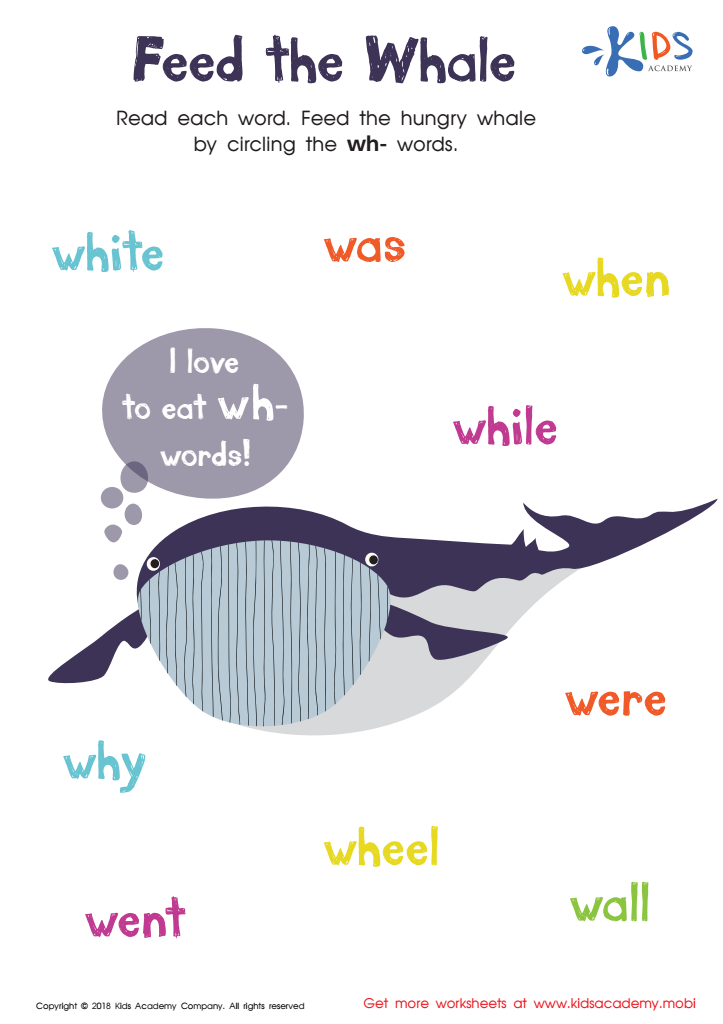
Feed the Whale Worksheet
Help your early reader build beginning consonant and blend recognition with this fun whale worksheet! They'll feed the whale wh- words, circle sight words, and build fine motor skills—all while discriminating between differently colored words.
 Assign to My Students
Feed the Whale Worksheet
Worksheet
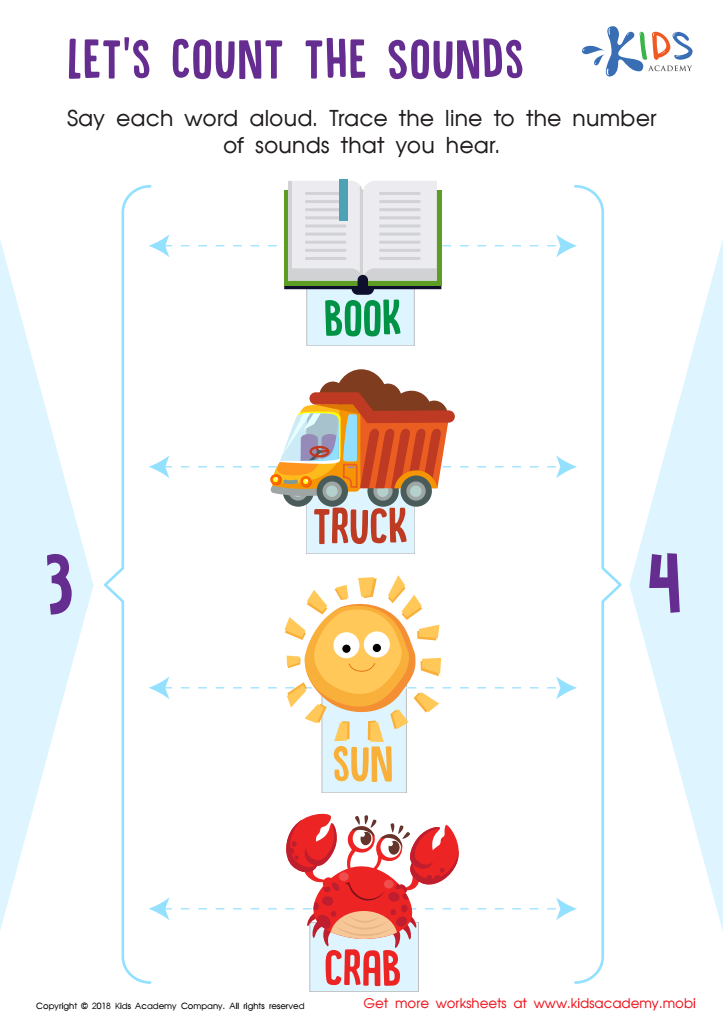
Let's Count the Sounds Worksheet
This bright and cheery traceable worksheet encourages children to practice auditory discrimination and phonological awareness. Using picture clues, they read each word and trace the line that represents the number of sounds heard. This builds decoding skills and helps them become successful readers.
Let's Count the Sounds Worksheet
Worksheet
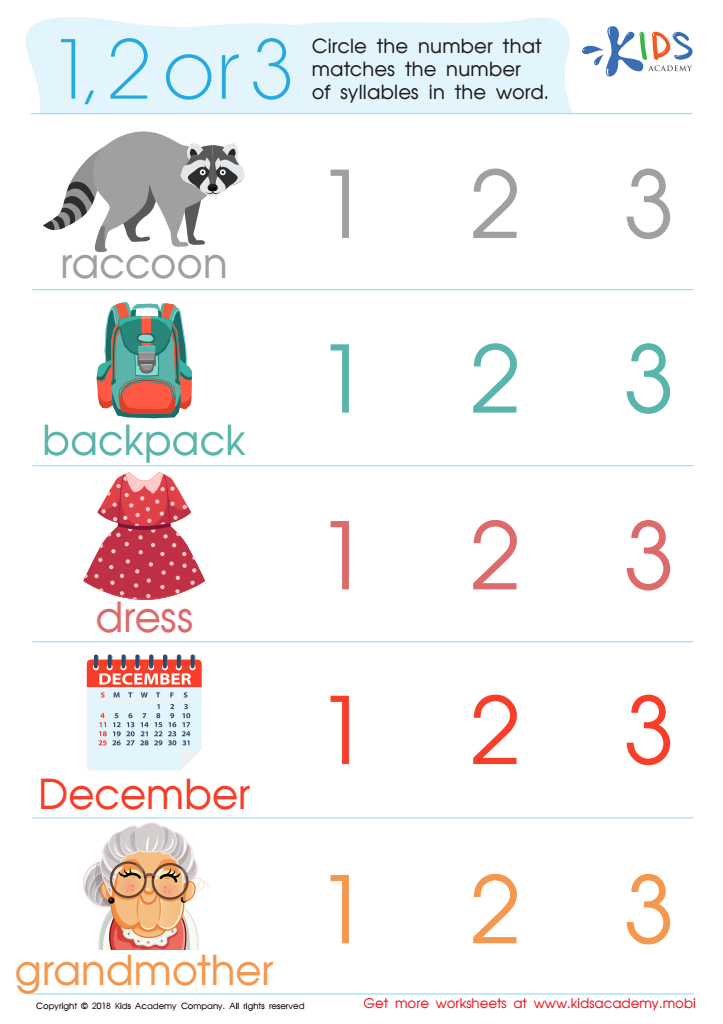
1, 2 or 3? Worksheet
Do your kids know about syllables? Test their understanding with this worksheet. Read the words aloud and ask them to say them with you. Help them circle the number that matches the number of syllables in each word. Perfect for expanding knowledge or testing how much they've already learned.
1, 2 or 3? Worksheet
Worksheet
Join Kids Academy for Free
Who is primarily going to use this learning content?








Counting skills and phonics are foundational components of early education that are crucial for children aged 7-9. First, strong counting skills not only enhance mathematical competence but also foster broader cognitive development. At this age, children transition from basic counting to understanding concepts like addition, subtraction, and even simple problem-solving. Mastery of counting helps students develop the ability to think logically and recognize patterns, essential skills for later academic success.
Similarly, phonics play a vital role in literacy development. Understanding the relationship between letters and sounds enables children to decode words, enhancing reading fluency and comprehension. As children read more easily, their vocabulary expands, and their ability to express themselves improves. This synergy between phonics and counting lays a foundation for essential life skills.
Furthermore, combining these two areas supports holistic development; cognitive skills from counting enhance analytical thinking and problem-solving, while phonics boosts language abilities that aid in communication. Parents and teachers should prioritize these skills to foster a love of learning, build confidence, and set children on a path to academic success. It is essential to create engaging and supportive environments where children can thrive in these areas during these crucial formative years.







