Reading Skills Normal Phonics Worksheets for Ages 7-9
5 filtered results
-
From - To
Enhance your child's reading abilities with our engaging Normal Phonics Worksheets, specially designed for ages 7-9. These worksheets focus on essential phonics skills, helping young learners decode words, improve pronunciation, and foster a love for reading. Each activity is carefully crafted to complement classroom learning, encouraging confidence and independence in reading. With a variety of interactive exercises, including matching sounds to letters and identifying phonetic patterns, your child will develop a strong foundation in literacy. Perfect for both homeschooling and classroom use, our worksheets make phonics practice fun and effective, ensuring a bright future for your budding reader!
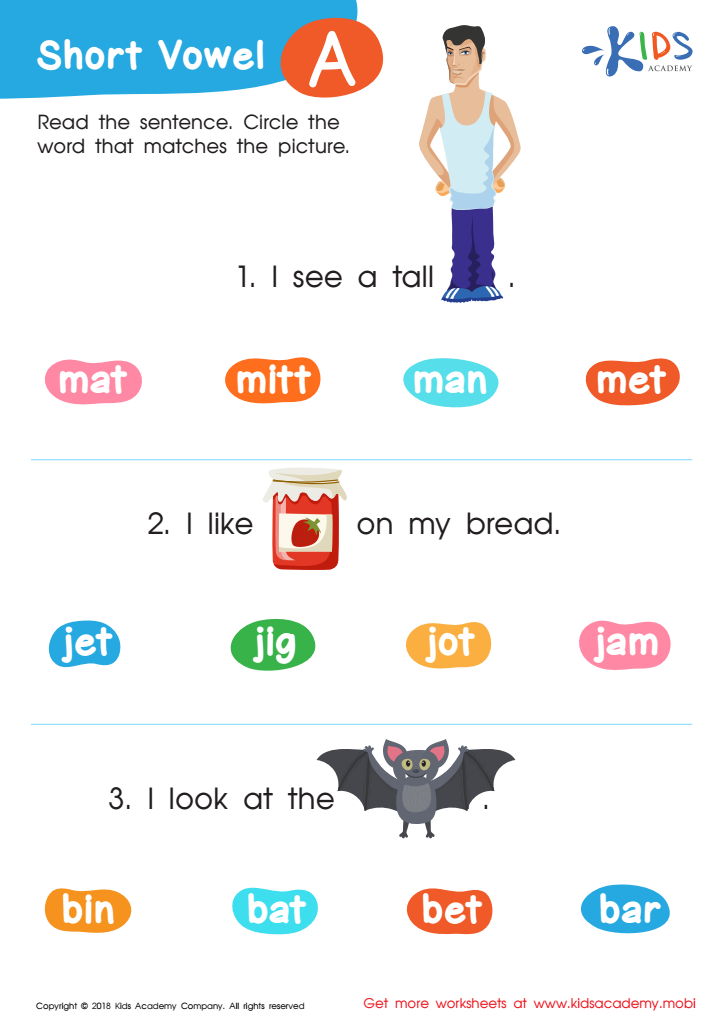
Short Vowel /a/ Worksheet
 Assign to My Students
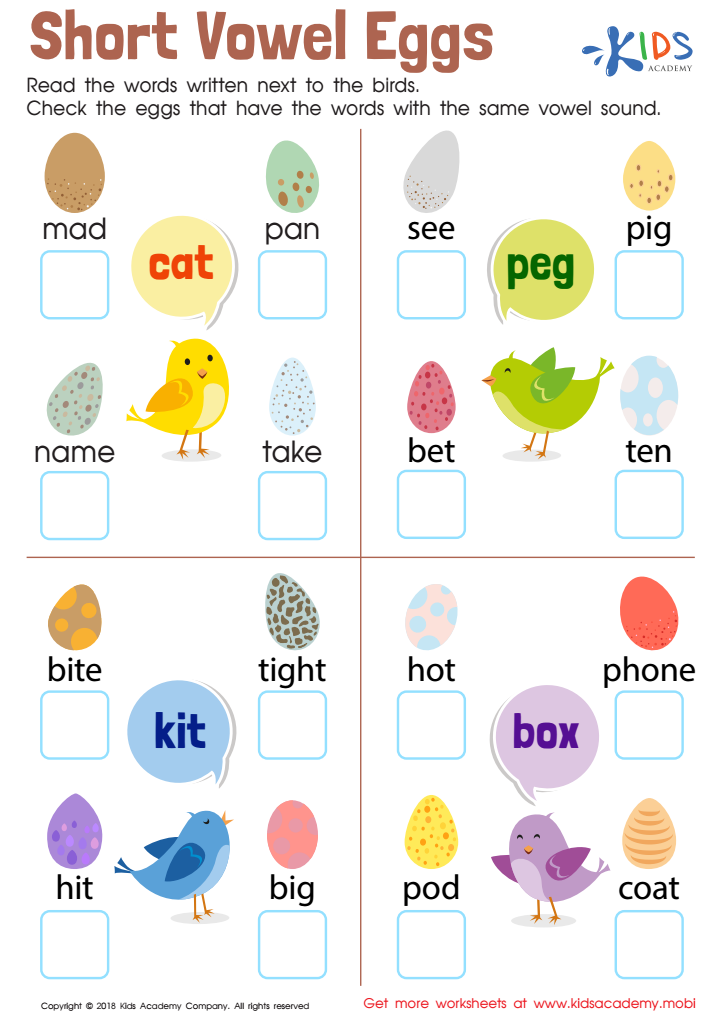
Short Vowel Eggs Worksheet
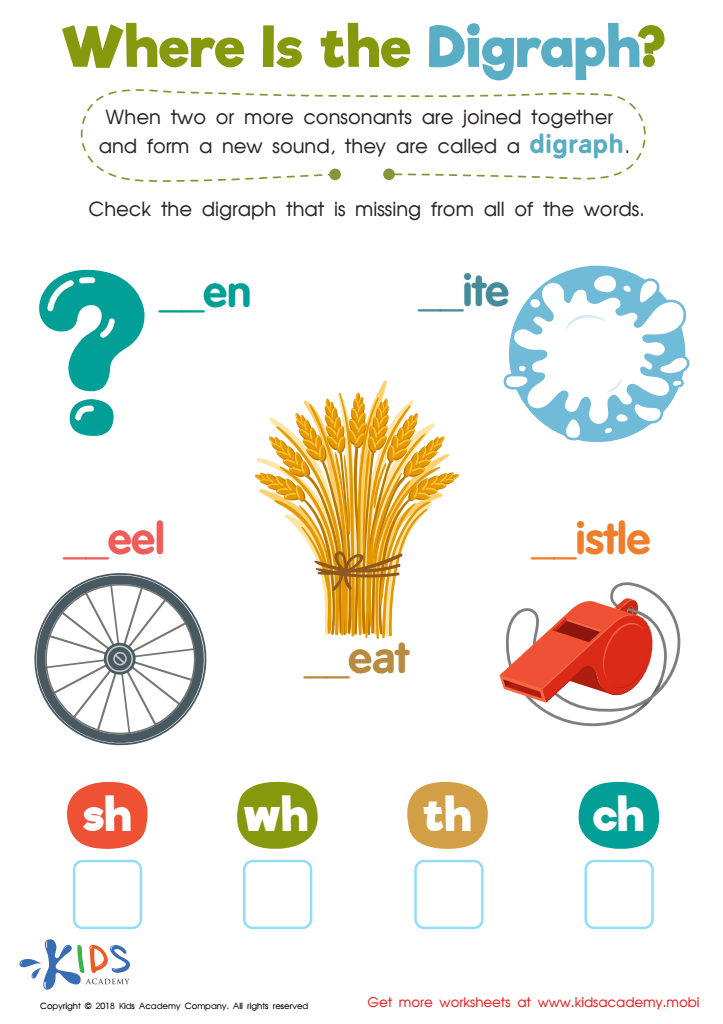
Where Is the Digraph? Worksheet
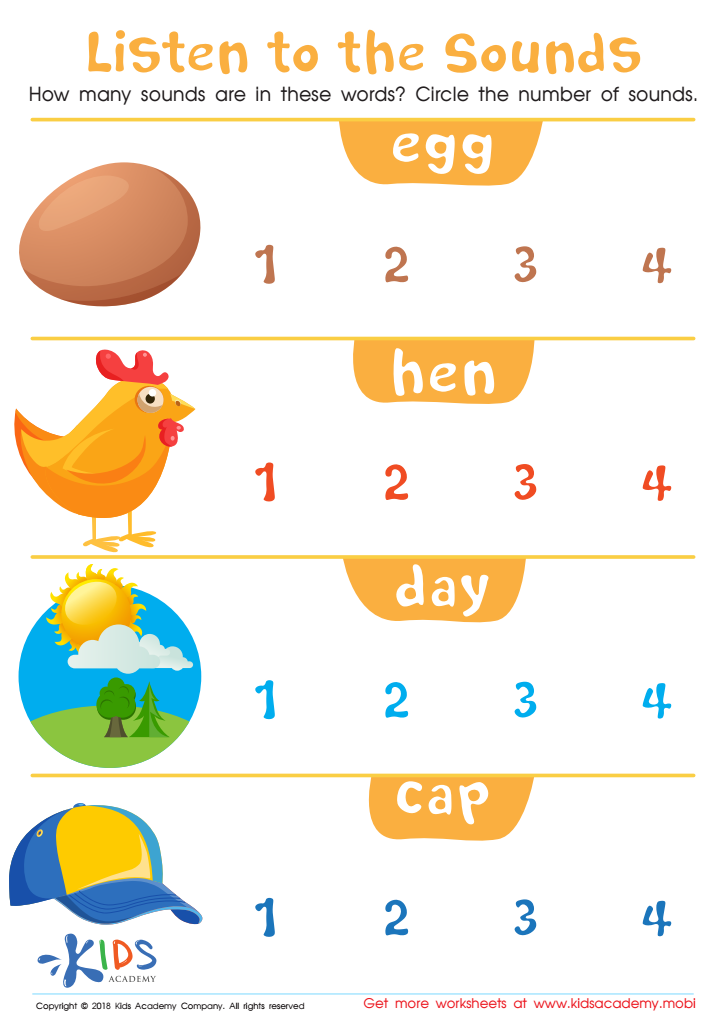
Listen to the Sounds Worksheet
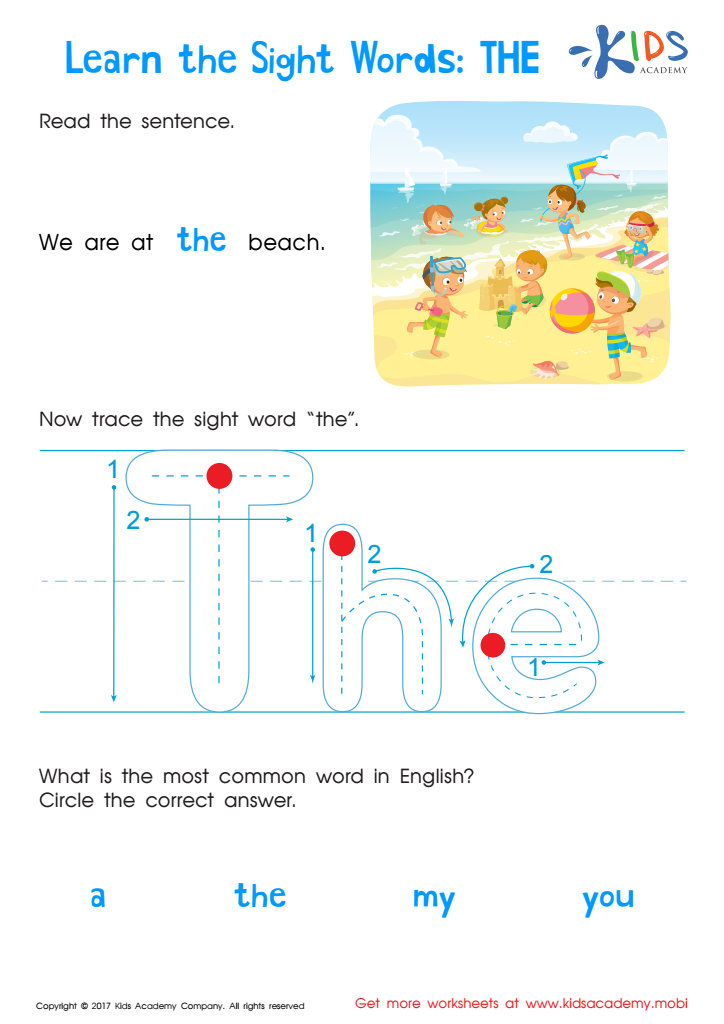
Sight Words: The Worksheet








Reading skills are crucial for children aged 7-9 as they transition from learning to read to reading to learn. At this stage, developing strong phonics skills is essential, as it helps children decode unfamiliar words, enhances their reading fluency, and supports overall literacy development. Phonics instruction enables children to understand the relationship between letters and sounds, making it easier for them to tackle more complex texts as they progress in school.
Parents and teachers should care about Normal Phonics during this age range because it lays a strong foundation for future academic success. Mastery of phonics not only leads to improved reading skills but also boosts comprehension, vocabulary, and writing abilities. Children who struggle with phonics often face challenges in later grades, which can lead to a lack of confidence and a disinterest in reading.
Moreover, instilling a love for reading during these formative years can foster critical thinking, creativity, and a lifelong passion for learning. By focusing on phonics, parents and teachers can ensure that children develop the skills they need for effective communication, enhanced academic performance, and overall personal growth. Supporting reading development at this pivotal age opens doors to a world of knowledge and opportunities for young learners.







