
Reading skills development Normal Phonics Worksheets for Ages 7-9
3 filtered results
Difficulty Level
Grade
Age
-
From - To
Subject
Activity
Standards
Discover our comprehensive "Normal Phonics Worksheets for Ages 7-9," designed to enhance your child's reading skills development. These engaging and age-appropriate worksheets encompass various phonics activities that help children decode words, improve their pronunciation, and boost their reading fluency. Our expertly crafted exercises include letter recognition, phonetic sounds, blending, and segmenting words, ensuring they gain a strong foundation in early literacy. Perfect for home or classroom use, these resources make learning to read enjoyable and effective. Support your child's journey to reading proficiency with our evidence-based and easy-to-use phonics worksheets from Kids Academy.
Favorites
With answer key
Interactive
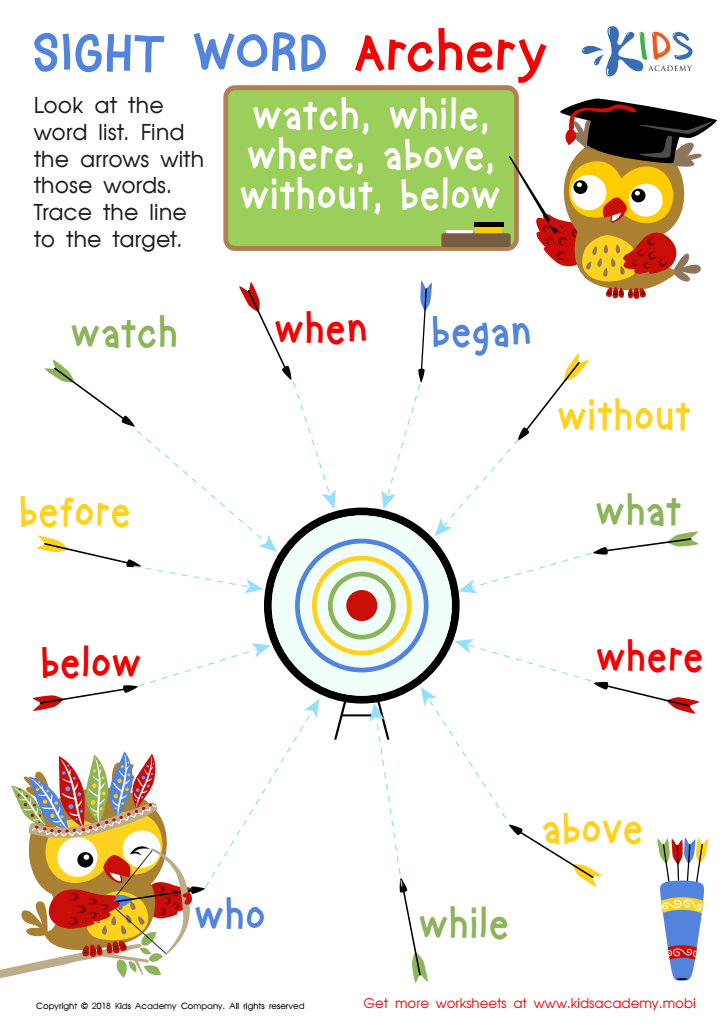
Sight Word Archery Worksheet
Read the words list with your kids, pointing at each one. Ask them to do the same. Help them find the arrows with those words and trace the line to the target in the centre.
 Assign to My Students
Sight Word Archery Worksheet
Worksheet
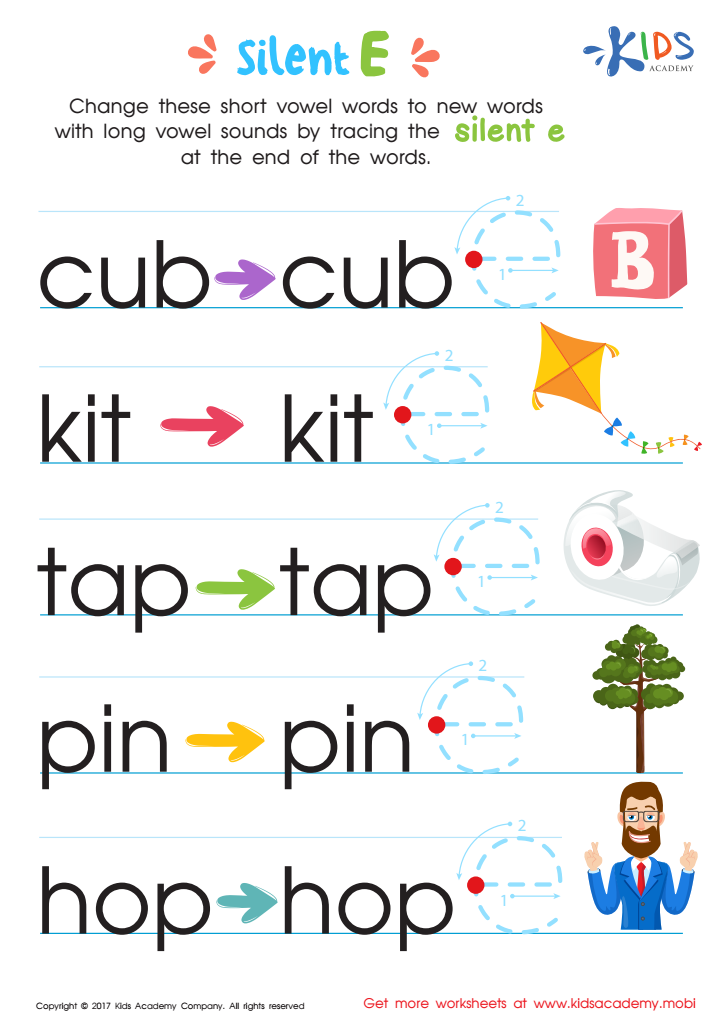
Silent E Words Worksheet
The letter e is amazing - it changes words without making a sound! Boost spelling and phonics with this Silent e worksheet from Kids Academy - fun and colorful!
Silent E Words Worksheet
Worksheet
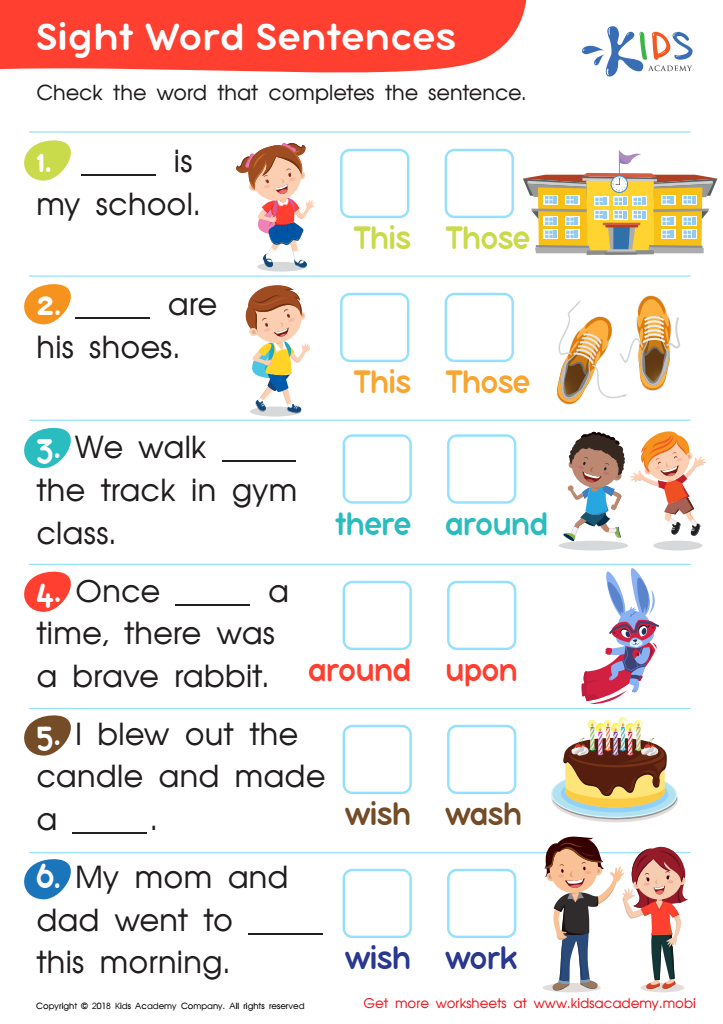
Sight Word Sentences Worksheet
Improve reading fluency! Have students fill in the blank with the correct sight word to complete sentences. Sight words are often tricky to decode - they don't follow phonics or spelling rules. To read smoothly, young learners must know them by memory. Use this printable and help kids master their sight words!
Sight Word Sentences Worksheet
Worksheet
Join Kids Academy for Free
Who is primarily going to use this learning content?








Reading skills development is a fundamental cornerstone of a child’s overall academic and personal growth, especially for ages 7-9. This stage is often referred to as the ‘learning to read’ phase, setting the foundation for future ‘reading to learn’ endeavors. Proficiency in reading enables children to access and absorb information across subjects, including math, science, and social studies.
Phonics, in particular, plays a crucial role in this developmental stage. As a method of teaching reading, phonics emphasizes the relationship between letters and their corresponding sounds, enabling children to decode new words independently. Strong phonics skills lead to improved word recognition, fluency, and ultimately, comprehension. When children are able to navigate the mechanics of reading confidently, they can focus more on understanding the content of a text, which aids in critical thinking and problem-solving.
Furthermore, reading proficiency positively impacts self-esteem and fosters a love of learning. Children who struggle with reading may face frustration and discouragement, affecting their confidence and engagement in school. Therefore, parents and teachers should prioritize and maintain a structured approach to reading and phonics instruction, understanding it not merely as an academic requirement but as an essential life skill that opens doors to endless opportunities and lifelong learning.







