Sight word recognition Normal Phonics Worksheets for Ages 7-9
4 filtered results
-
From - To
Enhance your child's reading skills with our Sight Word Recognition Normal Phonics Worksheets, specially designed for ages 7-9. These engaging worksheets provide practice in recognizing and mastering common sight words, a crucial skill for developing fluent reading. Our colorful and interactive activities keep young learners motivated while reinforcing phonics principles. With a variety of exercises, including matching, fill-in-the-blanks, and word searches, each worksheet caters to different learning styles. Suitable for both classroom and home use, these worksheets foster confidence and literacy in early readers. Explore our collection today and empower your child with the gift of reading!
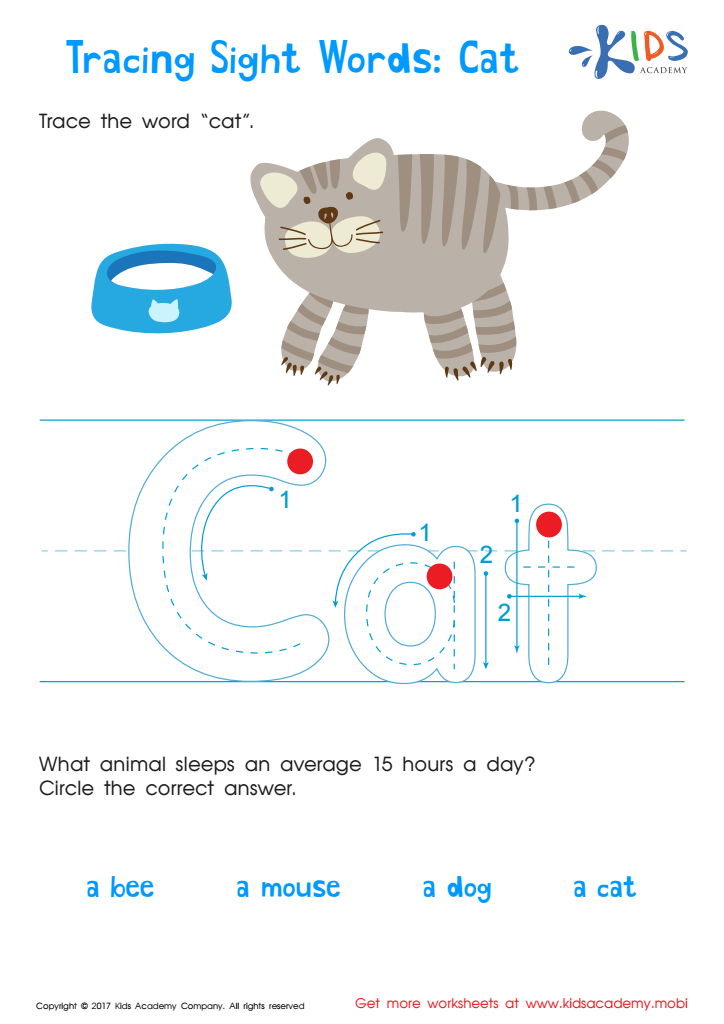
Cat Printable Sight Words Worksheet
 Assign to My Students
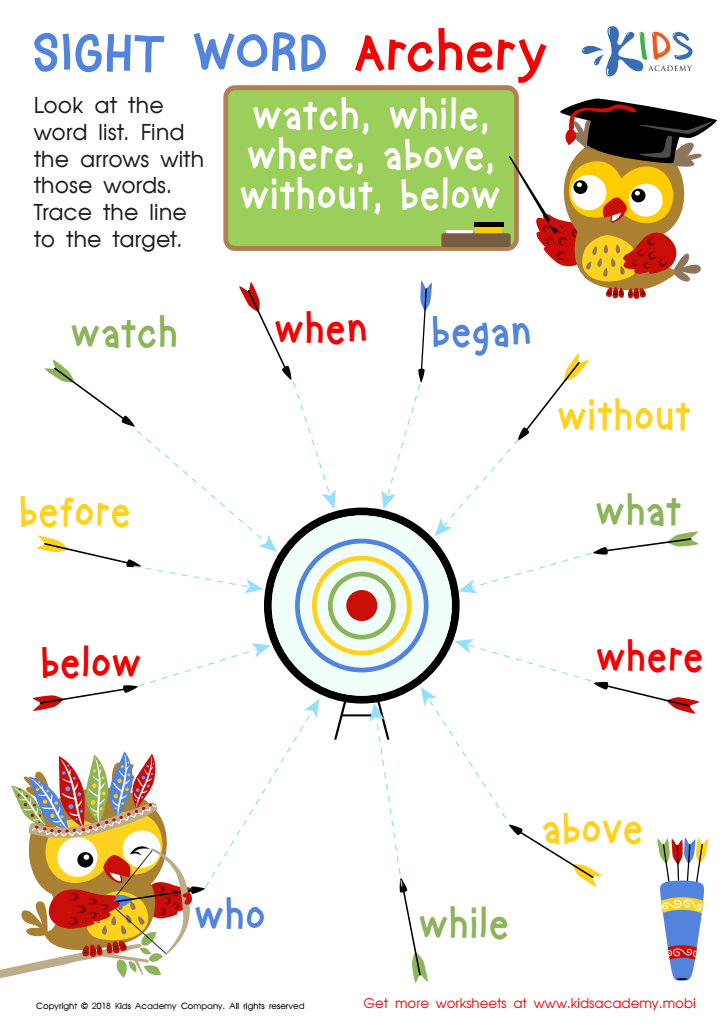
Sight Word Archery Worksheet
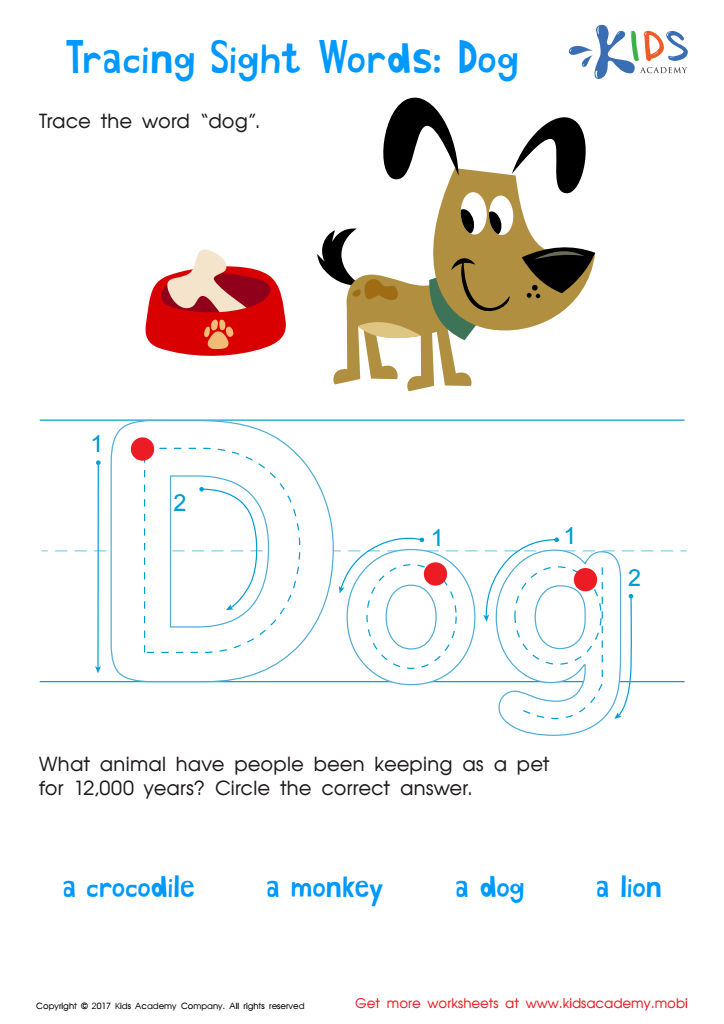
Dog Worksheet Sight Words Worksheet
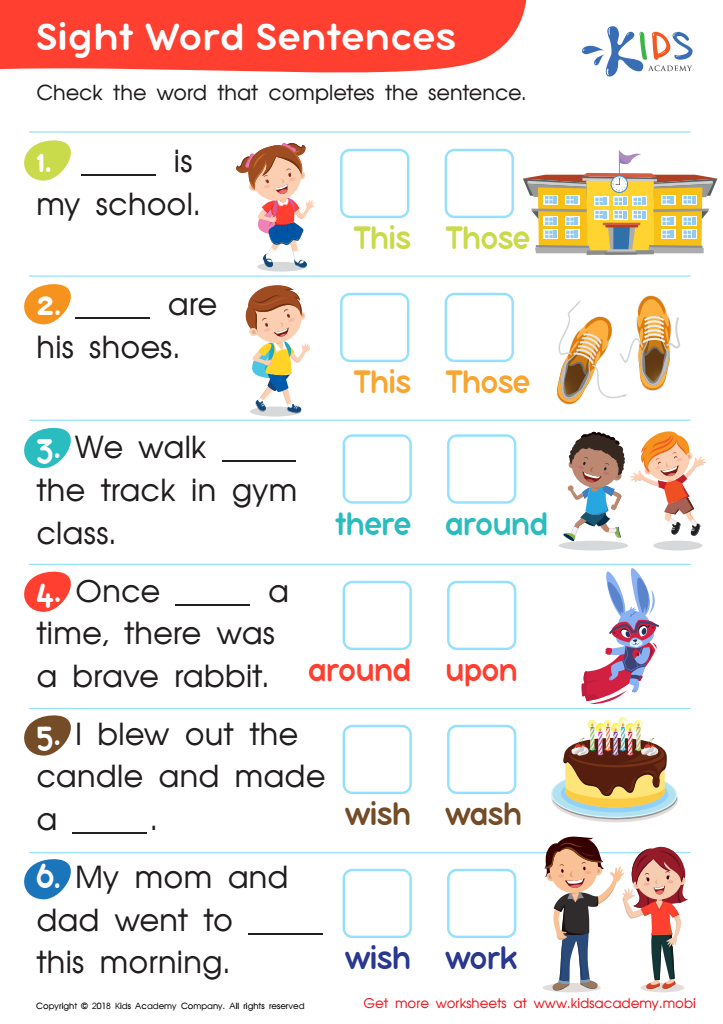
Sight Word Sentences Worksheet








Sight word recognition and phonics are fundamental components of reading development for children aged 7-9. During these critical years, children transition from basic reading skills to more complex comprehension abilities. Understanding sight words—frequently used words that children should recognize instantly—allows for smoother, more fluent reading. This fluency is essential for promoting confidence and enjoyment in reading, which can foster a lifelong love for literature.
On the other hand, phonics teaches children the relationship between letters and sounds. Mastery in phonics enables children to decode unfamiliar words, expanding their vocabulary and improving their comprehension skills. As they encounter more complex texts in school, a solid foundation in phonics will empower them to tackle challenges with greater ease.
For parents and teachers, investing time in these literacy strategies is vital. Early support helps identify struggling readers, enabling timely interventions to prevent future difficulties. Moreover, parents modeling and encouraging these skills at home can significantly enhance children's learning experiences. Ultimately, promoting sight word recognition and phonics equips children with tools essential for academic success, critical thinking, and effective communication, making it imperative for both educators and parents to prioritize these literacy skills.







