Filters

6 filtered results

Clear all filters
Favorites
With answer key
Interactive

6 filtered results

Difficulty Level

Grade


Discover our engaging Vocabulary Expansion Normal Short Vowels Worksheets designed specifically for children ages 7-9. These printable resources help young learners enhance their vocabulary skills through interactive activities focused on short vowel sounds. Each worksheet features fun and age-appropriate exercises that promote phonetic understanding and vocabulary development. By practicing with these worksheets, students will become more confident in identifying and using words with short vowels in their writing and speech. Transform your child's learning experience and watch them grow their vocabulary while enjoying the learning process! Visit our page to access a variety of printable worksheets tailored to your child's needs.

Check out this FREE Trial Lesson on Short Vowels for age 7-9!

Distinguish between Long U and Short U

Favorites
With answer key
Interactive
  • 7-9
  • Vocabulary expansion
  • Short Vowels
  • Normal
Reading: Long O and Short O Sounds Worksheet

Reading: Long O and Short O Sounds Worksheet

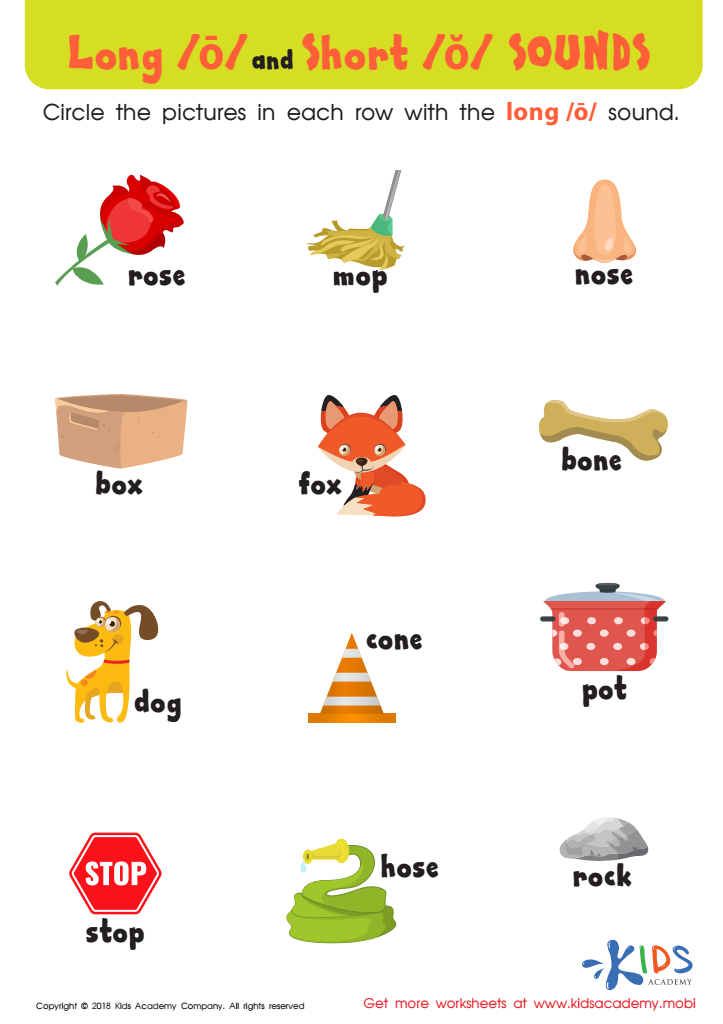
Students practice distinguishing between short and long O sounds with this reading worksheet. They sound out each word, then circle the pictures with the long O sound. Perfect for individual practice or to work with peers! Improves understanding of this skill and helps avoid confusion.
Reading: Long O and Short O Sounds Worksheet
Worksheet
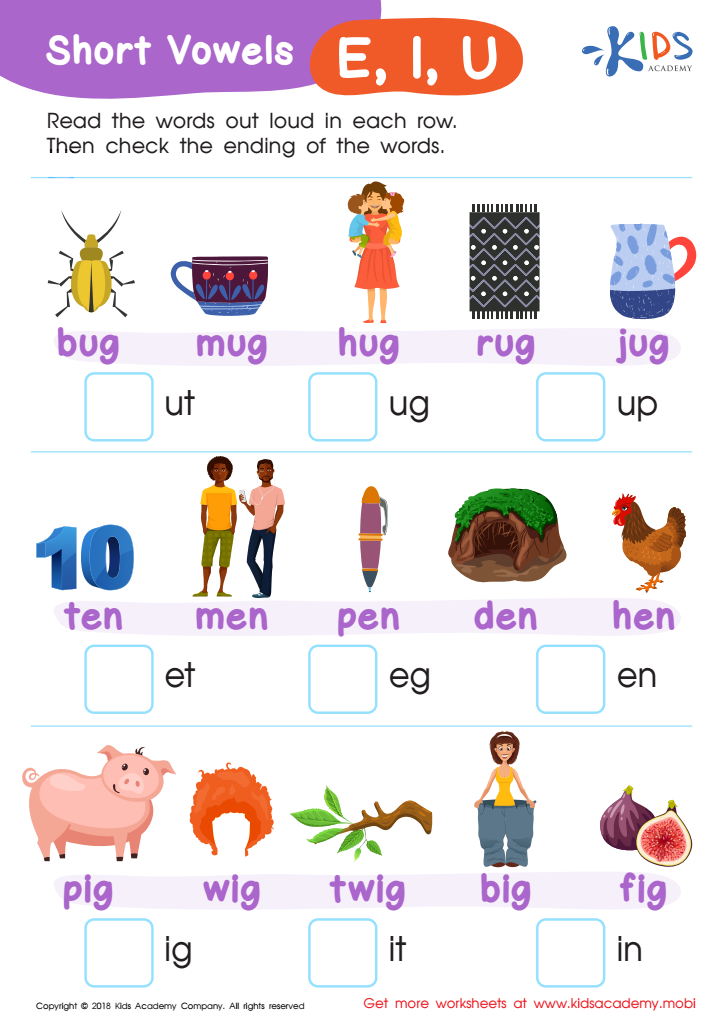
Short Vowels /e/, /i/, and /u/ Worksheet

Short Vowels /e/, /i/, and /u/ Worksheet

Your emergent reader can have fun while practicing their short vowel sounds with this free, brightly colored worksheet. They'll identify one-syllable words by their pictures, then match the correct ending for each. They'll gain an understanding of how short vowel sounds vary in closed syllables with different endings, without even realizing it!
Short Vowels /e/, /i/, and /u/ Worksheet
Worksheet
Long and Short U Worksheet

Long and Short U Worksheet

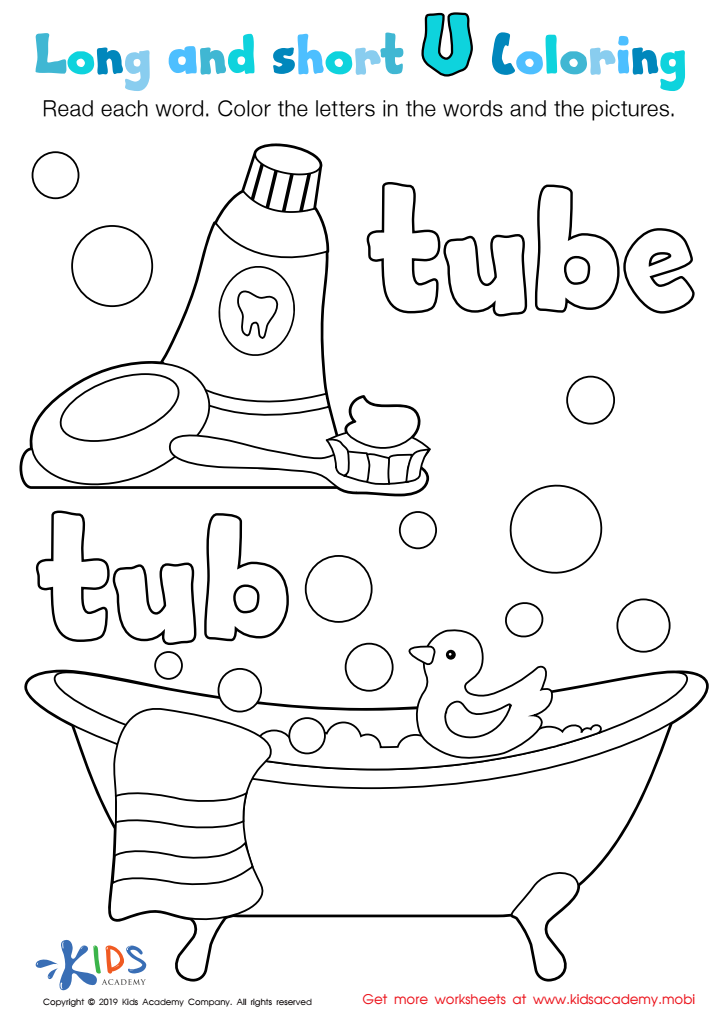
Revised: Spice up your lesson on long and short vowels with this fun printout! Kids read the words "tube" and "tub," then reinforce the sound by coloring in the words and pictures. It's a great way to make phonics class enjoyable!
Download (PDF)
Assign to My Students
Long and Short U Worksheet
Worksheet
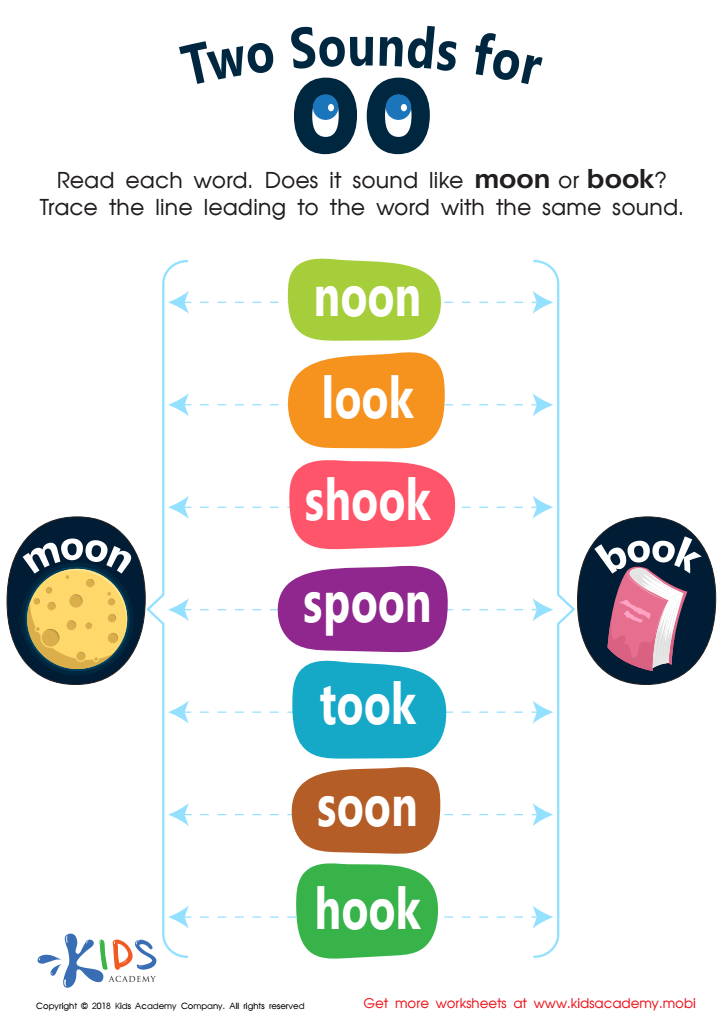
Two Sounds for OO Worksheet

Two Sounds for OO Worksheet

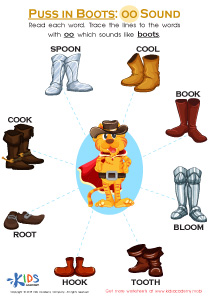
This worksheet helps kids learn the different sounds of the -oo digraph. They match words based on whether they sound like moon or book, plus practice fine motor skills tracing lines. Fun and educational!
Two Sounds for OO Worksheet
Worksheet
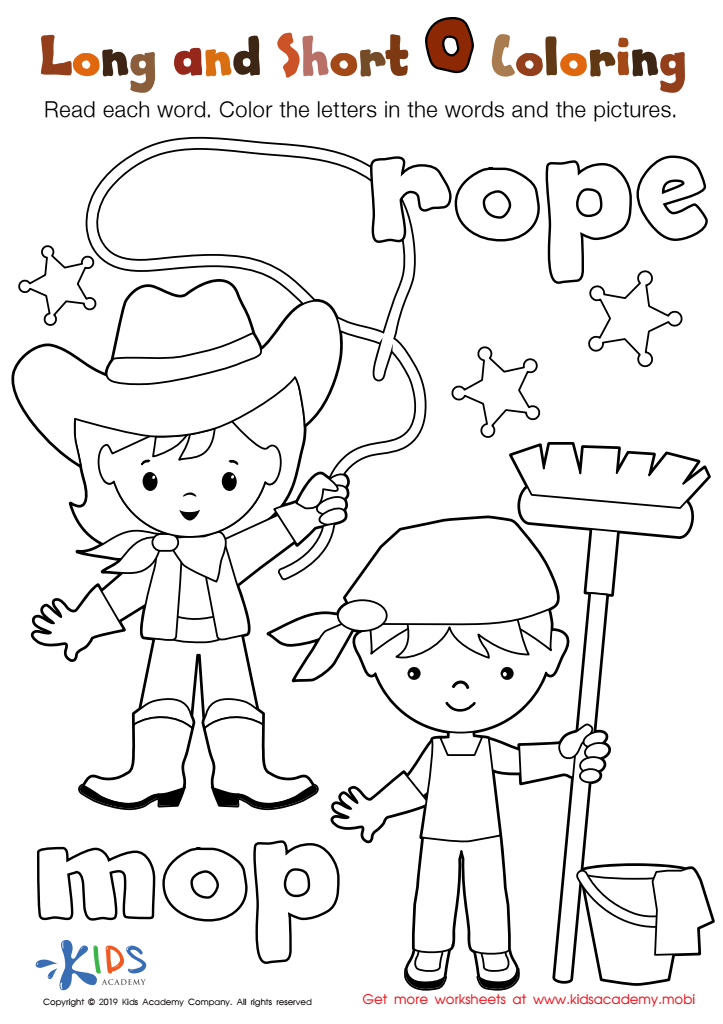
Long and Short O Worksheet

Long and Short O Worksheet

Help your students recognize the difference between long and short «Os» with this fun printout. Let them read and color-in "rope" and "mop" simultaneously. Listen to the different sounds, then color the words and pictures. Great for classes, it'll make your phonics lesson memorable and enjoyable.
Download (PDF)
Assign to My Students
Long and Short O Worksheet
Worksheet
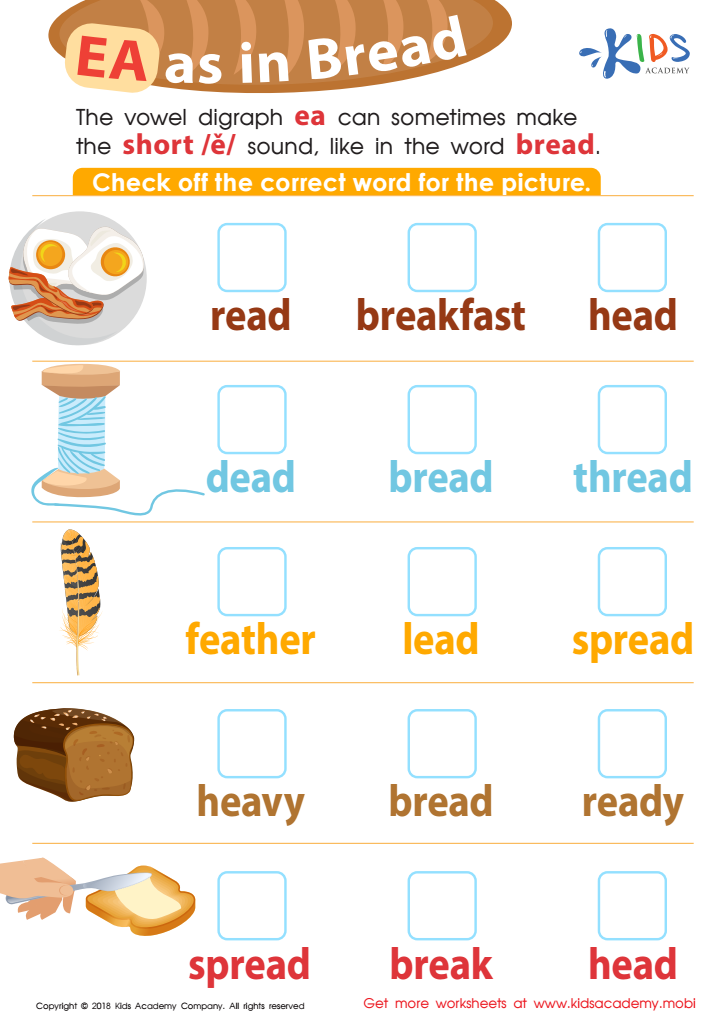
Reading: EA as in Bread Worksheet

Reading: EA as in Bread Worksheet

The vowel digraph ea can be read in two ways. Examples of the long sound are "read" and "lead"; examples of the short sound are "bread" and "head". Ask your kids to give you more examples and then have them check off the correct word for the pictures on this worksheet. This will help them understand the ea sound.
Reading: EA as in Bread Worksheet
Worksheet


Parents and teachers should prioritize vocabulary expansion, focusing on normal short vowels for children aged 7-9, as this developmental stage is critical for language acquisition and literacy. At this age, children are transitioning from basic phonics to reading more complex texts, and a robust vocabulary serves as the foundation for comprehension and expression. By enhancing their understanding of short vowel sounds—like in "cat," "bed," "hit," "not," and "sun"—children improve their decoding skills and reading fluency.

A solid grasp of vocabulary also aids in their ability to articulate thoughts and engage in conversations, thus fostering communication skills vital for academic and social success. Furthermore, vocabulary knowledge is linked to other academic areas, including writing, mathematics, and critical thinking. Introducing engaging activities and games that center around short vowels can enhance motivation and retention.

Additionally, a rich vocabulary contributes to building confidence in young learners, encouraging them to express themselves more freely in both oral and written forms. Overall, investing time in vocabulary expansion for these early grades lays the groundwork for a child’s future academic achievement and interpersonal relationships. Thus, parents and teachers play a crucial role in nurturing this essential skill set.