Vocabulary expansion Normal Vowels and Consonants Worksheets for Ages 7-9
6 filtered results
-
From - To
Our "Vocabulary Expansion Normal Vowels and Consonants Worksheets for Ages 7-9" are designed to engage young learners while boosting their reading and writing skills. These fun and interactive worksheets help children distinguish between vowels and consonants, enhancing their understanding of word formation and pronunciation. Tailored for ages 7-9, each printable is carefully crafted to expand students' vocabulary through a variety of activities, including word matching, fill-in-the-blanks, and word sorting. Ideal for classroom use or at-home learning, these resources support foundational language skills, setting children on a path to academic success. Download now to inspire and educate your young learners!
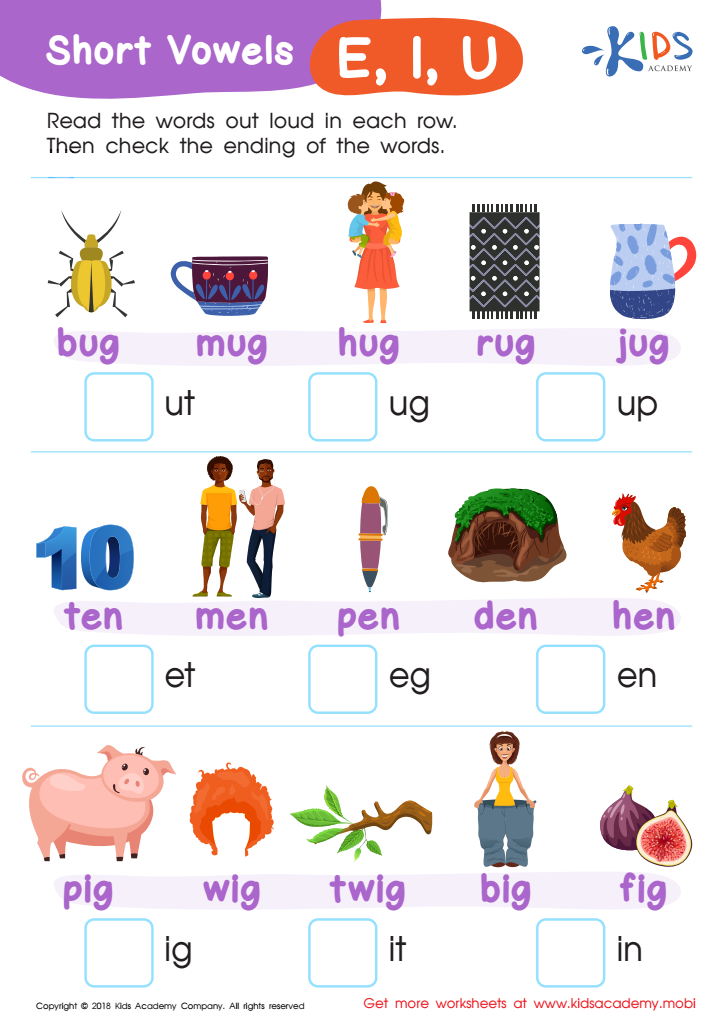
Short Vowels /e/, /i/, and /u/ Worksheet
 Assign to My Students
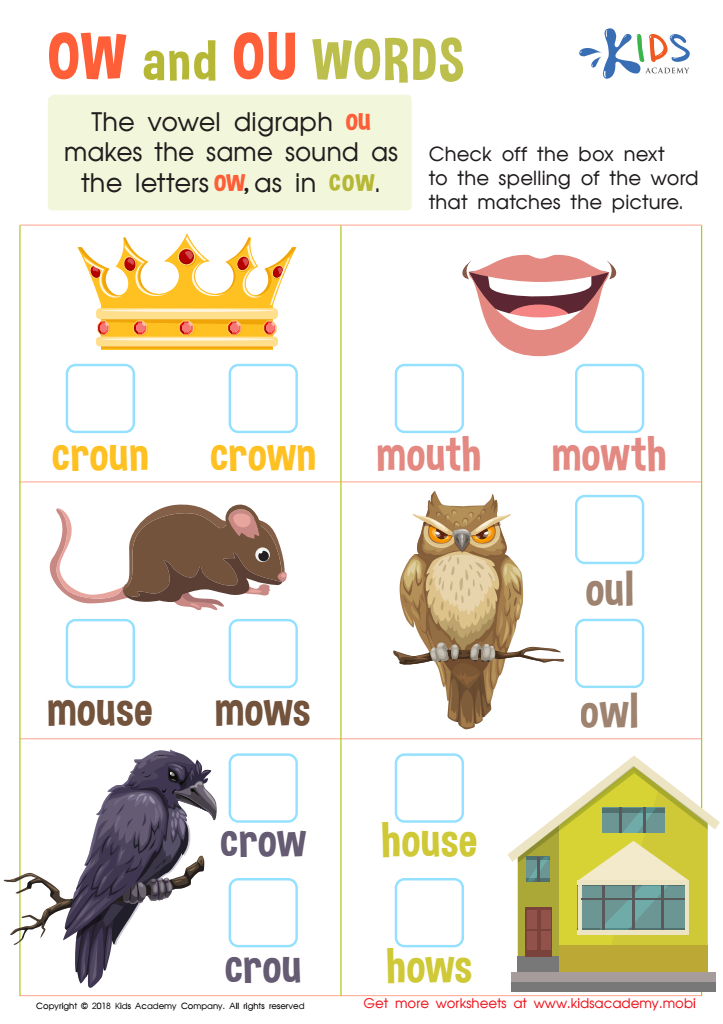
Reading: OW and OU Words Worksheet
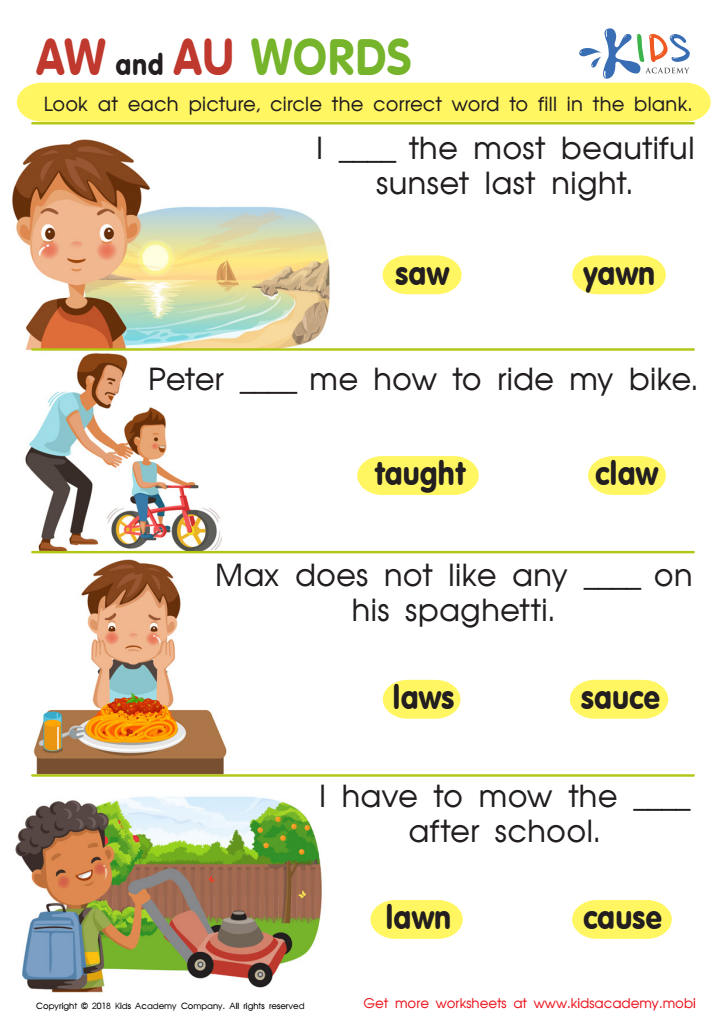
Reading: AW and AU Words Worksheet
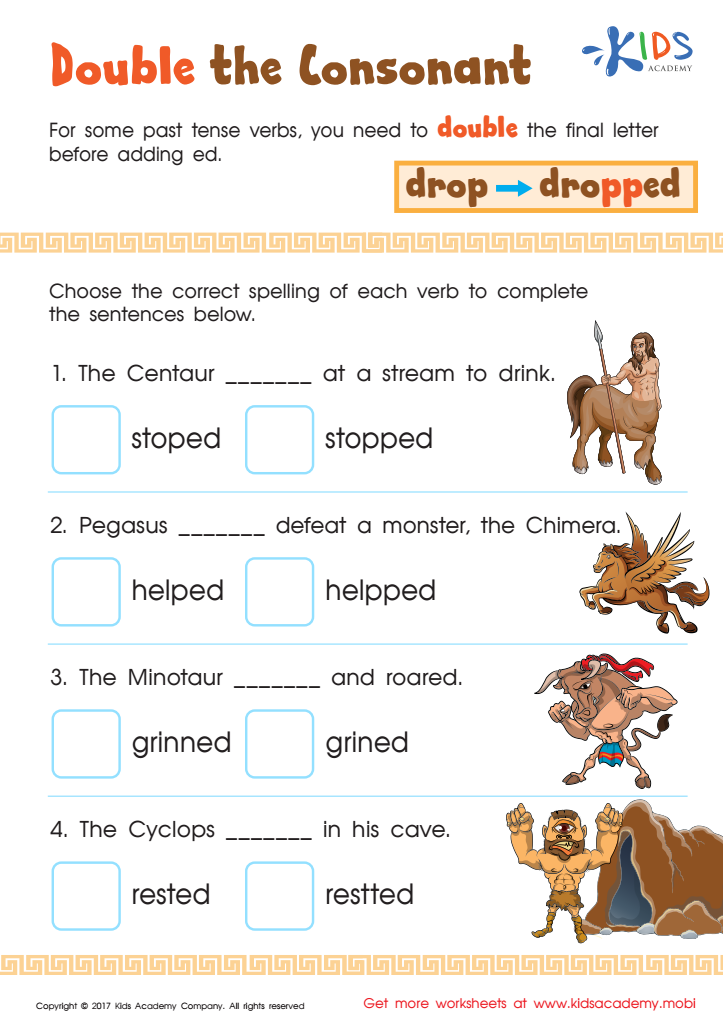
Double Consonant Spelling Worksheet
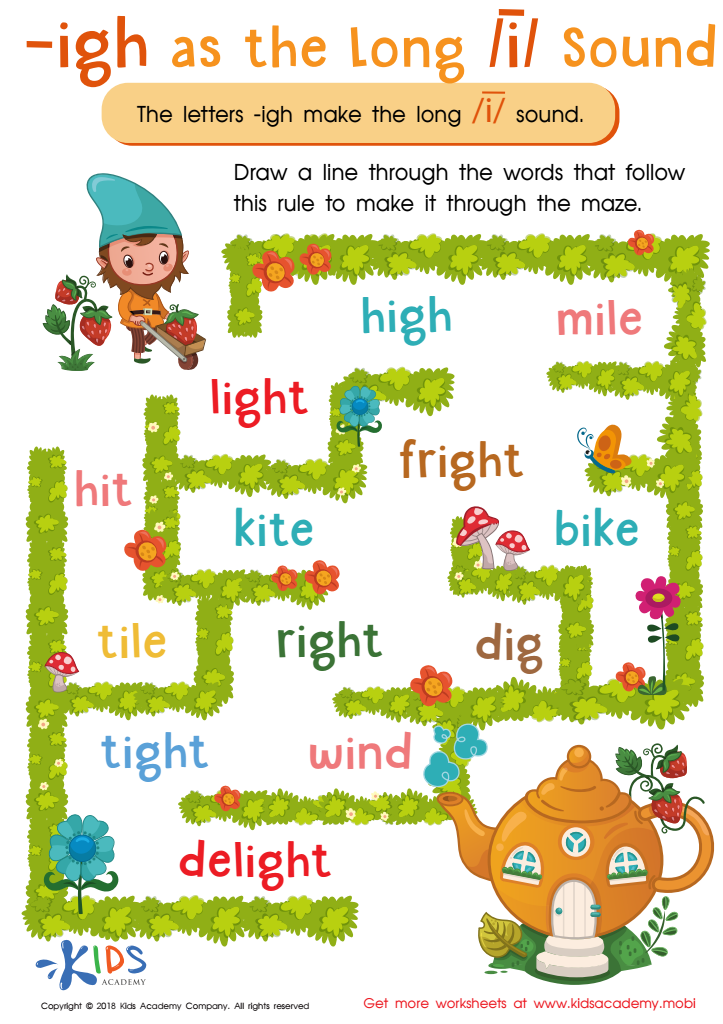
Reading: IGH as Long I Worksheet
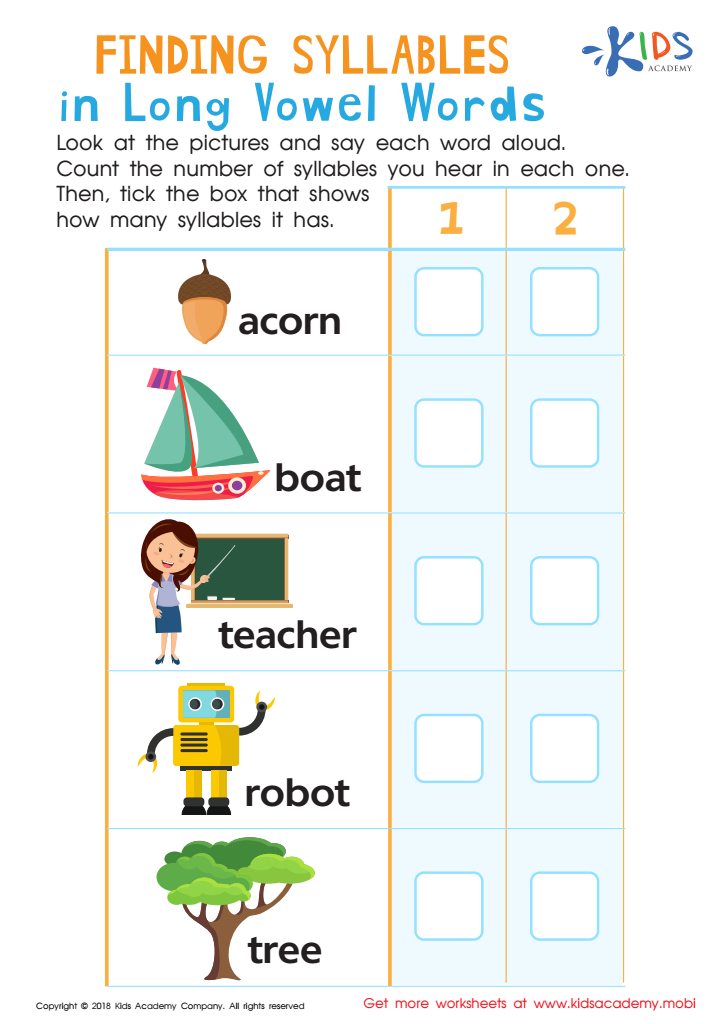
Finding Syllables in Long Vowel Words Worksheet



Vocabulary expansion and understanding normal vowels and consonants are crucial for children aged 7-9 as these years form a pivotal stage in their linguistic and cognitive development. During this period, children transition from basic word recognition to fluent reading and writing, necessitating a robust vocabulary to support comprehension and expression. Expanding vocabulary enhances children's ability to understand complex texts, articulate thoughts clearly, and develop critical thinking skills, which are essential for academic success and everyday communication.
Moreover, a solid grasp of vowels and consonants underpins phonemic awareness, the ability to recognize and manipulate sounds in words. This skill is foundational for proficient reading and spelling, directly impacting literacy outcomes. Encountering a variety of words in different contexts helps cement these phonemic patterns, making decoding unfamiliar words easier. Additionally, a rich vocabulary enhances listening skills, enabling children to follow instructions more effectively and engage more fully in classroom discussions.
Teachers and parents play a vital role in fostering a language-rich environment. They can introduce new words, model their usage, and engage children in conversations that challenge them to think and articulate complex ideas. Activities such as reading aloud, interactive storytelling, and word games are excellent strategies for integrating vocabulary and phonemic learning in an enjoyable, engaging manner. Thus, caring about vocabulary expansion and the fundamentals of phonetics during these formative years lays the groundwork for academic and communicative competence.






