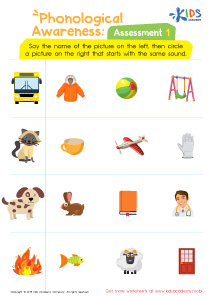
Spelling practice Normal Vowels Worksheets for Ages 7-9 - Page 2
27 filtered results
-
From - To
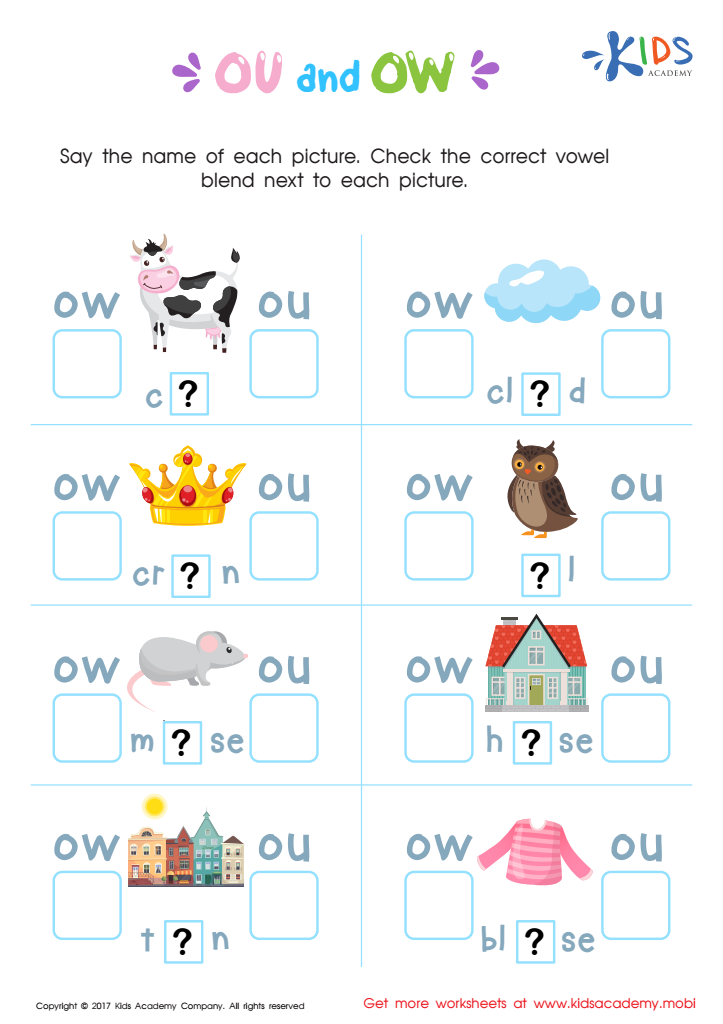
OU and OW Words Worksheet
 Assign to My Students
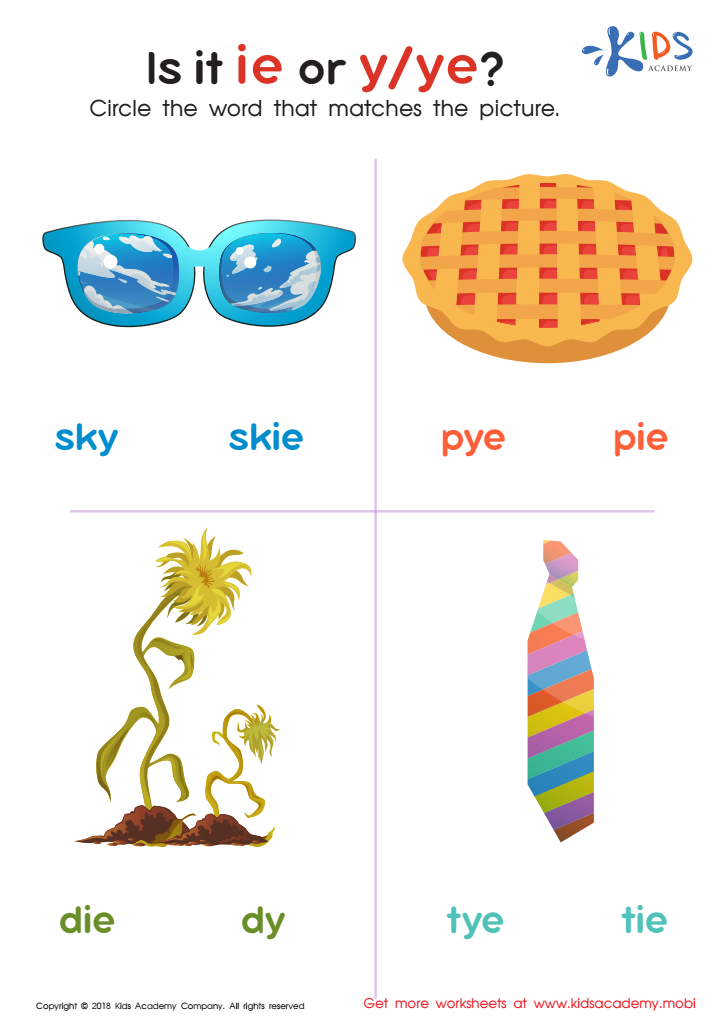
Is It IE or Y/Ye? Worksheet
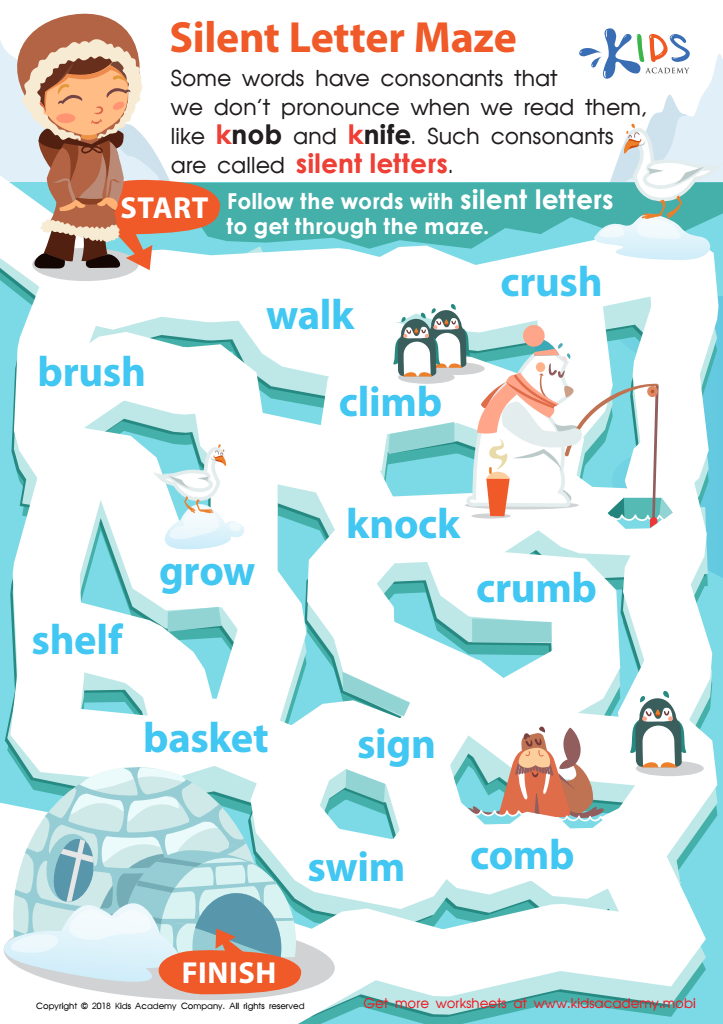
Silent Letter Maze Worksheet





Spelling practice, specifically focusing on normal vowels, is crucial for children aged 7-9 as it lays the foundation for their reading and writing skills. During these formative years, children are developing their phonetic understanding, which aids in decoding words. Mastering vowel sounds helps them recognize and spell a wide range of words, improving their reading fluency and comprehension.
Moreover, strong spelling skills enhance written communication. When children are confident in their spelling, they can express their thoughts and creativity more effectively, leading to a greater interest in writing. This increased self-assurance can foster a positive attitude toward language arts, encouraging them to engage more deeply with literature and self-expression.
Additionally, spelling is closely linked to overall academic performance. Children who struggle with spelling often face challenges in other subjects, reinforcing the importance of practice. Parents and teachers can support students by incorporating engaging activities, such as games and interactive exercises, that transform spelling drills into enjoyable experiences.
By prioritizing spelling practice for normal vowels, caregivers can cultivate a love for language, enhance literacy skills, and equip children for future academic success. Ultimately, investing time in this foundational skill can significantly impact a child's educational journey.