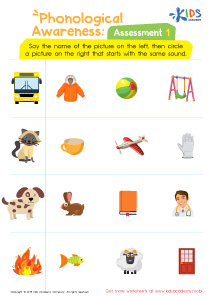
Vocabulary Enrichment Normal Vowels Worksheets for Ages 7-9
3 filtered results
-
From - To
Boost your child's language skills with our Vocabulary Enrichment Normal Vowels Worksheets designed for ages 7-9. These engaging worksheets focus on helping young learners explore and expand their vocabulary through interactive activities centered around vowels. Children will practice identifying, using, and recognizing normal vowels in various contexts, enhancing their reading and writing abilities. Our thoughtfully crafted exercises make learning fun while promoting critical thinking and language development. Perfect for classroom or home use, these worksheets are an effective resource for reinforcing essential skills. Unlock your child's potential and foster a love for learning with our comprehensive vocabulary enrichment materials!
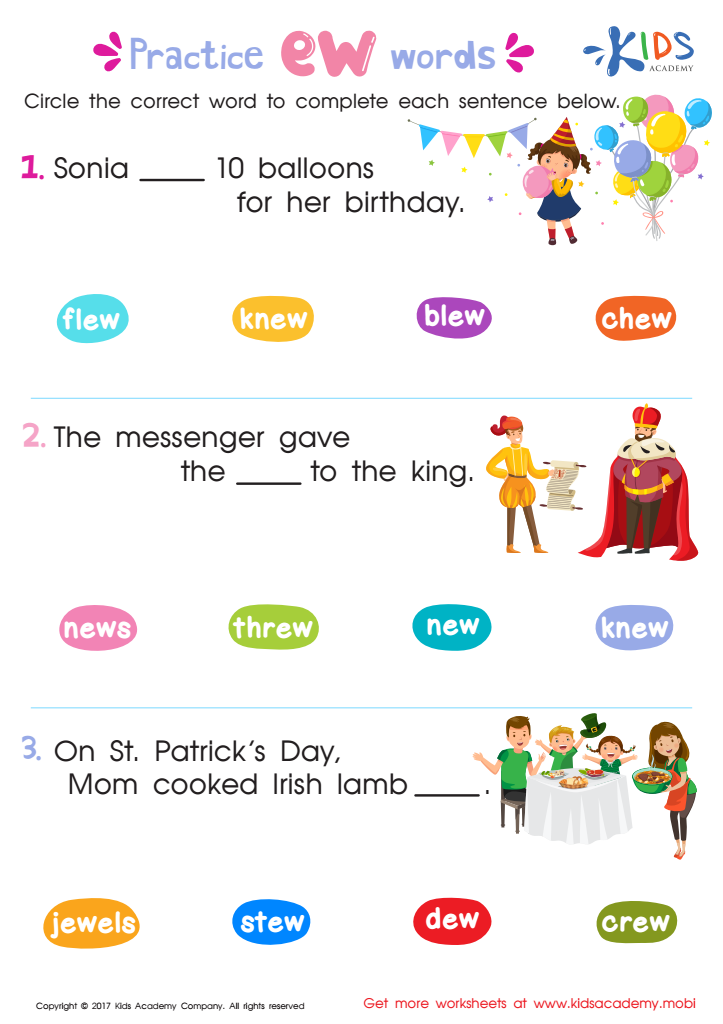
EW Words Worksheet
 Assign to My Students
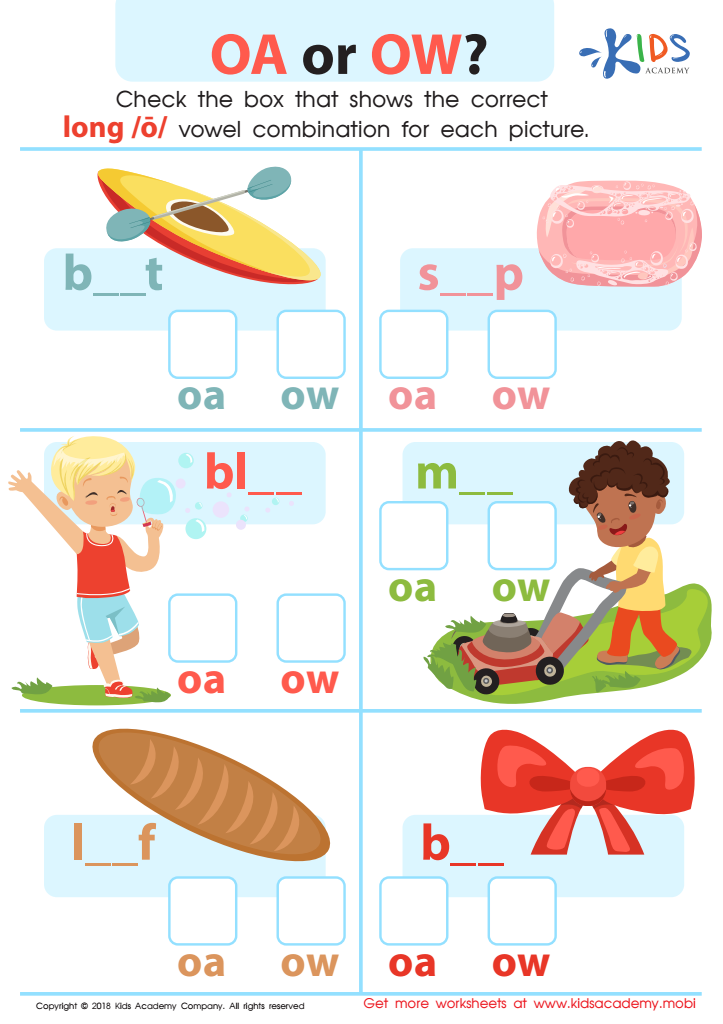
Reading: OA or OW Worksheet
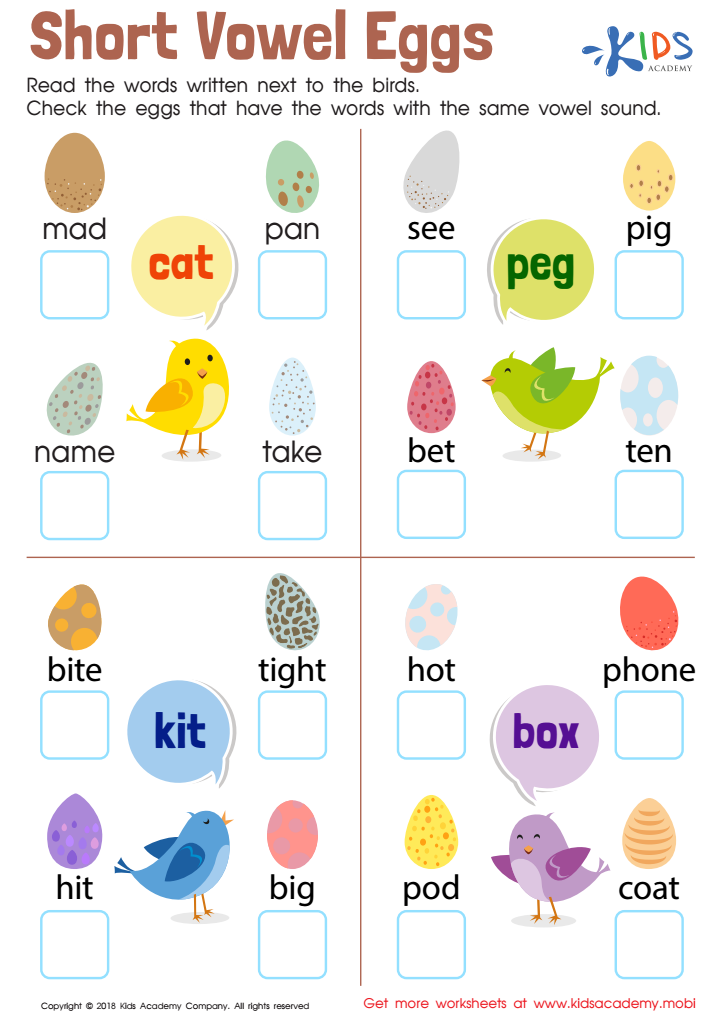
Short Vowel Eggs Worksheet





Vocabulary enrichment, especially focusing on normal vowels, is crucial for children aged 7-9 as it lays the foundation for effective communication and comprehension skills. During these formative years, children are expanding their lexicon and developing a more profound understanding of language. Focusing on normal vowels—specifically, their sounds and usage—can significantly enhance their reading and writing abilities.
Parents and teachers should care about vocabulary enrichment for several reasons. Firstly, a robust vocabulary boosts reading comprehension. As children encounter more complex texts, an understanding of different vowel sounds helps them decode words and grasp meanings more effortlessly. Secondly, strong vocabulary skills bolster overall academic performance. Engaging with varied vocabulary allows students to express thoughts clearly and creatively, fostering critical thinking and problem-solving skills.
Additionally, this enrichment promotes confidence and motivation in students. When they can articulate themselves well, children are more likely to participate in discussions and express their ideas without hesitation. Lastly, vocabulary enrichment including normal vowels encourages a lifelong love of reading and learning. By investing in vocabulary development, parents and teachers empower children to become effective communicators who can navigate diverse linguistic landscapes in school and beyond.