Basic astronomy knowledge Normal Worksheets for Ages 7-9
3 filtered results
-
From - To
Explore the wonders of the universe with our "Basic Astronomy Knowledge Worksheets" tailored for children aged 7 to 9. Designed to spark curiosity and enhance learning, these engaging worksheets cover fundamental topics such as planets, stars, and the solar system. Featuring colorful graphics and age-appropriate exercises, they foster critical thinking and creativity while encouraging a love for science. Whether used in the classroom or at home, our worksheets provide a fun and interactive way for young learners to understand basic astronomical concepts. Boost your child's knowledge and enthusiasm for astronomy today with our easy-to-use, printable resources!
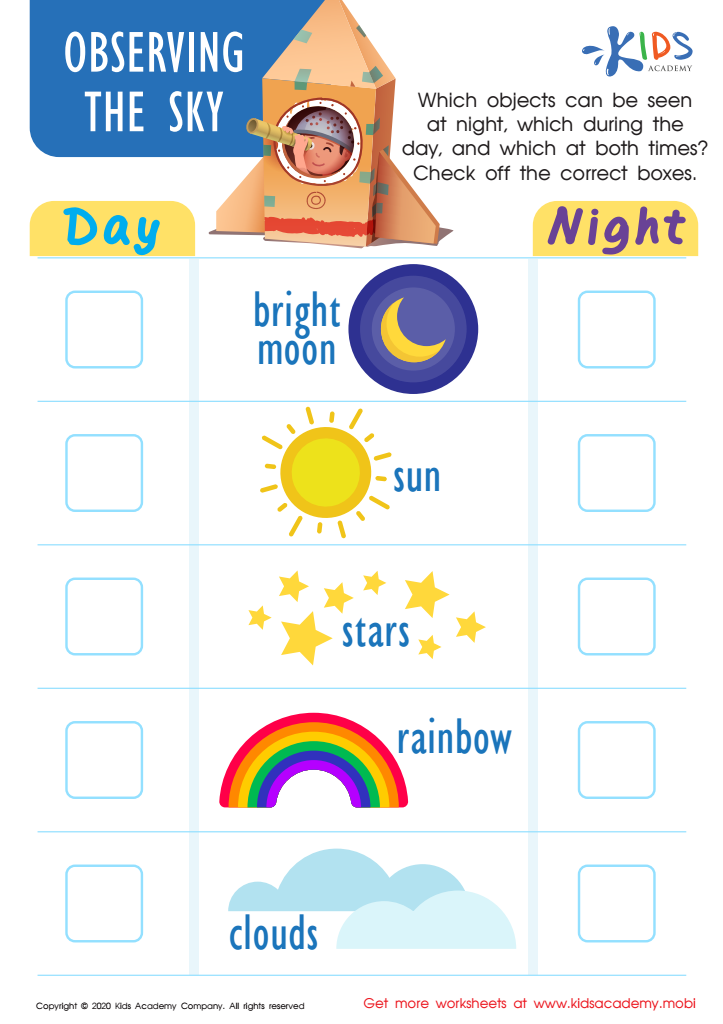
Observing the Sky Worksheet
 Assign to My Students
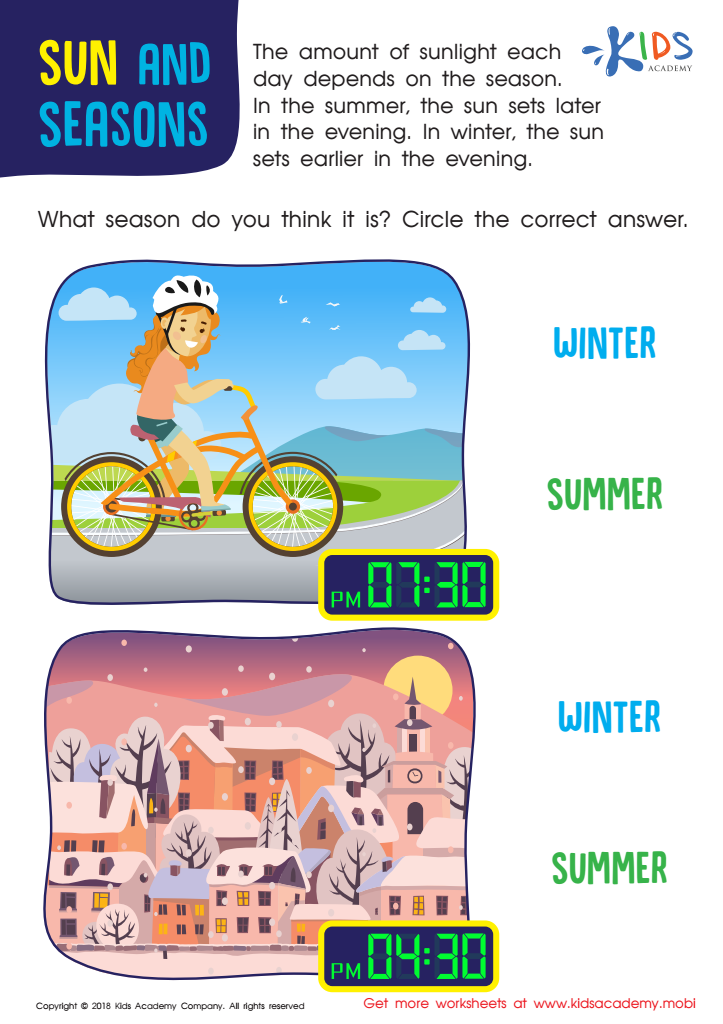
Sun and Seasons Worksheet
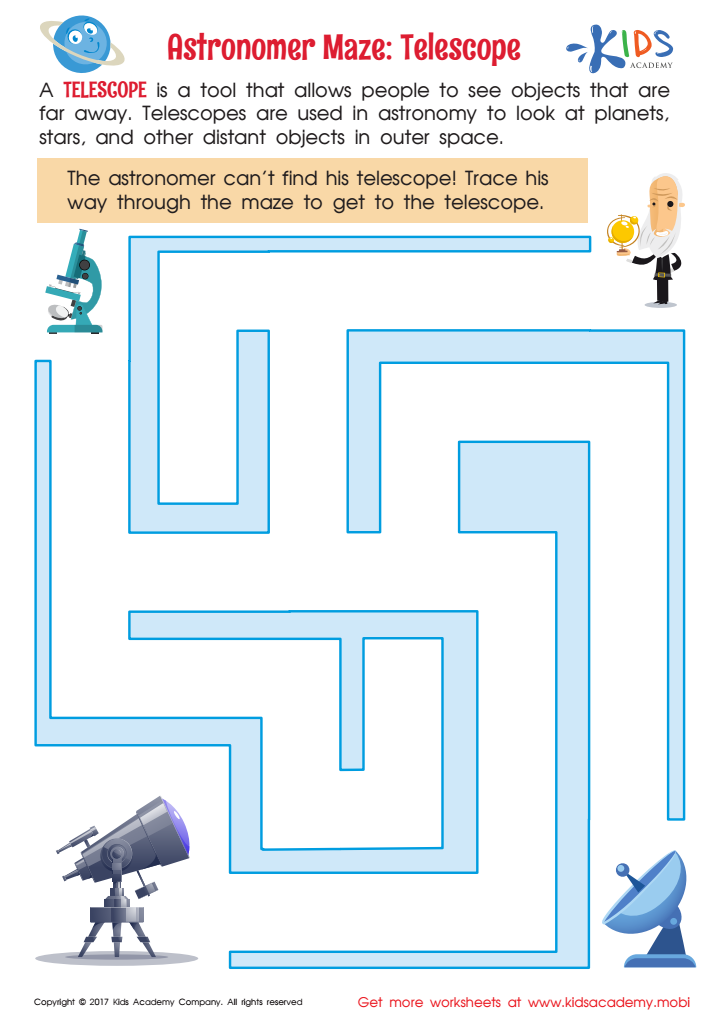
Astronomer Maze: Telescope Worksheet






Basic astronomy knowledge is essential for children aged 7-9 as it fosters curiosity, encourages critical thinking, and nurtures an appreciation for the universe. At this age, children are naturally inquisitive, asking questions about stars, planets, and the cosmos. By providing them with fundamental astronomical concepts, teachers and parents can help satisfy their curiosity and stimulate a love for science.
Understanding basic astronomy also promotes observational skills. When children learn to identify constellations or recognize celestial events like meteor showers, they become more engaged with their environment. This cultivates a sense of wonder and sparks interests that can lead to lifelong learning.
Additionally, astronomy teaches important lessons about perspective and humility. Children learn that Earth is one tiny part of a vast universe, which can instill a greater sense of responsibility for our planet. Furthermore, discussions around astronomy can foster collaboration and communication skills as children share discoveries with peers and adults.
In summary, introducing basic astronomy to young learners enriches their educational experience, supports cognitive development, and helps children make connections between science, nature, and their place in the universe. Thus, investing time in basic astronomy knowledge is invaluable for their growth and understanding.








