Capitalization rules Normal Worksheets for Ages 7-9
3 filtered results
-
From - To
Enhance your child's writing skills with our Capitalization Rules Normal Worksheets designed specifically for ages 7-9. These engaging worksheets provide a fun and interactive way for young learners to master essential capitalization rules. Students will practice identifying and using capital letters in sentences, names, and places, building a solid foundation for proper writing. Each worksheet includes clear instructions, examples, and exercises tailored to varying skill levels, making learning enjoyable and effective. Perfect for classroom use or supplemental at-home practice, our worksheets are a valuable resource for parents and teachers aiming to foster greater literacy skills in early learners. Start improving your child's confidence in writing today!
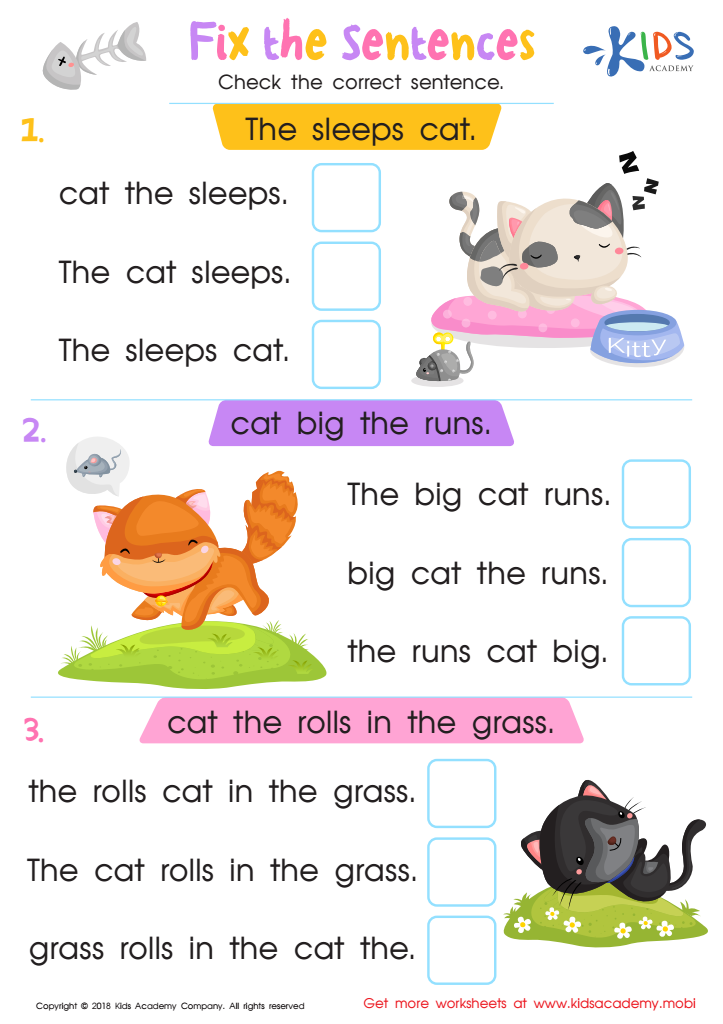
Fix the Sentences Worksheet
 Assign to My Students
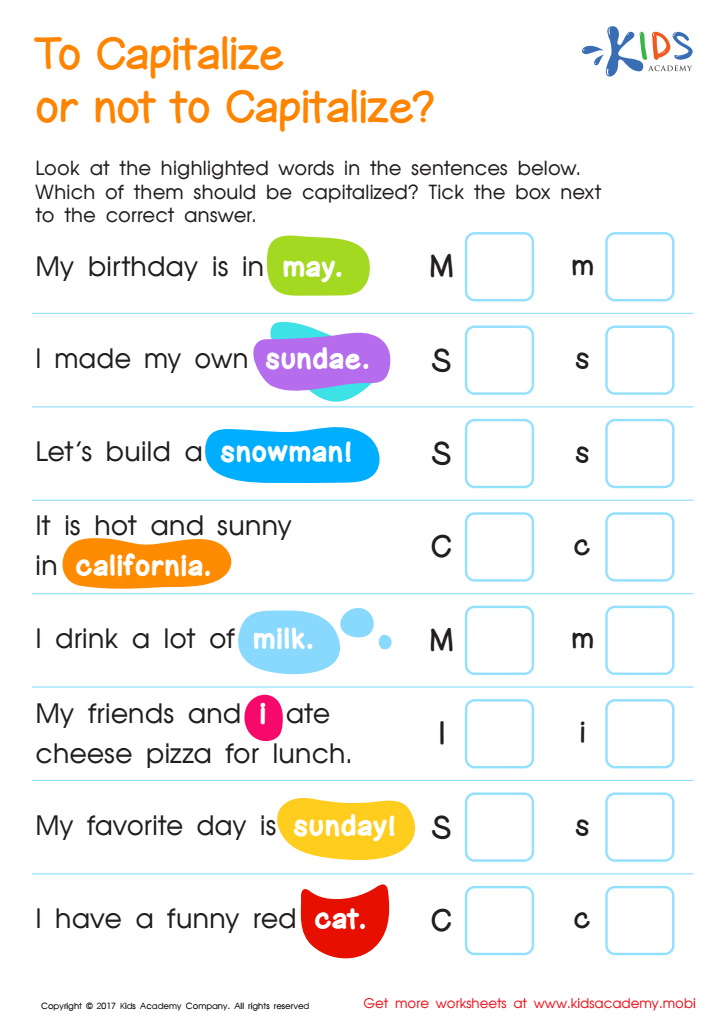
Capitalization: To Capitalize or Not? Printable
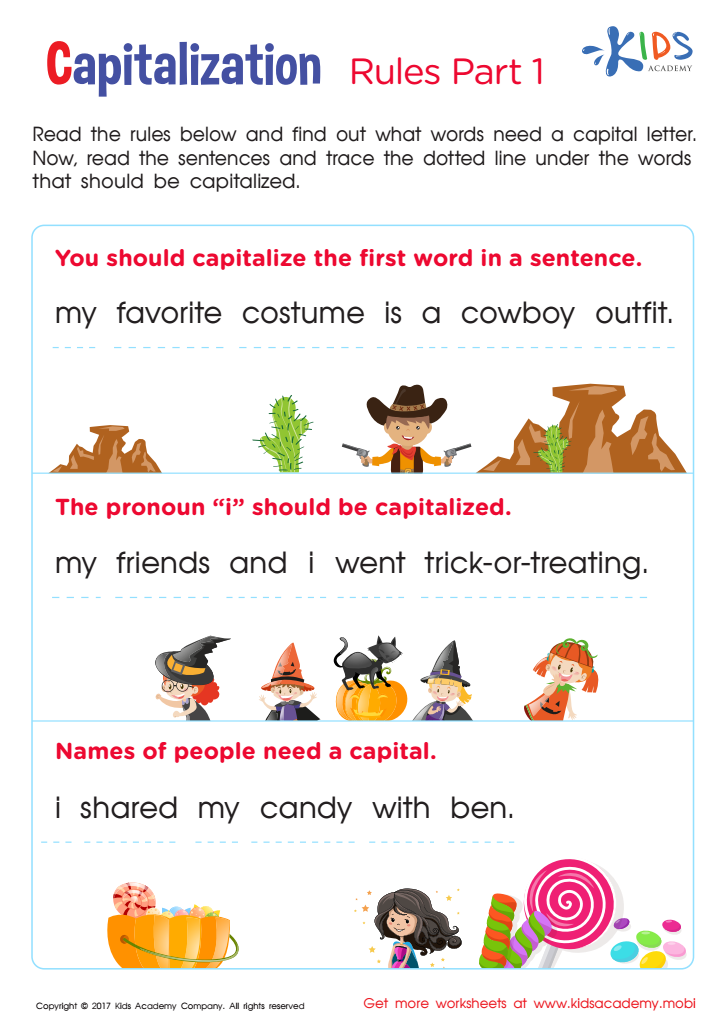
Capitalization Rules: Part 1 Worksheet






Capitalization rules are essential for effective communication, and understanding them significantly benefits children aged 7-9 in their reading and writing development. For parents and teachers, recognizing the importance of proper capitalization aids in fostering children’s literacy skills as it enhances clarity and meaning in their writing.
When children grasp when to capitalize letters—such as the beginning of sentences, names, days of the week, and the word “I”—they create clearer, more organized texts. This understanding not only boosts their writing skills but also enriches their reading experiences; they learn to recognize important words and signals in sentences, enhancing comprehension.
Moreover, mastering capitalization instills a sense of discipline and attention to detail, reflecting their commitment to quality work. As children make the effort to apply these rules, it enhances their confidence in writing, encouraging them to express their ideas more freely.
Finally, teaching capitalization promotes standard language conventions that are essential for academic success. By emphasizing capitalization rules, parents and teachers equip children with vital skills that serve as a foundation for their future learning, communication, and self-expression.








