Practicing subtraction Normal Worksheets for Ages 7-9
3 filtered results
-
From - To
Discover engaging "Practicing Subtraction" worksheets designed for ages 7-9! These fun, educational resources help young learners master subtraction through interactive exercises and clear step-by-step guidance. Perfect for classroom or at-home practice, each worksheet promotes critical thinking and problem-solving skills, ensuring students build a strong mathematical foundation. With a variety of activities tailored to maintain engagement and foster a love for learning, our subtraction worksheets make it easy to track progress and boost confidence in young mathematicians. Transform math practice into an enjoyable adventure with our expertly crafted materials, ideal for parents and teachers alike.
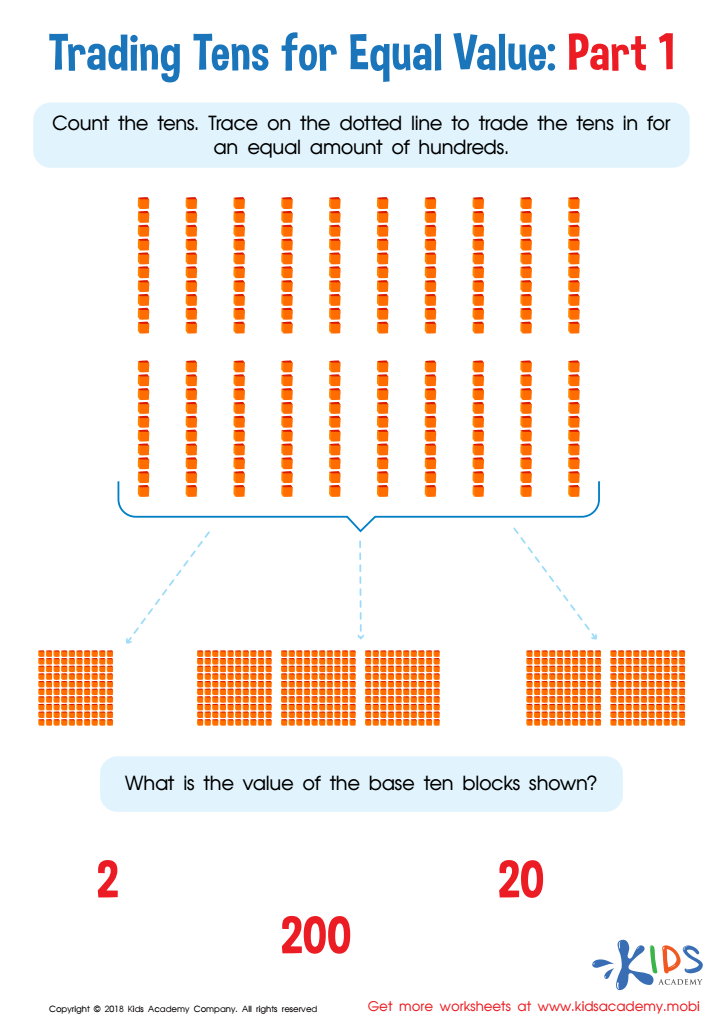
Trading Tens for Equal Value Worksheet: Part 1
 Assign to My Students
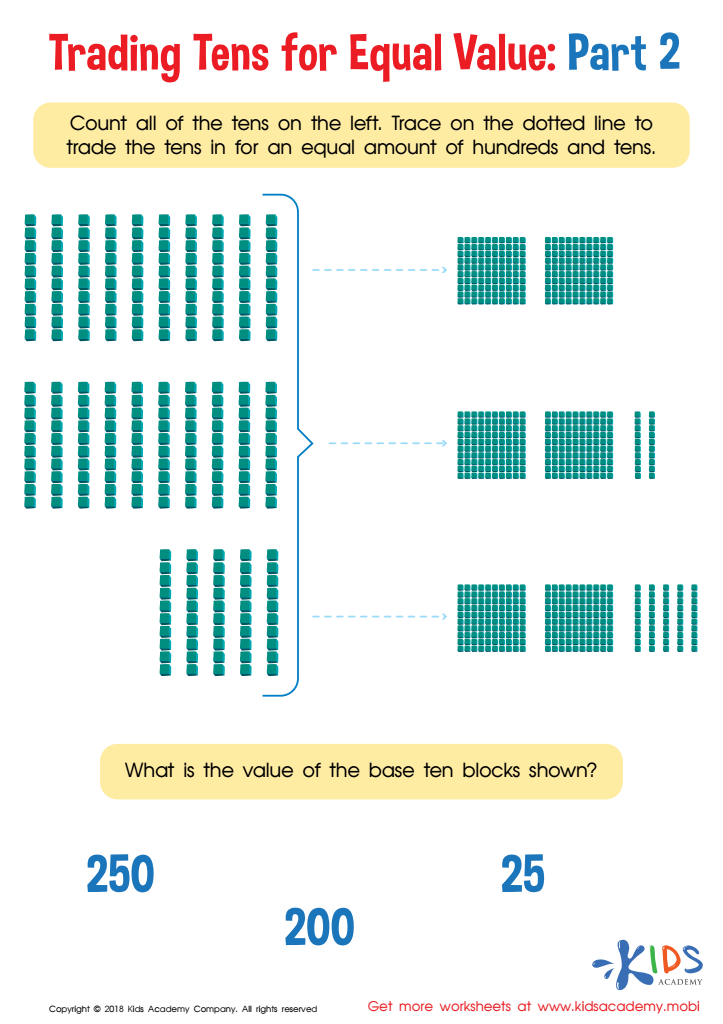
Trading Tens for Equal Value Worksheet: Part 2
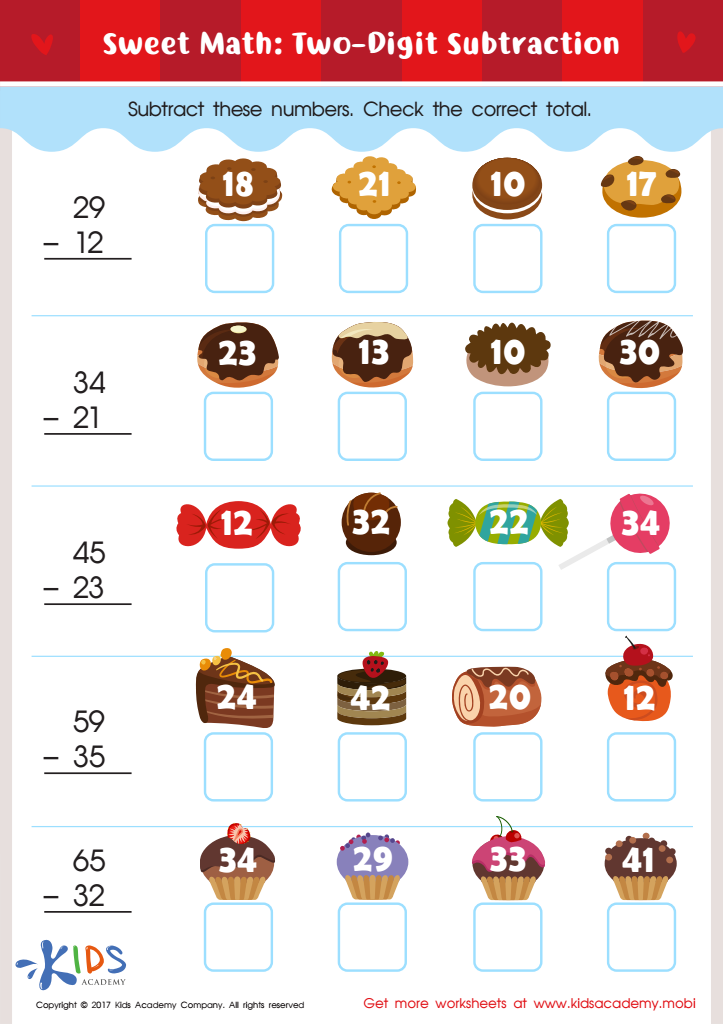
Two Digit Subtraction Worksheet






Practicing subtraction is crucial for children ages 7-9 as it serves as a foundational math skill pivotal for overall academic success. Mastery of subtraction during this age paves the way for more complex arithmetic operations, such as multiplication, division, and even algebra. It strengthens mental math abilities, enhancing the child's confidence and efficiency in solving mathematical problems.
Understanding subtraction also has practical implications in daily life, from making purchases to managing time. For instance, being able to swiftly calculate change when buying something or determining how much time is left before an event fosters independence and responsibility.
Furthermore, practicing subtraction develops critical cognitive skills, such as logical thinking and problem-solving. Activities involving subtraction often require children to estimate, reason, and deduce the most efficient solution, thereby sharpening these essential faculties.
In the classroom, a solid grasp of subtraction can boost a child's overall academic performance and foster a positive attitude toward math. It reduces frustration and anxiety when tackling math assignments, ultimately promoting a lifelong appreciation for learning. For teachers and parents alike, prioritizing subtraction practice supports the child's cognitive, practical, and emotional development, enabling them to navigate both academic challenges and real-world situations with greater ease and confidence.








