Prefix understanding Normal Worksheets for Ages 7-9
3 filtered results
-
From - To
Explore our engaging Prefix Understanding Worksheets designed specifically for kids ages 7-9. These printable resources offer a fun and interactive way to introduce young learners to the world of prefixes, enhancing their vocabulary and reading skills. Each worksheet challenges students with varied activities, including matching exercises, fill-in-the-blanks, and sentence creation using common prefixes like 'un-', 're-', and 'pre-'. Ideal for classroom or home use, these worksheets provide essential practice that aligns with educational standards, helping children to build a strong foundation in language arts while enjoying the learning process. Perfect for nurturing confident and proficient readers.
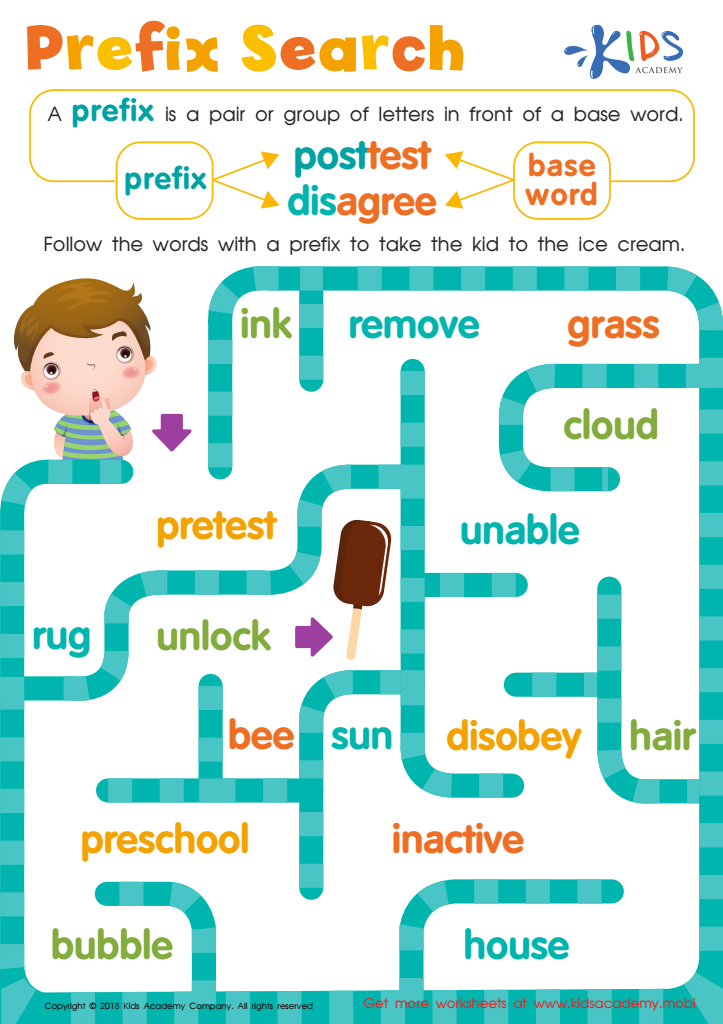
Reading: Prefix Search Worksheet
 Assign to My Students
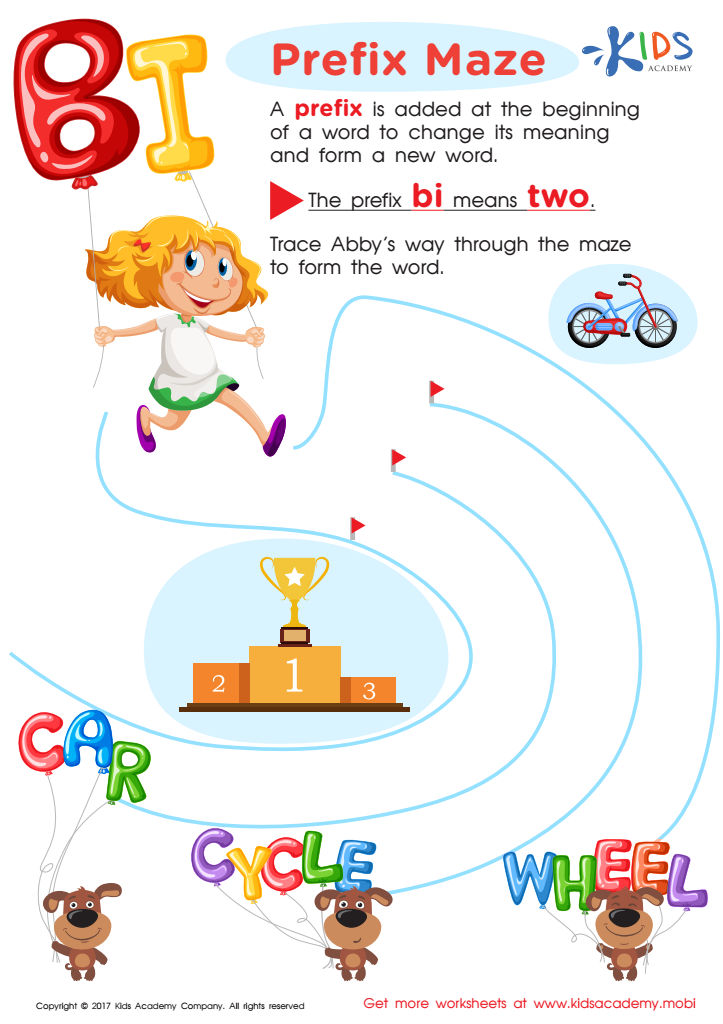
Prefix Bi Words Worksheet
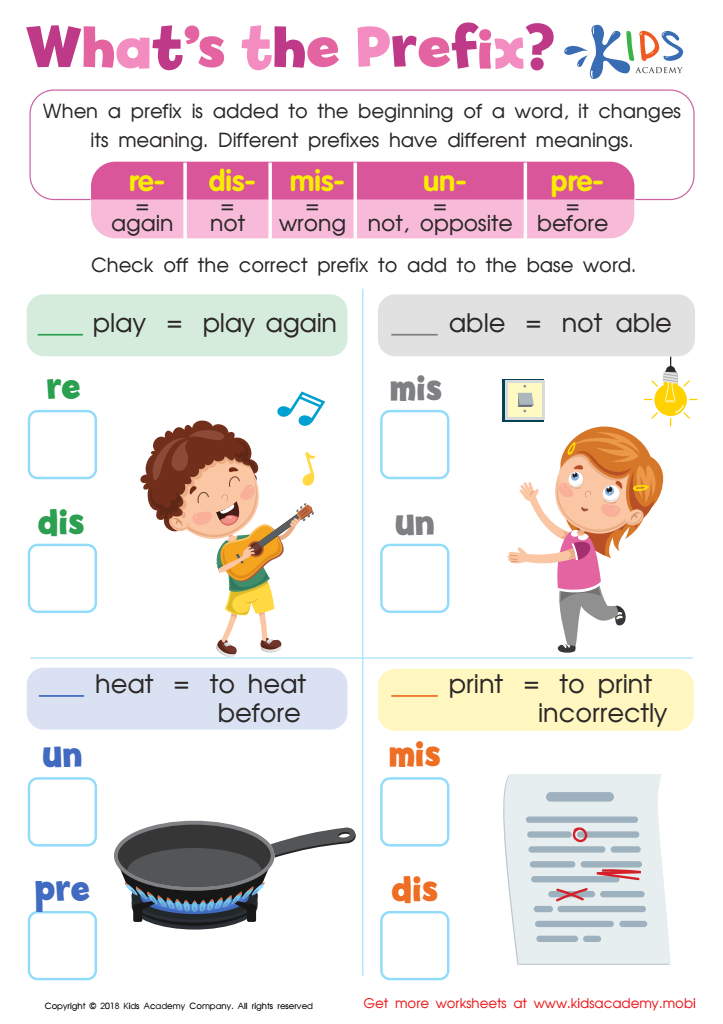
Reading: What Is the Prefix Worksheet






Understanding prefixes is crucial for children aged 7-9 as it lays a foundational block for vocabulary development, reading comprehension, and effective communication. Prefixes are groups of letters added to the beginning of a word to alter its meaning, helping young learners decode unfamiliar words and grasp their meanings effortlessly. For instance, knowing that the prefix "un-" means "not" can help a child decode words like "unhappy" or "unfriendly."
For parents and teachers, focusing on the comprehension of prefixes at this age fosters critical thinking and can enhance a child's ability to understand and process more complex texts over time. It also makes it easier for them to learn other languages, many of which have similar prefix constructs, thus broadening their cultural and linguistic proficiency.
Additionally, mastering prefixes can significantly aid in spelling and writing skills. When children recognize how words can be modified with prefixes, they become more confident writers and readers. This confidence can lead to better academic performance overall.
Engaging with prefixes through games, reading, and interactive activities makes learning fun and underscores the importance of these tiny but powerful word parts in everyday language. Therefore, parents and teachers should prioritize the teaching of prefixes to set the stage for lifelong literacy and learning success.








