
Understanding timelines Normal Worksheets for Ages 7-9
3 filtered results
Difficulty Level
Grade
Age
-
From - To
Subject
Activity
Standards
"Understanding Timelines Normal Worksheets for Ages 7-9" is a specially curated collection that aids kids in grasping historical events and sequencing with ease. Designed for children aged 7 to 9, these worksheets focus on developing critical thinking and chronological skills, fundamental for learning history and organizing information logically. Each worksheet invites kids to explore events, dates, and sequences through engaging activities, fostering a hands-on understanding of timelines. By consistently practicing, young learners enhance their ability to interpret historical sequences and construct their own timelines, preparing them for more advanced educational challenges. Explore our collection to support your child’s learning journey!
Favorites
With answer key
Interactive
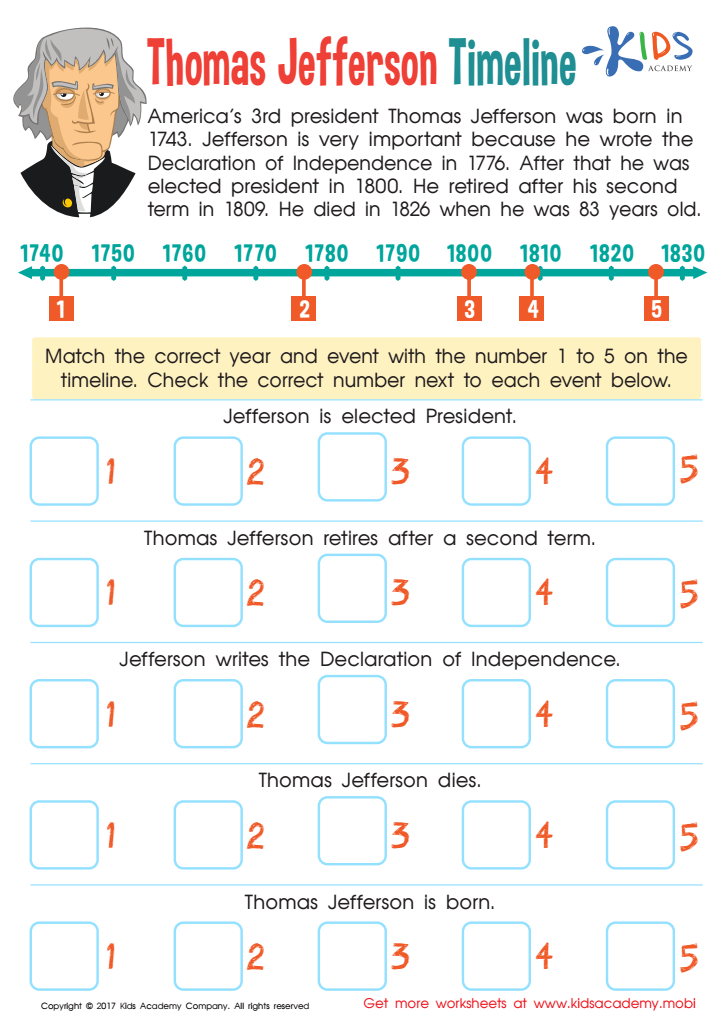
Thomas Jefferson Timeline Worksheet
Check your child's reading comprehension and knowledge of US history with this Thomas Jefferson timeline worksheet! Have them read the paragraph to learn about him, then use what they've read to fill in the timeline.
 Assign to My Students
Thomas Jefferson Timeline Worksheet
Worksheet
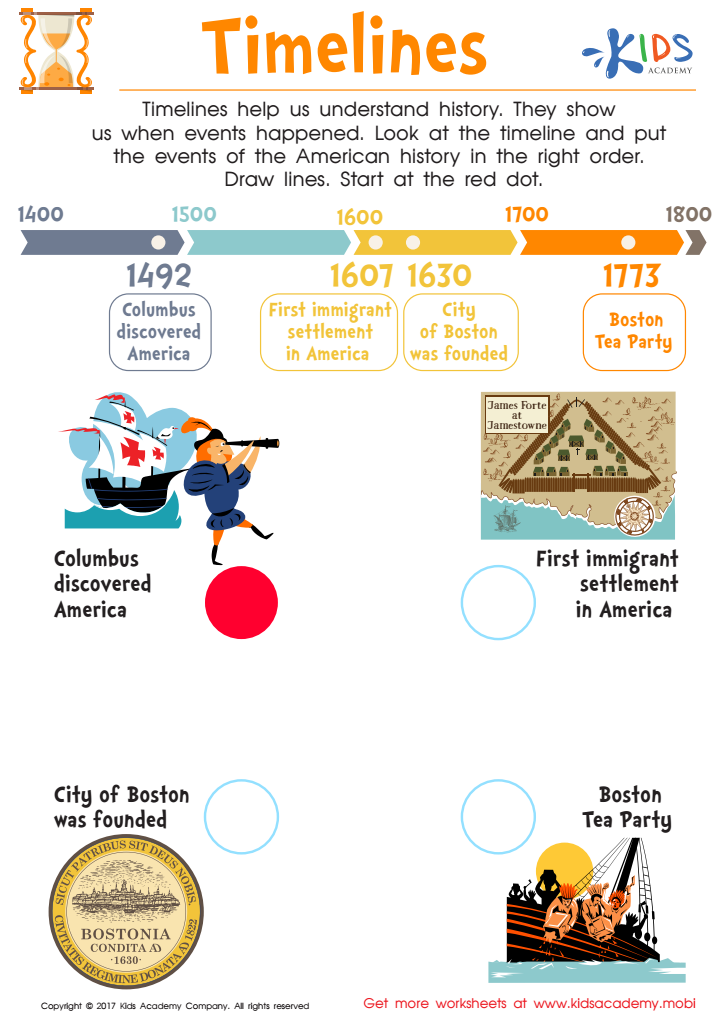
American History Timeline Worksheet
Encourage your child to explore American history with a fun timeline worksheet! It tracks major events in history and helps make sense of the past. It's an easy way to boost their knowledge and further their understanding of a key subject.
American History Timeline Worksheet
Worksheet
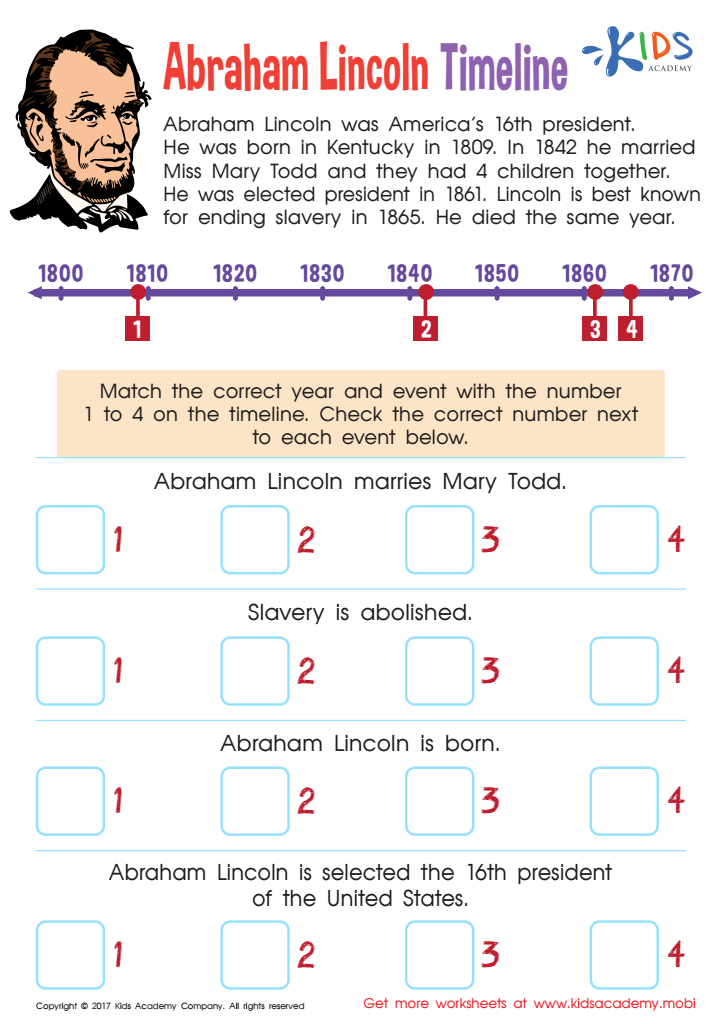
Abraham Lincoln Timeline Worksheet
Revised (76 words): Let's review America's most important president with this Abraham Lincoln timeline worksheet! Kids will read the paragraph and answer the questions using the timeline to increase their reading comprehension skills.
Abraham Lincoln Timeline Worksheet
Worksheet
Join Kids Academy for Free
Who is primarily going to use this learning content?








Understanding developmental timelines for ages 7-9 is crucial for both parents and teachers as it provides a framework to support children's optimal growth and learning. During this period, children experience significant cognitive, social, and emotional development that lays the foundation for future success.
From an academic perspective, knowing what is typical for this age group helps educators design appropriate curricula and interventions. For instance, children ages 7-9 generally develop better reading fluency and math skills, making it the perfect time to introduce more complex texts and problem-solving activities. Recognizing these milestones ensures teaching methods are tailored to students' developmental stages, fostering engagement and comprehension.
Socially and emotionally, children start to form deeper peer relationships and develop a better understanding of emotions during these years. By understanding these aspects, parents and teachers can create supportive environments that promote healthy social skills, such as cooperation and empathy. They can also be more attuned to signs of struggles, such as anxiety or social difficulties, allowing for timely interventions.
Moreover, knowing these timelines helps manage expectations. It encourages patience and reduces undue pressure on children who may develop at their own pace. Recognizing and appreciating each child's unique journey aids in fostering a positive, supportive growth environment, ultimately contributing to well-rounded, confident individuals.








