Visual learning stimulation Normal Worksheets for Ages 7-9
3 filtered results
-
From - To
Foster your child's cognitive development with our Visual Learning Stimulation Normal Worksheets designed for ages 7-9. These printable activities expertly combine fun with education, stimulating visual skills essential for reading, math, and problem-solving. Each worksheet is crafted by educational professionals to enhance visual memory, pattern recognition, and spatial reasoning. Perfect for classroom use or at-home learning, our engaging, colorful worksheets make learning enjoyable, supporting your child's academic growth in a way that feels like play. Empower your child to excel with tools tailored to make complex concepts easier and accessible. Transform their learning journey today!
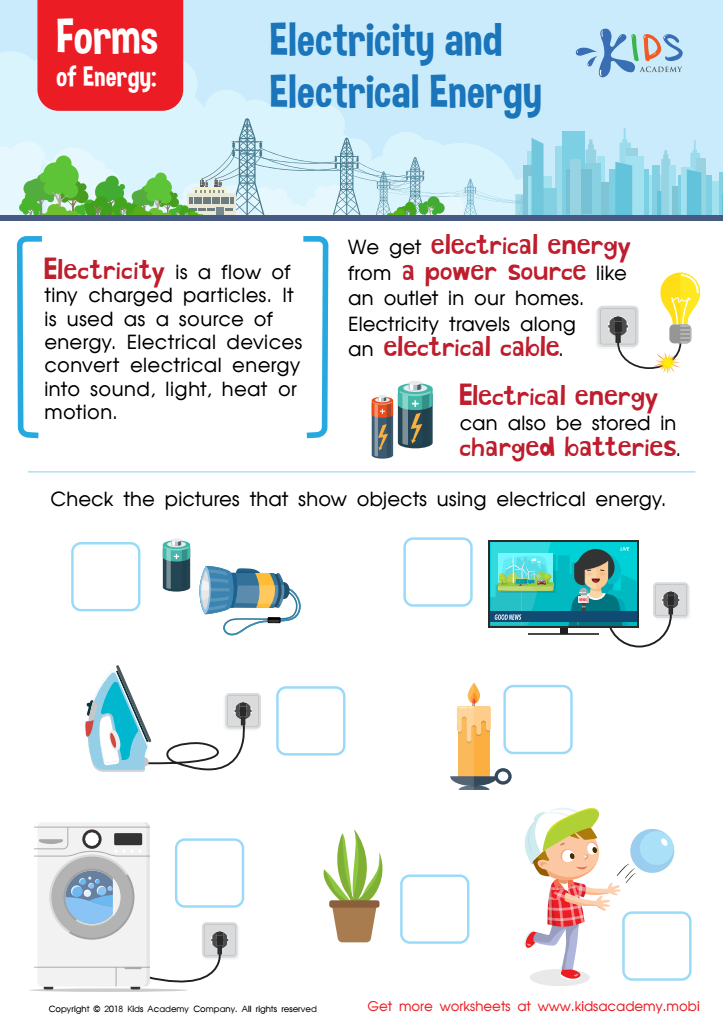
Forms of Energy Worksheet
 Assign to My Students
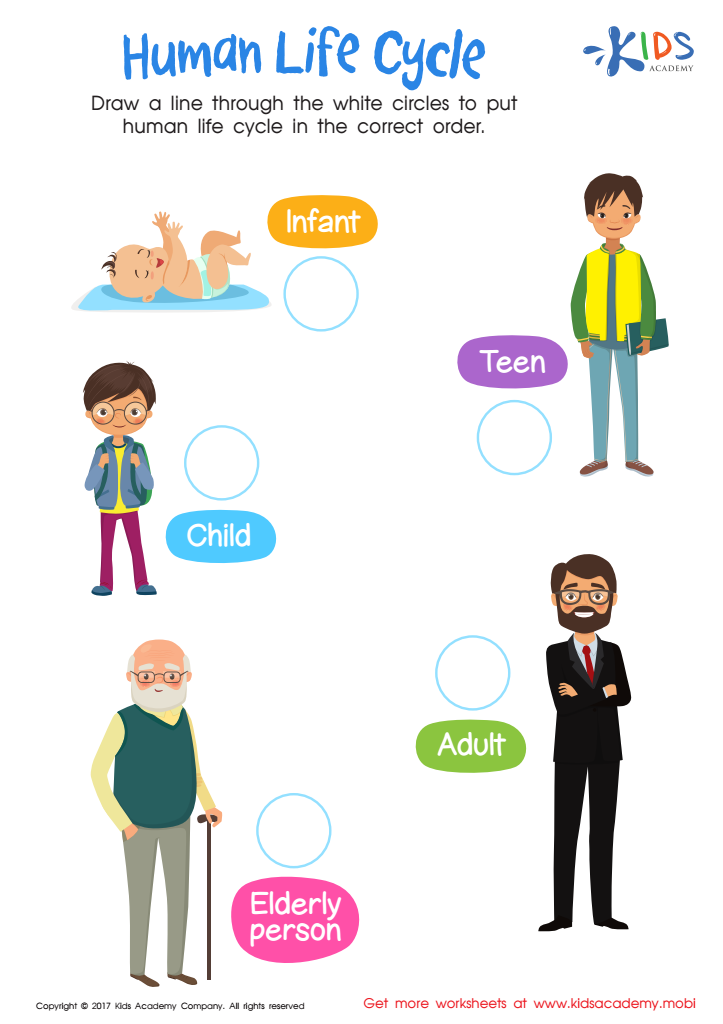
Human Life Cycle Worksheet
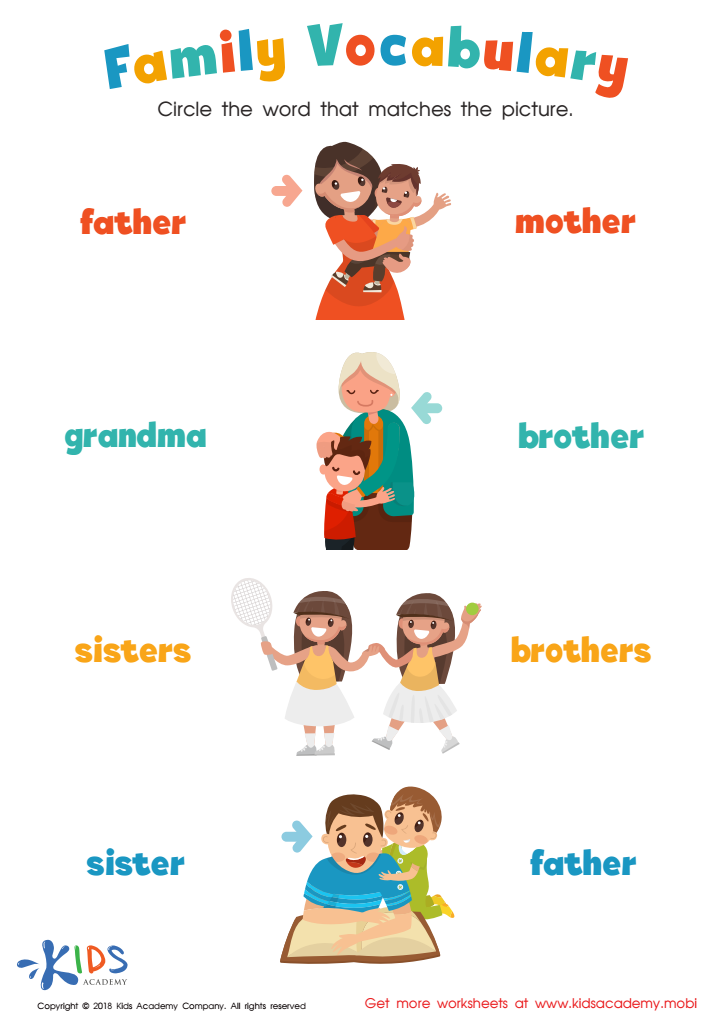
Family Vocabulary Worksheet






Parents and teachers should care about visual learning stimulation for children ages 7-9 because this is a crucial developmental period. At this age, children's brains are highly receptive to visual information, which can significantly enhance their ability to understand and retain new concepts. Visual aids such as pictures, charts, and videos can make abstract ideas more concrete, facilitating better comprehension and engagement.
Visual learning helps bridge the gap between seeing and understanding, which is particularly important as children encounter more complex subjects in school. For example, colorful diagrams can simplify scientific concepts, while visual storytelling can bolster reading comprehension and creativity. This method also caters to diverse learning styles, ensuring that visual learners, who might struggle with text-only materials, have the opportunity to thrive academically.
Furthermore, visual stimulation supports cognitive development by improving skills such as memory, attention, and spatial reasoning. These skills are fundamental across various subjects and crucial for problem-solving. In a tech-driven world, proficiency in interpreting and creating visual content is becoming increasingly vital.
In essence, incorporating visual learning strategies can create a more inclusive, engaging, and effective educational environment, laying a solid foundation for future academic success and lifelong learning.








