Logical thinking development Normal Addition & Subtraction Worksheets for Ages 7-9
4 filtered results
-
From - To
Enhance your child's logical thinking and math skills with our Normal Addition & Subtraction Worksheets tailored for ages 7-9. Designed to challenge young minds, these engaging resources systematically elevate their proficiency in basic arithmetic. Each worksheet blends fun, engaging problems with effective strategies to improve logical reasoning and ensure a strong foundational understanding of addition and subtraction. Help your child develop essential problem-solving abilities through interactive exercises that align with educational standards. Perfect for home or classroom use, our worksheets prepare young learners for future academic success in a fun, supportive manner. Explore our printable collection now!
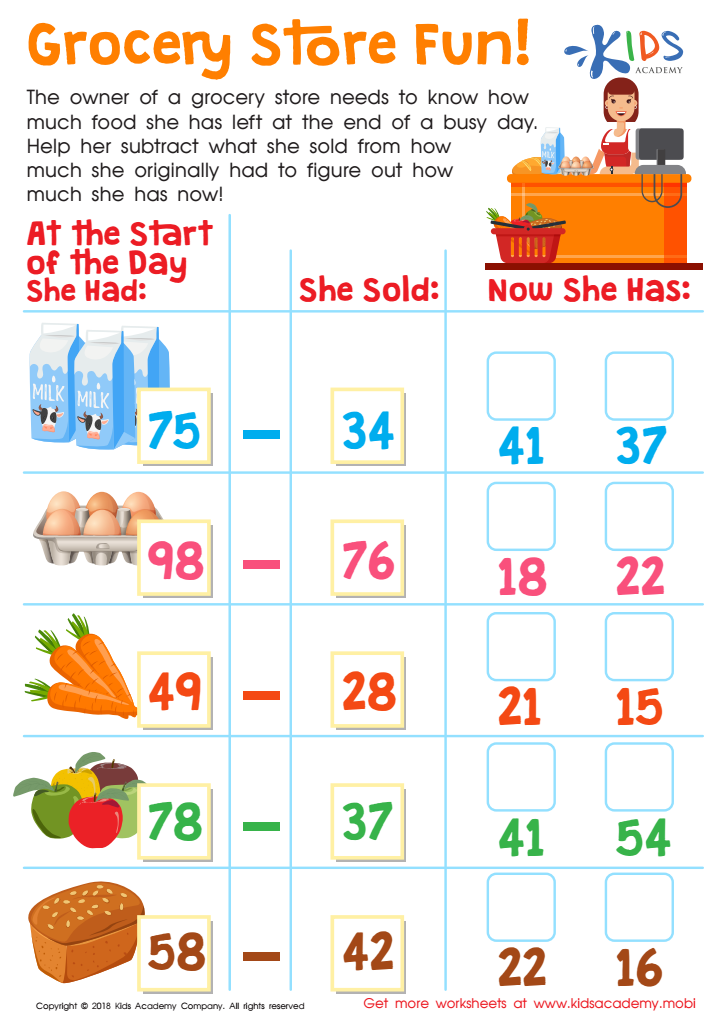
Grocery Store Fun! Worksheet
 Assign to My Students
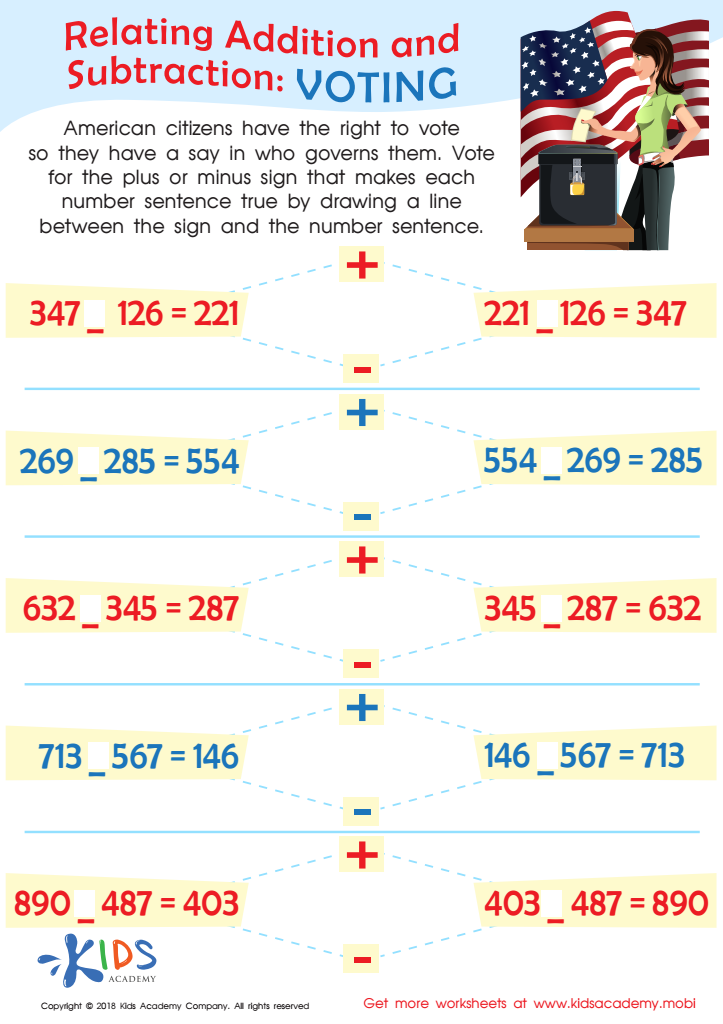
Voting Worksheet
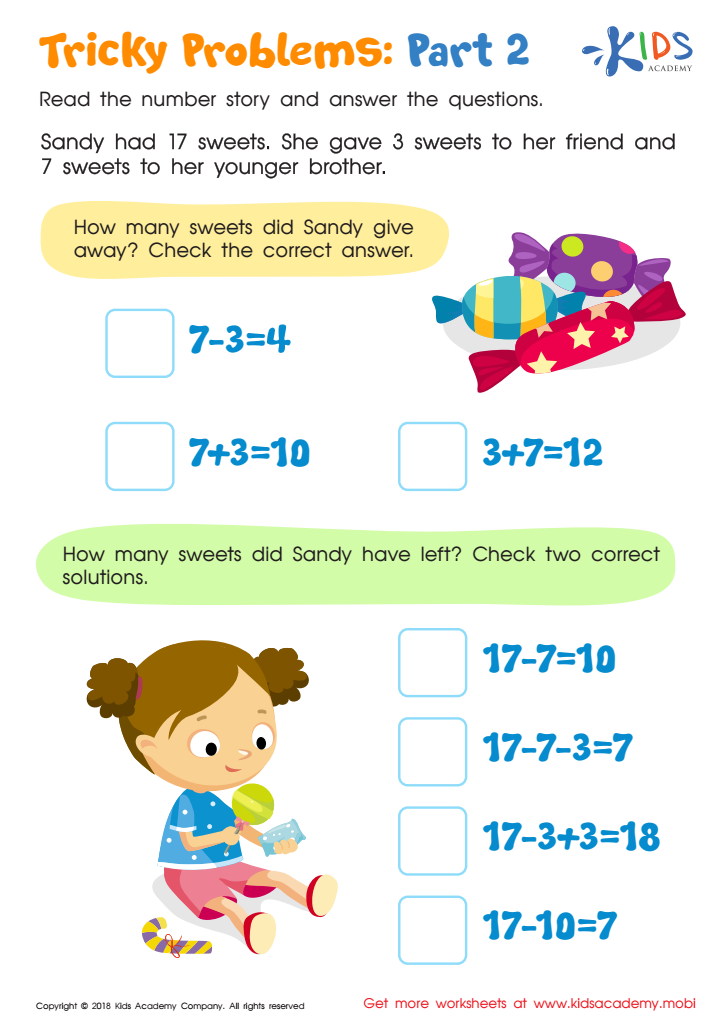
Tricky Problems Worksheet: Part 2
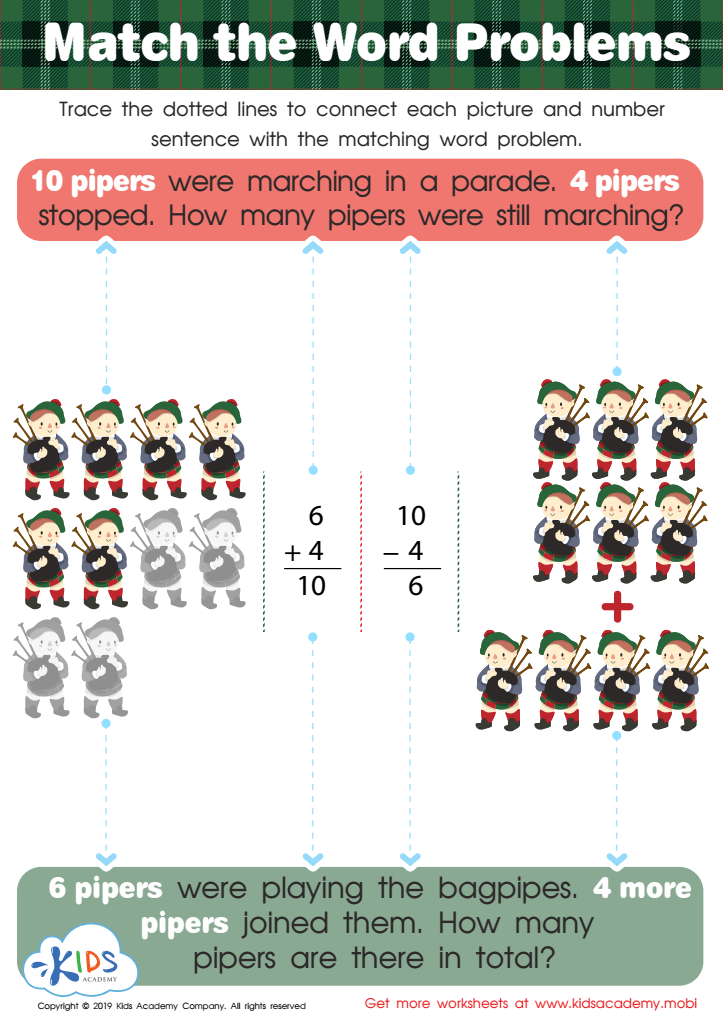
Match the Word Problems Worksheet








Logical thinking and fundamental arithmetic skills like addition and subtraction are crucial building blocks in a child's education, particularly for ages 7-9. At this age, children are transitioning from concrete thinking to more abstract reasoning. Encouraging the development of logical thinking helps them understand cause and effect, make decisions, and solve problems—skills that are essential both in and out of academic environments.
Fostering logical thinking also supports students in mastering basic addition and subtraction. These arithmetic operations are not merely about getting the right answer but understanding the relationship between numbers and how they fit into larger patterns. Proficiency in addition and subtraction forms the foundation for higher-level mathematics, such as multiplication, division, fractions, and algebra.
Moreover, developing these skills early enhances a child's confidence and fosters a positive attitude toward learning. When children see that they can solve problems logically and perform basic calculations correctly and efficiently, they feel a sense of accomplishment and are more motivated to tackle more complex tasks.
Parents and teachers play a pivotal role by providing structured learning experiences, like puzzles and practical exercises, that encourage kids to think logically. Engaging in hands-on activities and incorporating real-life examples can make these fundamental mathematical concepts more relatable and easier to grasp, ultimately promoting a lifelong love for learning and intellectual curiosity.








