Multiplication practice Normal Math Worksheets for Ages 7-9 - Page 2
30 filtered results
-
From - To
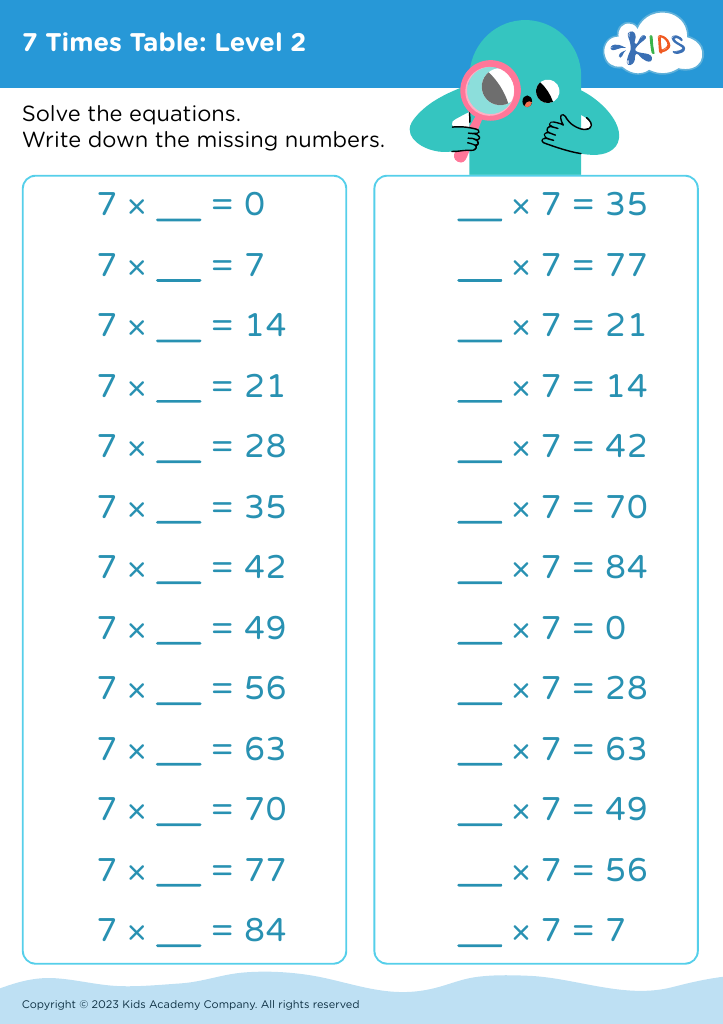
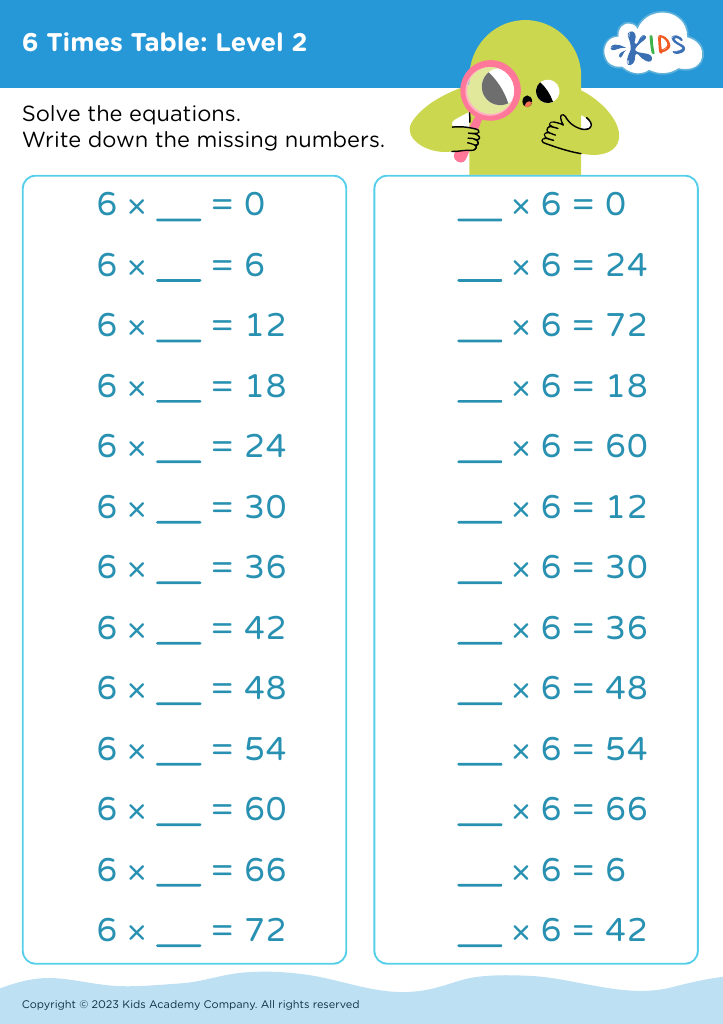
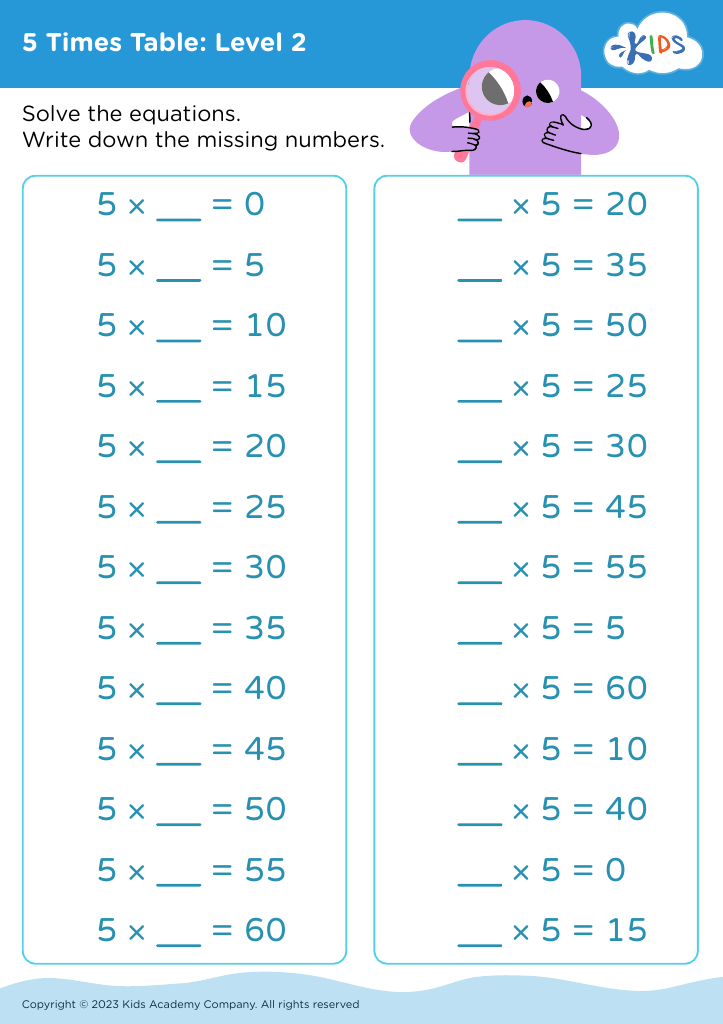
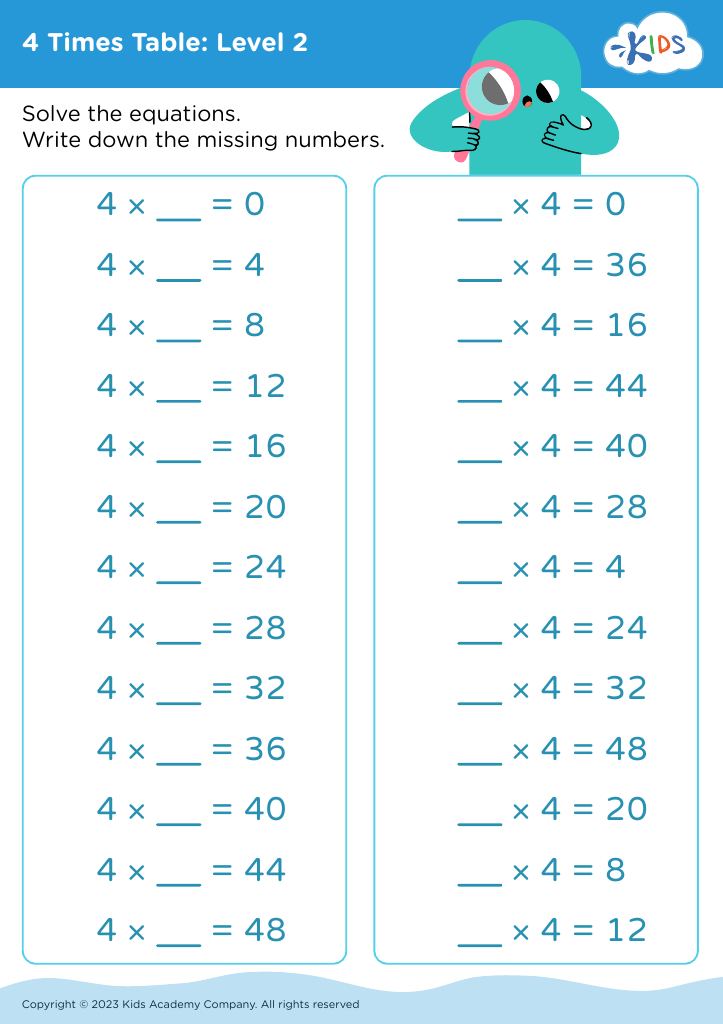
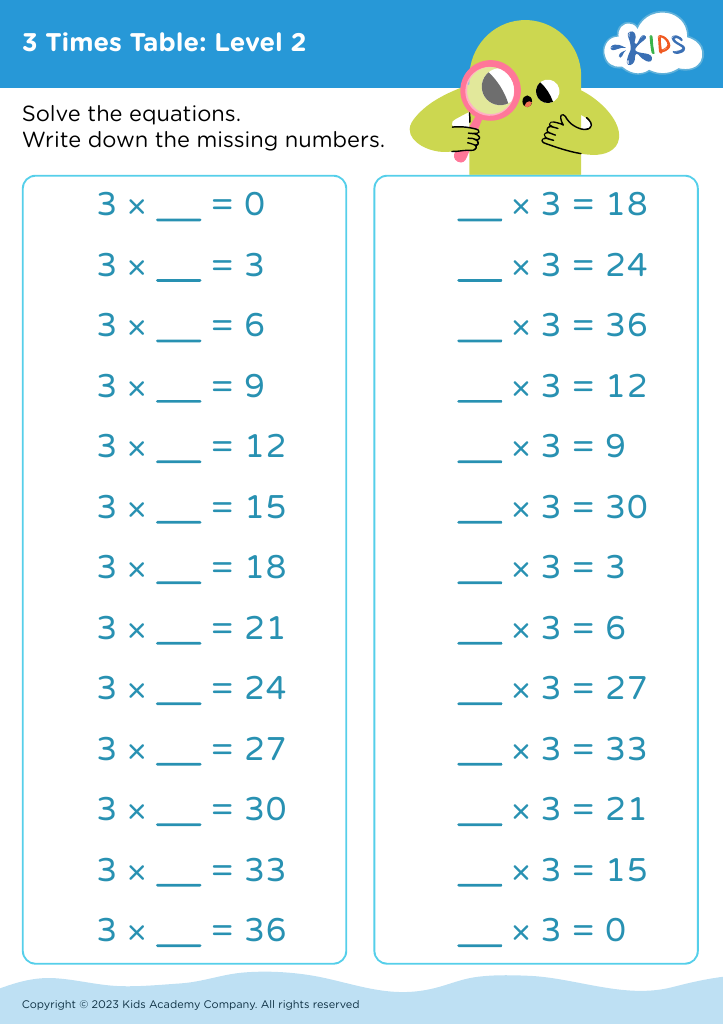
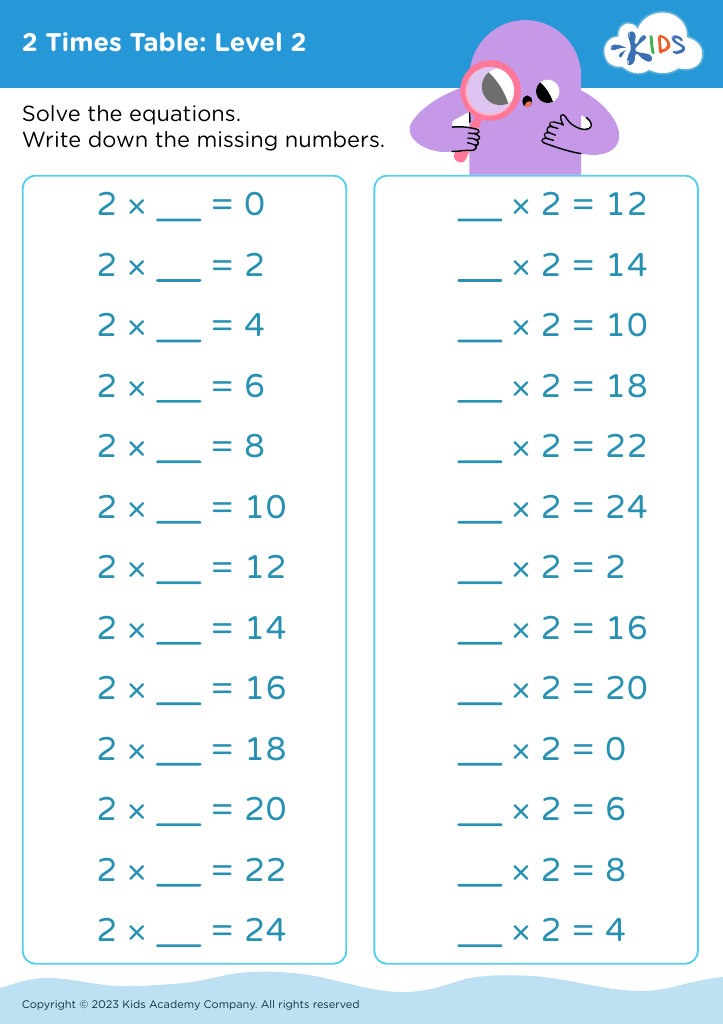








Parents and teachers should prioritize multiplication practice for children ages 7-9 because this foundational skill is essential not only for higher math but also for everyday problem-solving. At this age, children are beginning to transition from basic arithmetic to more complex concepts. Mastery of multiplication enables them to tackle division, fractions, and even introductory algebra smoothly, laying a strong groundwork for their future education.
Moreover, memorizing multiplication tables enhances cognitive skills such as memory, focus, and critical thinking. As kids encounter practical applications of multiplication in real life—like calculating change, understanding time, or cooking—boosting their confidence in math fosters a positive attitude towards the subject.
Engaging in multiplication practice also enhances a child's engagement and enjoyment of math. Utilizing interactive games or creative approaches can transform what sometimes feels like tedious work into fun learning experiences. This critical phase in their mathematical development can prevent later struggles with complex concepts, promoting long-term mathematical proficiency.
Lastly, cooperation between parents and teachers in support of multiplication practice cultivates a shared responsibility for the child's educational journey. Combining school learning with home practice ensures that children receive the reinforcement they need to master these vital skills.








