
Handwriting practice Normal Building Vocabulary Worksheets for Ages 7-9
4 filtered results
Difficulty Level
Grade
Age
-
From - To
Subject
Activity
Standards
Our "Handwriting Practice & Building Vocabulary Worksheets for Ages 7-9" offer a dual learning experience. Perfect for young learners, these printable worksheets enhance handwriting skills while simultaneously expanding their vocabulary. Engaging exercises captivate children as they practice writing neat, legible letters and words. Each worksheet incorporates age-appropriate vocabulary in varying contexts to foster language development, reading comprehension, and fine motor skills. Aligned with educational standards, our materials support parents and teachers in creating a strong foundation for future academic success. Unlock your child’s potential with our expertly designed, fun, and educational handwriting and vocabulary worksheets today!
Favorites
With answer key
Interactive
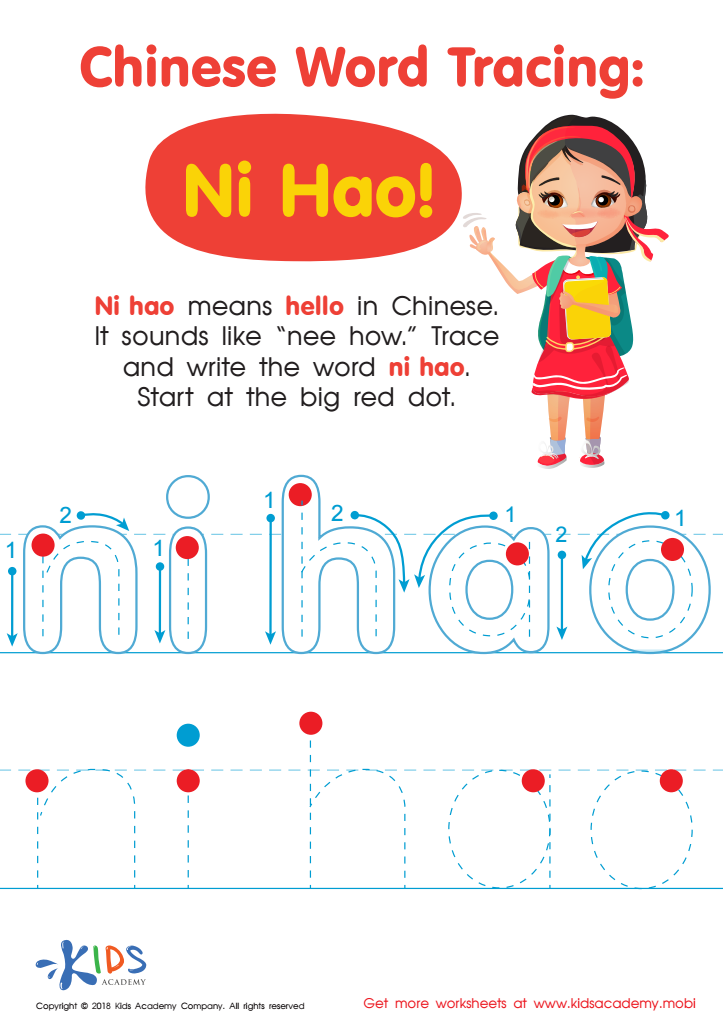
Chinese Word Tracing: Ni Hao Worksheet
Kids can learn to say "Ni hao" with this fun tracing worksheet. The free PDF helps kids write and say the Chinese greeting while also developing fine-motor, handwriting and reading skills. With red guide dots and traceable lines, kids will learn top-to-bottom and left-to-right patterning for fluent reading.
 Assign to My Students
Chinese Word Tracing: Ni Hao Worksheet
Worksheet











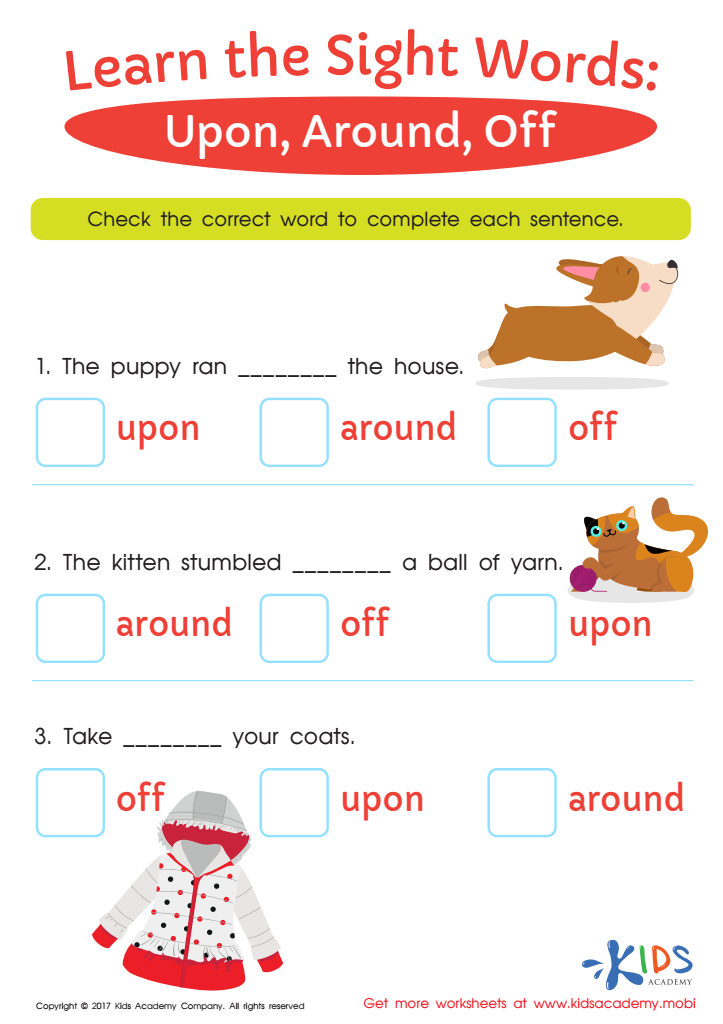
Upon, Around, Off Sight Words Worksheet
Assist your child in mastering prepositions by printing off this worksheet featuring three sight words: upon, around, off. Read the sentences aloud and use the illustrations to demonstrate the meaning of each. Your kid will soon master these words quickly.
Upon, Around, Off Sight Words Worksheet
Worksheet
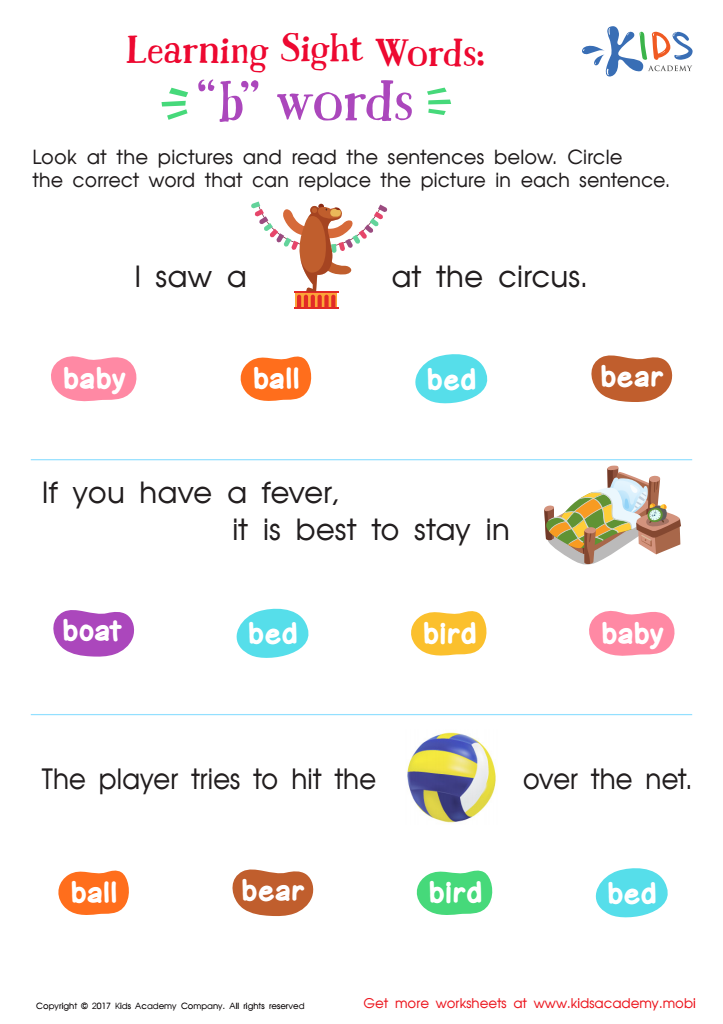
"B" Words Printable Sight Words Worksheet
Kids will learn sight words quickly with this fun worksheet! "B" Words offers guided practice with simple sentences and pictures. Build your child's reading confidence with this helpful worksheet and watch them become a master!
"B" Words Printable Sight Words Worksheet
Worksheet
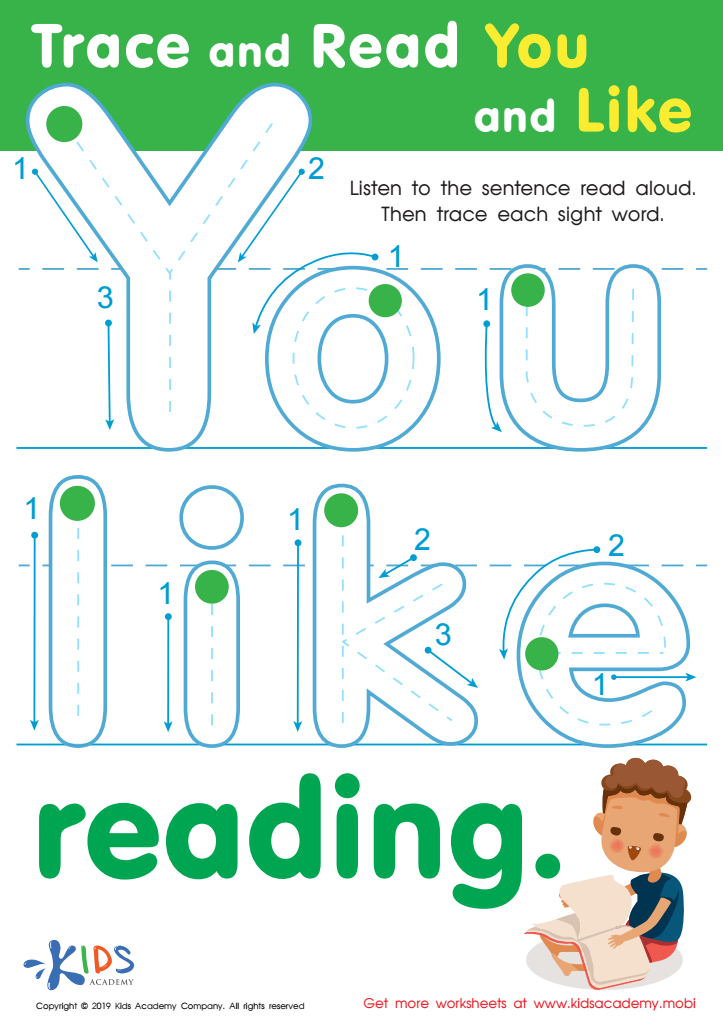
Trace Read You Like Worksheet
Sight words help children become confident and fluent readers. This free worksheet encourages success with basic 'you' and 'like' words. Writing them with traceable lines and green dots shows motion and builds sight word vocabulary. Help your child master the basics and boost their reading progress!
Trace Read You Like Worksheet
Worksheet
Join Kids Academy for Free
Who is primarily going to use this learning content?


.jpg)





Handwriting practice and vocabulary building are critical components of a child's development, especially between the ages of 7-9. At this developmental stage, children begin to consolidate their reading and writing skills, which are foundational for all future learning.
Handwriting practice is essential as it not only improves motor skills but also enhances cognitive development by reinforcing learning processes. Good handwriting ensures that children can express their thoughts clearly and legibly, a skill that is vital for academic success. Additionally, handwriting practice aids in the development of hand-eye coordination, muscle memory, and attention to detail.
Building a robust vocabulary at this age is equally important as it directly influences reading comprehension and communication skills. A rich vocabulary allows children to understand and engage with complex texts, facilitating better academic performance across subjects. It also enhances their ability to express themselves clearly and confidently in both written and verbal forms.
Parents and teachers play a pivotal role in supporting these skills. Providing opportunities for handwriting practice and incorporating vocabulary-building activities into daily routines can make learning more engaging. Simple activities like reading together, playing word games, and encouraging creative writing can significantly contribute to a child's linguistic and cognitive growth. By prioritizing these areas, parents and teachers set a strong foundation for lifelong learning and effective communication skills.








