Moral lesson understanding Normal Building Vocabulary Worksheets for Ages 7-9
3 filtered results
-
From - To
Enhance your child's vocabulary and moral comprehension with our "Moral Lesson Understanding Normal Building Vocabulary Worksheets" designed for ages 7-9! These engaging worksheets are perfect for helping young learners connect language skills with essential life lessons, promoting critical thinking and empathy. Featuring a variety of activities, each worksheet aims to enrich vocabulary while highlighting important moral lessons. Ideal for classroom or home use, these resources encourage children to reflect on values such as honesty, kindness, and responsibility. Foster a love for language and ethical understanding in your students with our thoughtfully crafted materials that make learning both fun and meaningful.
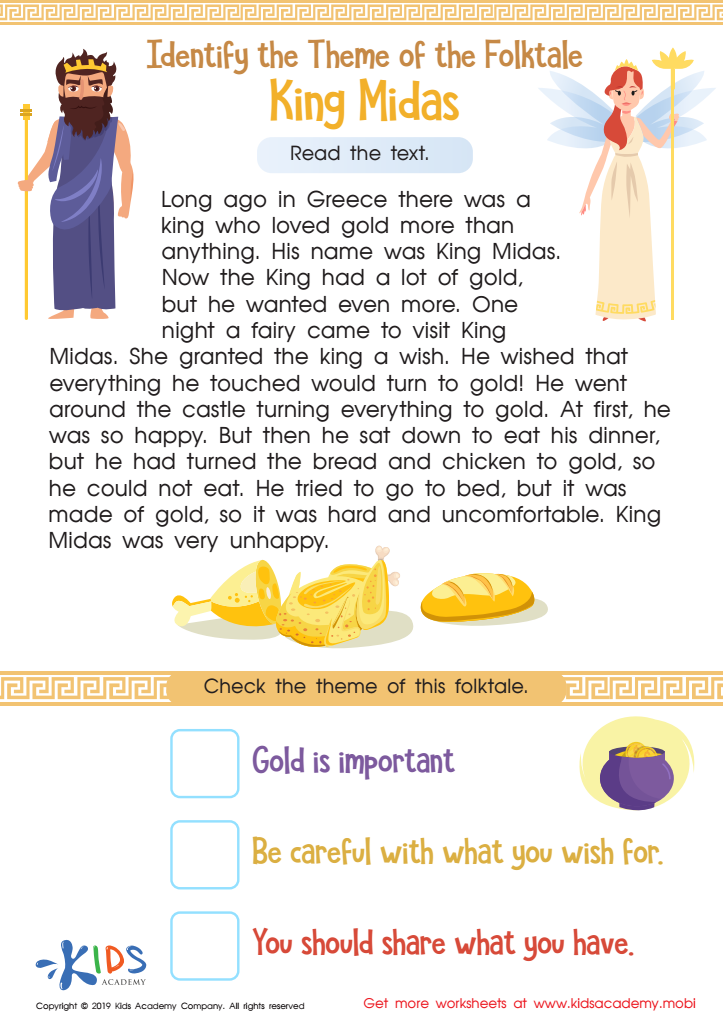
King Midas Worksheet
 Assign to My Students











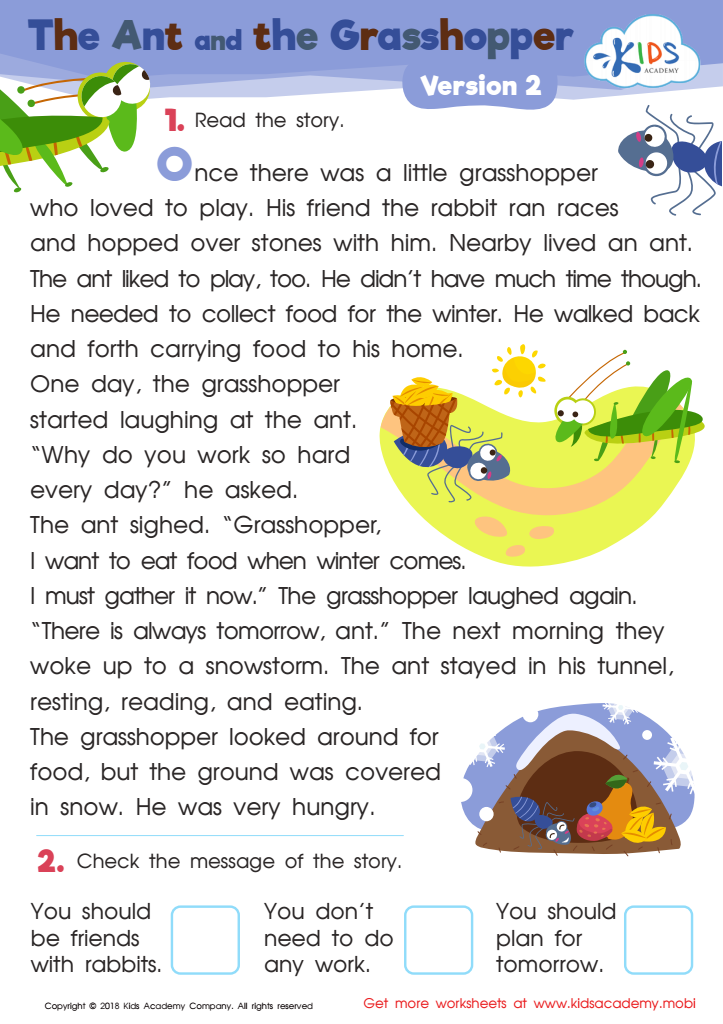
The Ant and The Grasshopper Version 2 Worksheet
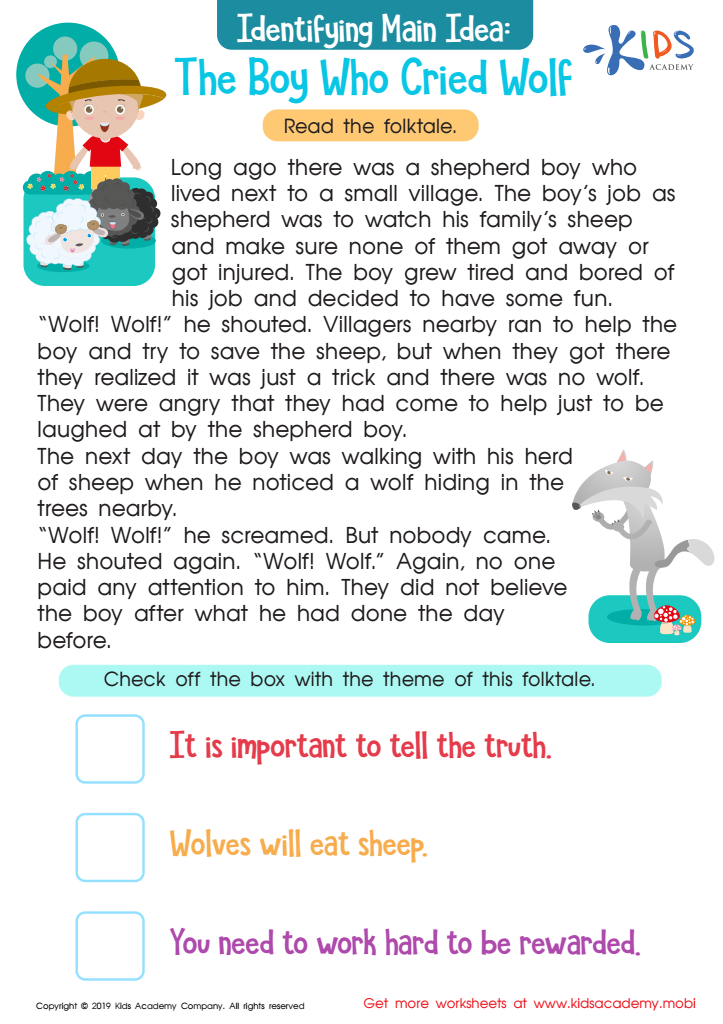
The Boy Who Cried Wolf Part 2 Worksheet




.jpg)



Understanding moral lessons and building vocabulary in children aged 7-9 is crucial for their social and emotional development. At this stage, children begin to formulate their values and understanding of right and wrong. Parents and teachers play a vital role in helping them navigate these concepts. Engaging with moral lessons helps children develop empathy, learn to resolve conflicts amicably, and cultivate a sense of justice, which are essential life skills.
Moreover, building vocabulary during these years supports children's comprehension and expression abilities. A robust vocabulary enables them to articulate their thoughts, feelings, and beliefs clearly. It also enhances their reading skills, as a strong lexicon is foundational to understanding texts and developing critical thinking.
Incorporating moral lessons connected to vocabulary can enrich discussions, promoting not only linguistic skills but also ethical reasoning. For example, exploring characters’ choices in stories can introduce words associated with ethics, such as “justice”, “honesty,” and “compassion.” This makes moral learning more relatable and impactful.
In summary, focusing on moral lessons and vocabulary development fosters well-rounded individuals, empowering children to become thoughtful, articulate members of society. Parents and teachers should prioritize this connection to equip children with the tools they need for life.








