Moral lesson understanding Normal Reading Worksheets for Ages 7-9
5 filtered results
-
From - To
Explore our engaging "Moral Lesson Understanding" reading worksheets, designed for children ages 7 to 9! These printable resources help young learners develop critical thinking skills through the exploration of morals and values in various stories. Each worksheet encourages kids to read carefully, comprehend the underlying messages, and reflect on their implications. With fun activities and thought-provoking questions, educators can seamlessly integrate these worksheets into their curriculum, fostering a deeper understanding of ethical lessons. Perfect for classroom or at-home learning, these worksheets inspire children to think critically about choices and consequences, cultivating lifelong moral reasoning skills. Start inspiring young minds today!
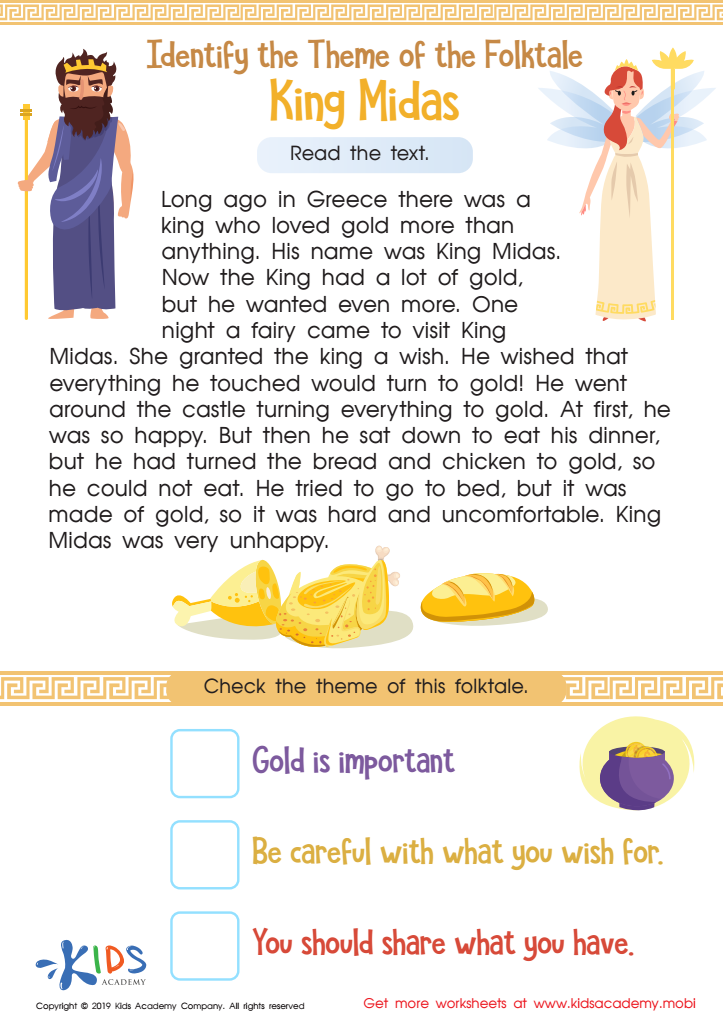
King Midas Worksheet
 Assign to My Students
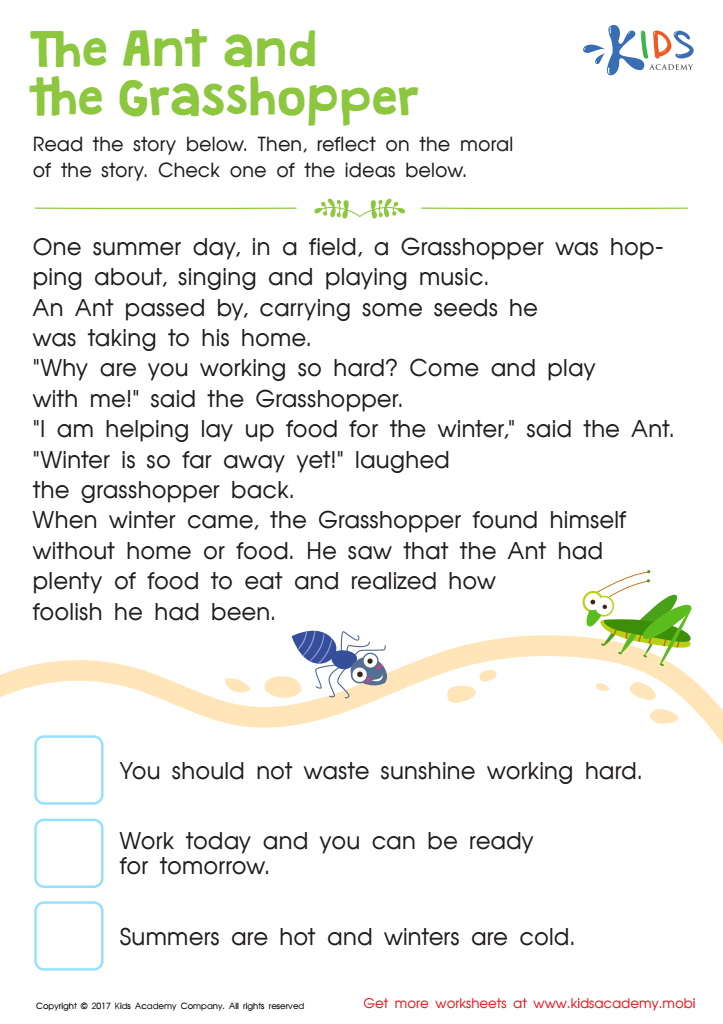
The Ant and The Grasshopper Printable
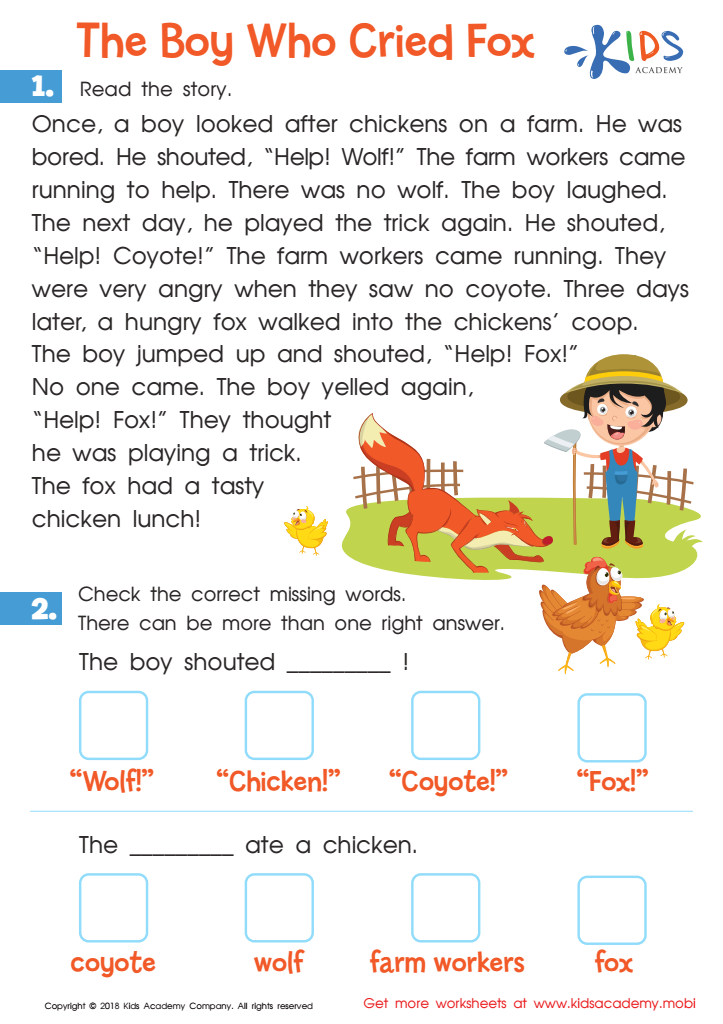
The Boy Who Cried Fox Worksheet
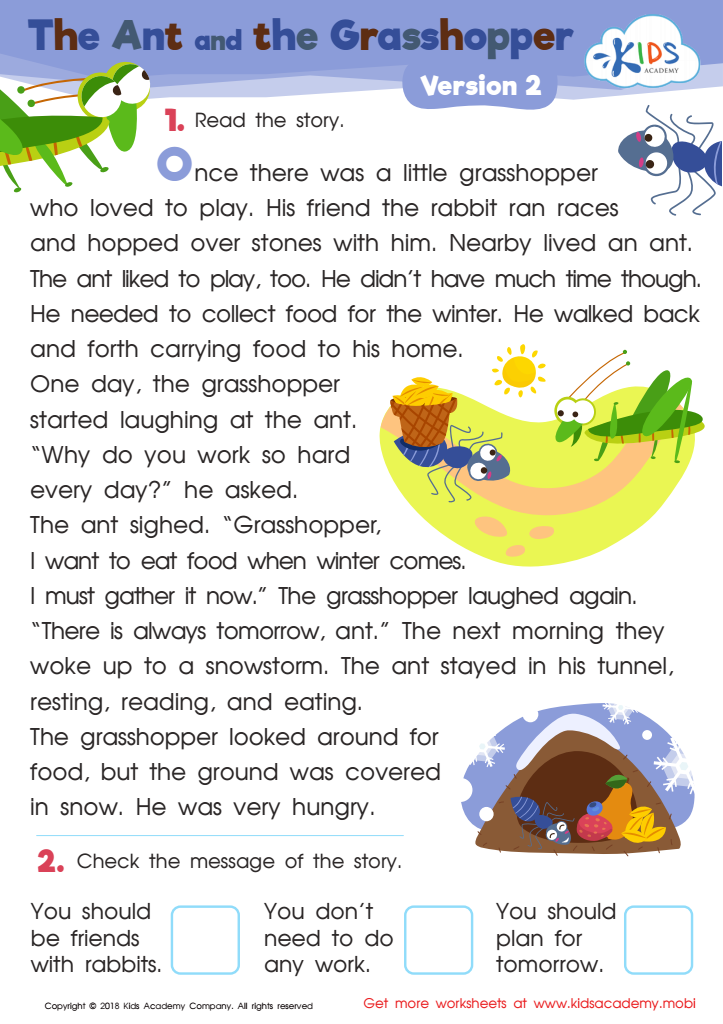
The Ant and The Grasshopper Version 2 Worksheet
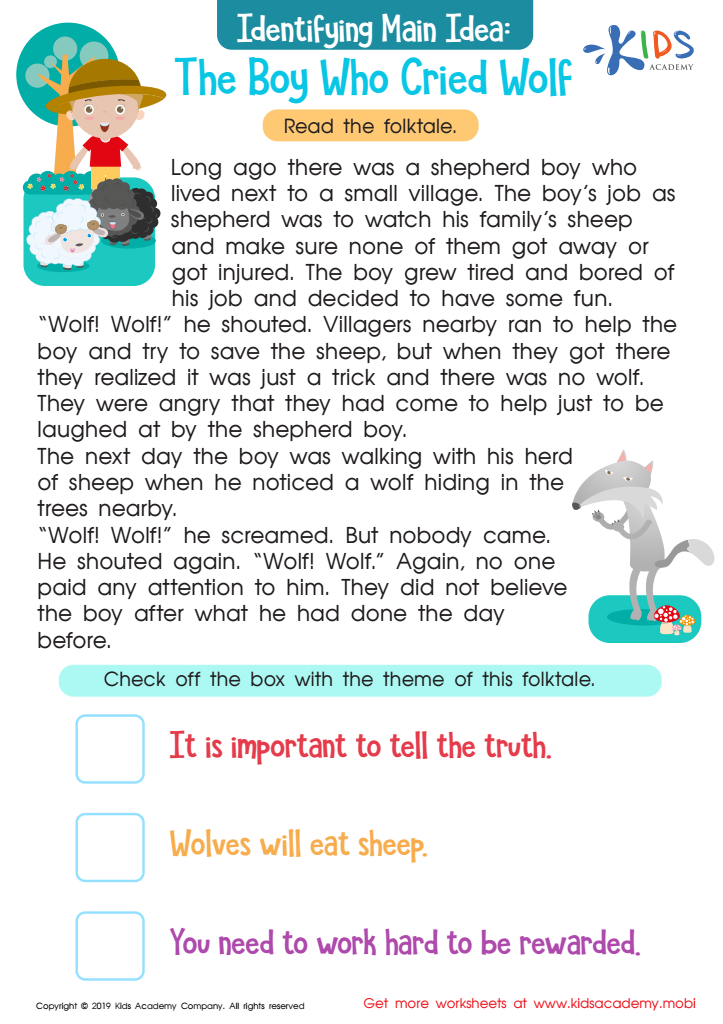
The Boy Who Cried Wolf Part 2 Worksheet








Parents and teachers should prioritize moral lesson understanding in reading for children aged 7-9 because this stage of development is crucial for shaping character and social understanding. At this age, children are highly impressionable and begin to comprehend complex ideas about right and wrong, fairness, empathy, and social responsibility.
Reading stories with moral lessons helps children navigate their emotions and relationships with others. When they encounter characters facing dilemmas, kids can not only relate to their struggles but also critically analyze the consequences of various choices. This fosters critical thinking and aids in the development of their values.
Moreover, discussions about characters' decisions can lead to meaningful conversations about ethics, encouraging children to articulate their thoughts and feelings. This enhances their communication skills and emotional intelligence.
Engaging children with narratives that emphasize morals also promotes positive behavior, helping them understand the importance of kindness, integrity, and cooperation in their everyday lives. Ultimately, instilling these values through reading enriches their overall educational experience and nurtures them into compassionate individuals who are capable of positively contributing to society. Hence, moral understanding in reading should be a fundamental focus for both parents and educators.








