Sequencing Skills Normal Reading Worksheets for Ages 7-9
3 filtered results
-
From - To
Enhance your child's reading comprehension and critical thinking with our Sequencing Skills Worksheets designed for ages 7-9. These engaging printable worksheets help children learn how to arrange events in the correct order, a vital skill for understanding stories and improving literacy. Each worksheet features age-appropriate activities that promote logical reasoning and reinforce reading comprehension through fun exercises. From real-life scenarios to imaginative narratives, your child will enjoy practicing sequencing while building confidence in their reading abilities. Perfect for at-home learning or classroom use, these worksheets provide a valuable resource to support your child's educational growth and love for reading.
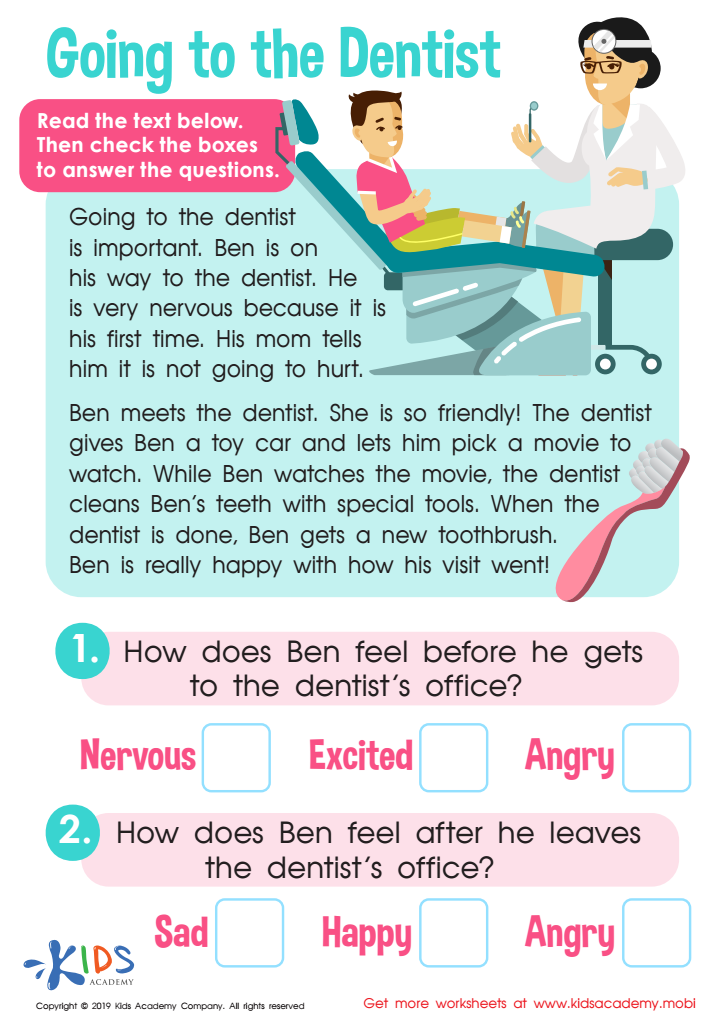
Going to the Dentist Worksheet
 Assign to My Students
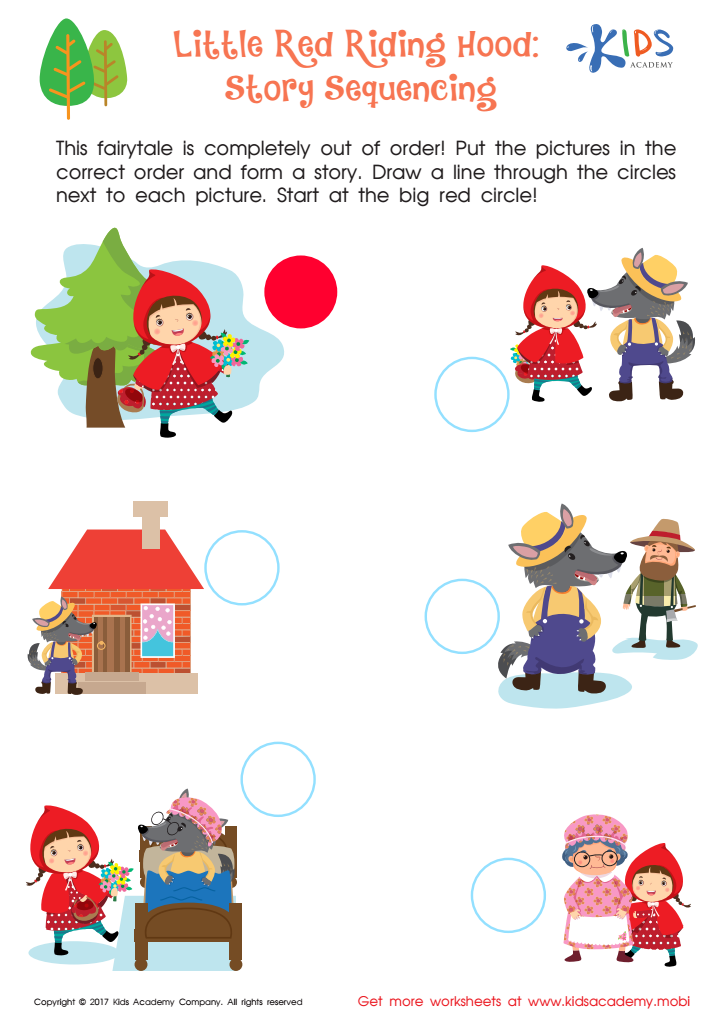
Story Sequencing Printable
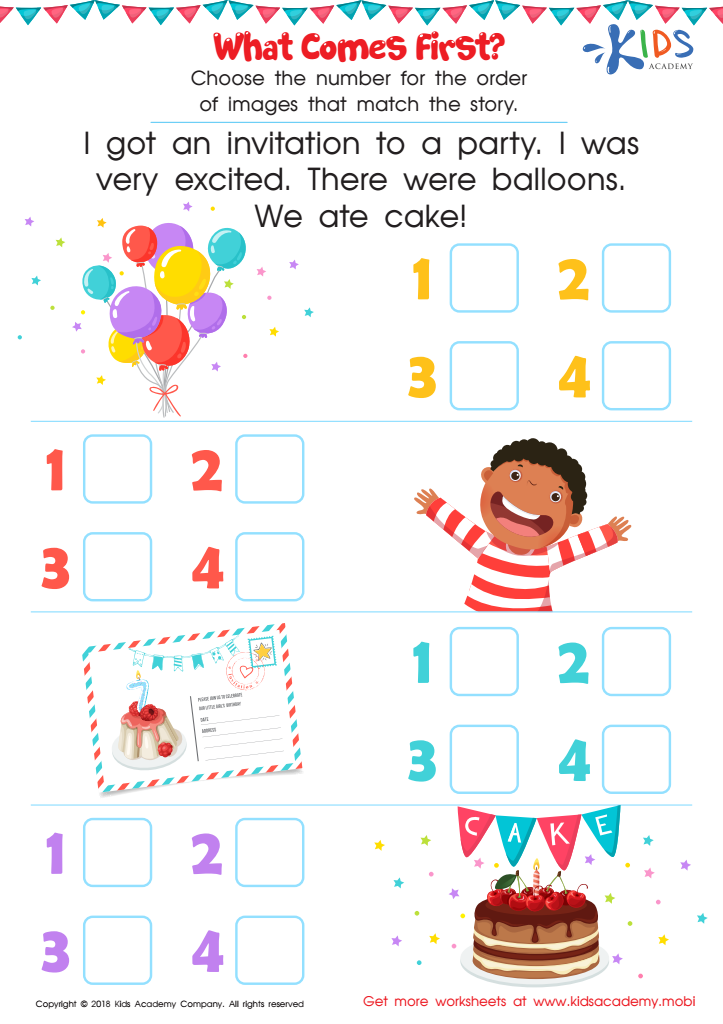
What Comes First Worksheet








Sequencing skills are critical for children ages 7-9 as they form the foundation for reading comprehension and overall literacy development. Understanding the order of events in a story helps children grasp the narrative structure, enhancing their ability to predict outcomes and make inferences. When children can recognize sequence, they are more equipped to summarize stories accurately, identify main ideas, and form connections between different parts of the text.
For parents and teachers, nurturing these skills is essential because they directly impact academic success. Proficient sequencing enables children to engage with texts in a more meaningful way, fostering a love for reading and learning. Furthermore, these skills are not only applicable to stories but also essential in subjects like science and history, where the chronological order of information is key.
Engaging children in sequencing activities—like retelling stories, using picture cards, or engaging in timeline exercises—can be both enjoyable and effective. By prioritizing sequencing skills, adults can help children develop critical thinking and organizational abilities that extend well beyond reading, preparing them for future academic challenges and everyday life skills. Ultimately, focusing on sequencing empowers children to become more confident and capable learners.