
Understanding adjectives Normal Reading Worksheets for Ages 7-9
3 filtered results
Difficulty Level
Grade
Age
-
From - To
Subject
Activity
Standards
Enhance your child's reading skills with our "Understanding Adjectives Normal Reading Worksheets" designed specifically for ages 7-9. These engaging worksheets help young learners grasp the concept of adjectives, essential for developing their descriptive language abilities. Each activity promotes comprehension, encourages creativity, and reinforces vocabulary. Your child will enjoy identifying and using adjectives through fun exercises and real-world examples, making learning both effective and enjoyable. With a variety of worksheets tailored to different learning styles, these resources will boost your child's confidence in reading and writing. Explore our collection to support your child's journey toward becoming a more expressive communicator!
Favorites
With answer key
Interactive
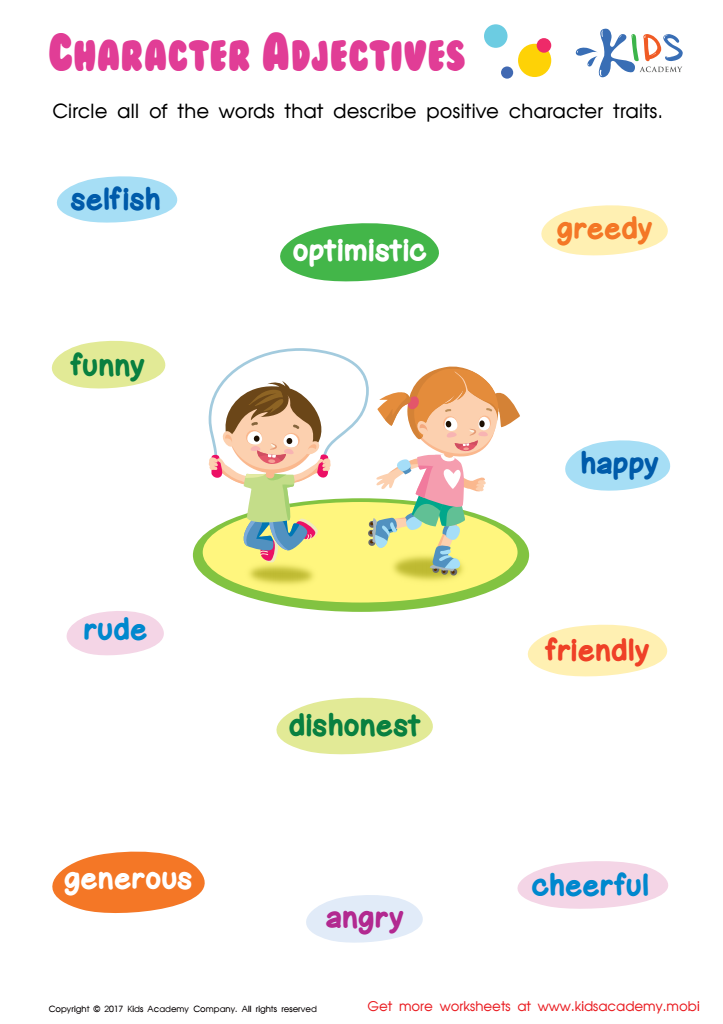
Character Adjectives Worksheet
Help your child express their feelings easily with this PDF worksheet! It focuses on character adjectives and increases their vocabulary, so they can confidently articulate positive emotions.
 Assign to My Students
Character Adjectives Worksheet
Worksheet
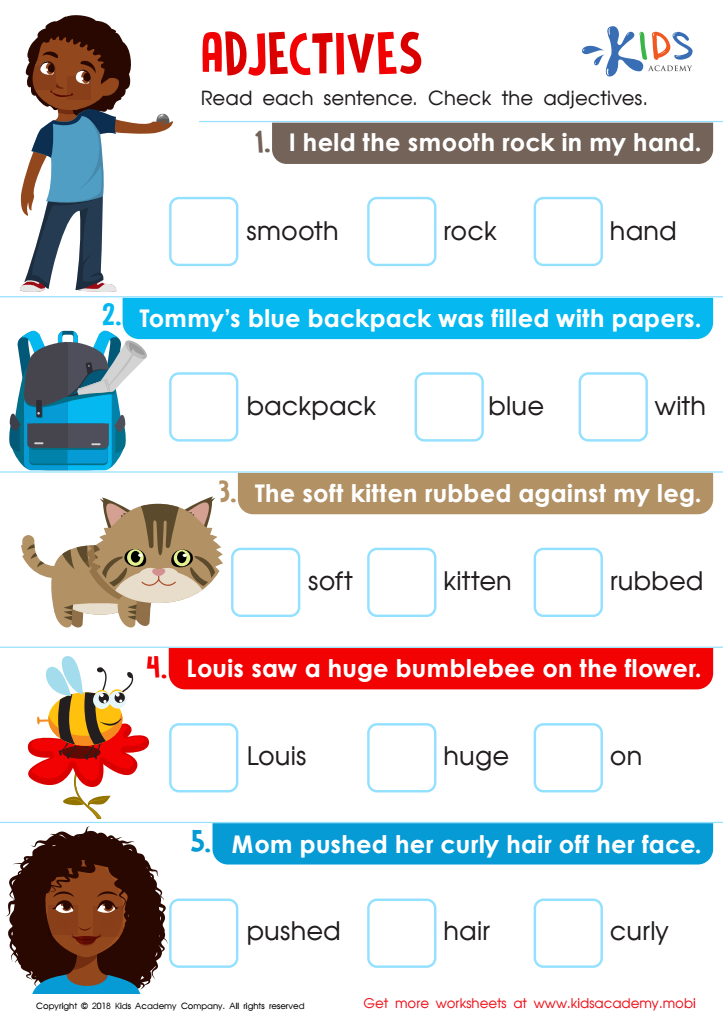
Adjectives Worksheet
Adjectives are words that describe a noun. Examples include "beautiful" and "good". Ask your students to use these adjectives in a sentence and have them identify the adjectives in five sentences on a worksheet. Point out that adjectives are essential to understand, and have them check their answers.
Adjectives Worksheet
Worksheet
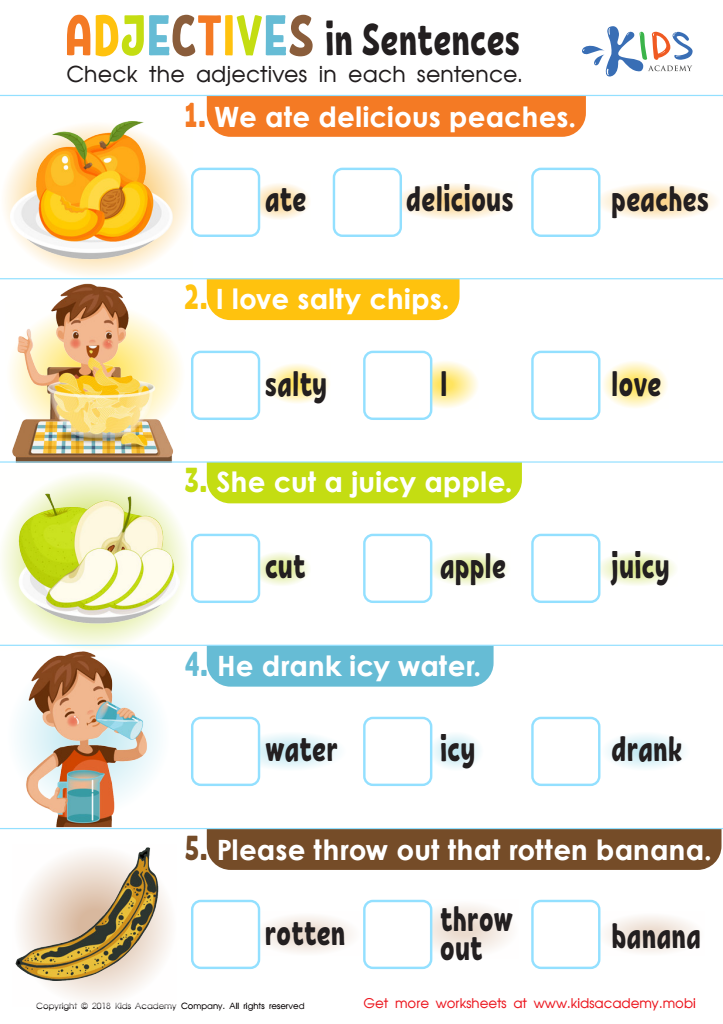
Adjectives in Sentences Worksheet
Our learners can find it hard to use writing to add detail, but adjectives can help. With this fun worksheet, kids can identify adjectives that describe food and drink. Guide them through each sentence, discussing the words and having them choose the one that gives information about the food/drink.
Adjectives in Sentences Worksheet
Worksheet
Join Kids Academy for Free
Who is primarily going to use this learning content?






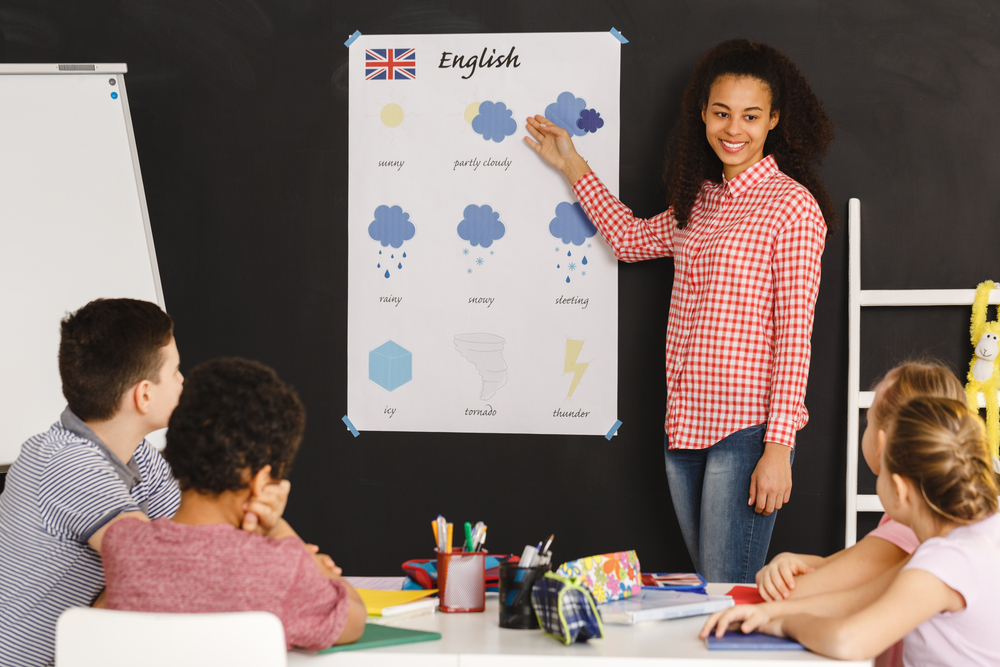
Understanding adjectives is vital for children aged 7-9 as it significantly enhances their reading and writing skills. At this developmental stage, children are learning to articulate their thoughts clearly, and adjectives play a crucial role by adding detail and nuance to their language.
When parents and teachers prioritize understanding adjectives, they empower children to express themselves more vividly. Descriptive language captures readers’ attention and fosters imagination, making stories and non-fiction more relatable and engaging. For instance, a child who can describe a character as “energetic” rather than just “someone” allows others to visualize and understand better, creating a more immersive reading experience.
Moreover, mastering adjectives supports critical thinking and comprehension skills. As students learn to identify and utilize adjectives in texts, they can analyze characters, settings, and themes more effectively, promoting deeper understanding of various materials.
Encouraging the use of adjectives also boosts vocabulary development. Exposure to diverse adjectives enriches children's language, equipping them with the tools necessary for effective communication. In essence, investing time in helping children grasp adjectives can lead to improved literacy skills, which are foundational for their future academic success. Parents and teachers play a pivotal role in fostering this essential aspect of language learning.








