Understanding Sequences Normal Reading Worksheets for Ages 7-9
3 filtered results
-
From - To
Enhance your child's reading skills with our "Understanding Sequences Normal Reading Worksheets" for ages 7-9! Designed to help young learners grasp the concept of sequencing in stories, these engaging worksheets improve comprehension and critical thinking. Children will practice identifying the order of events, which is fundamental in reading development. Each worksheet features fun activities that blend learning with excitement, making the process enjoyable. By working through these sequences, children will gain confidence in their reading abilities while developing important analytical skills. Perfect for home or school use, these worksheets are an effective tool to support your child's literacy journey!
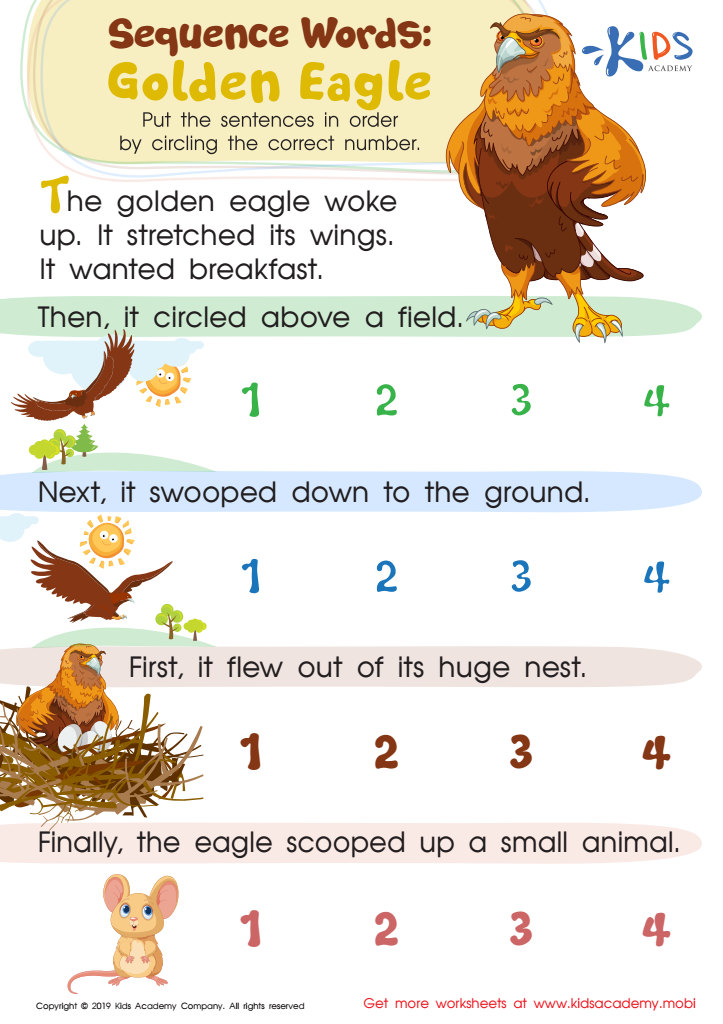
Sequence Word Eagle Worksheet
 Assign to My Students
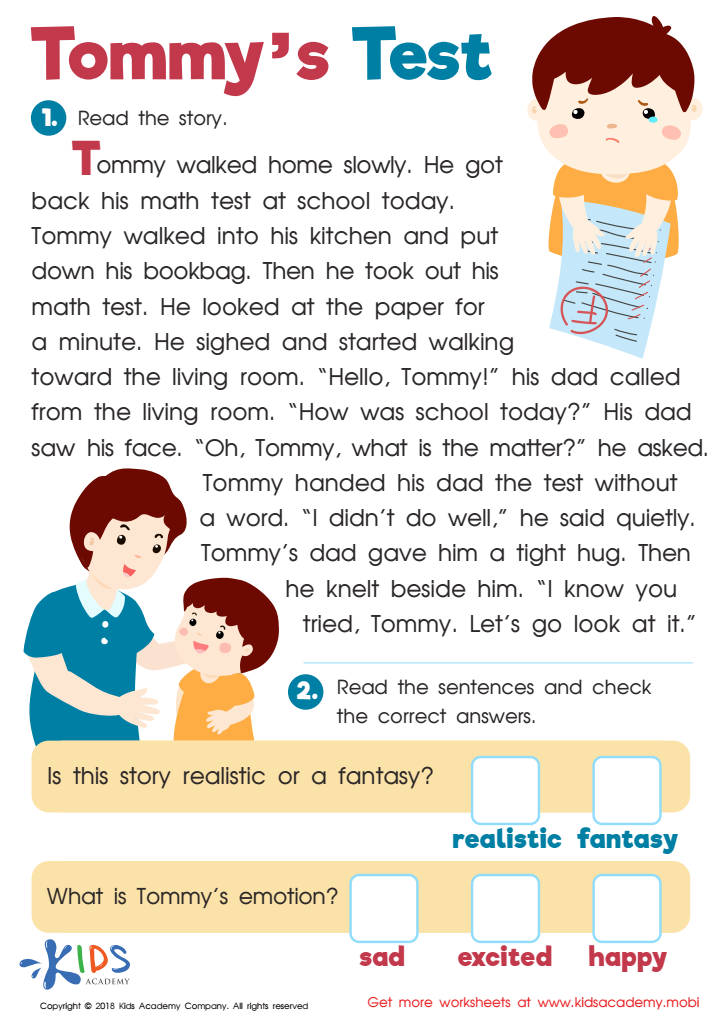
Tommys Test Worksheet
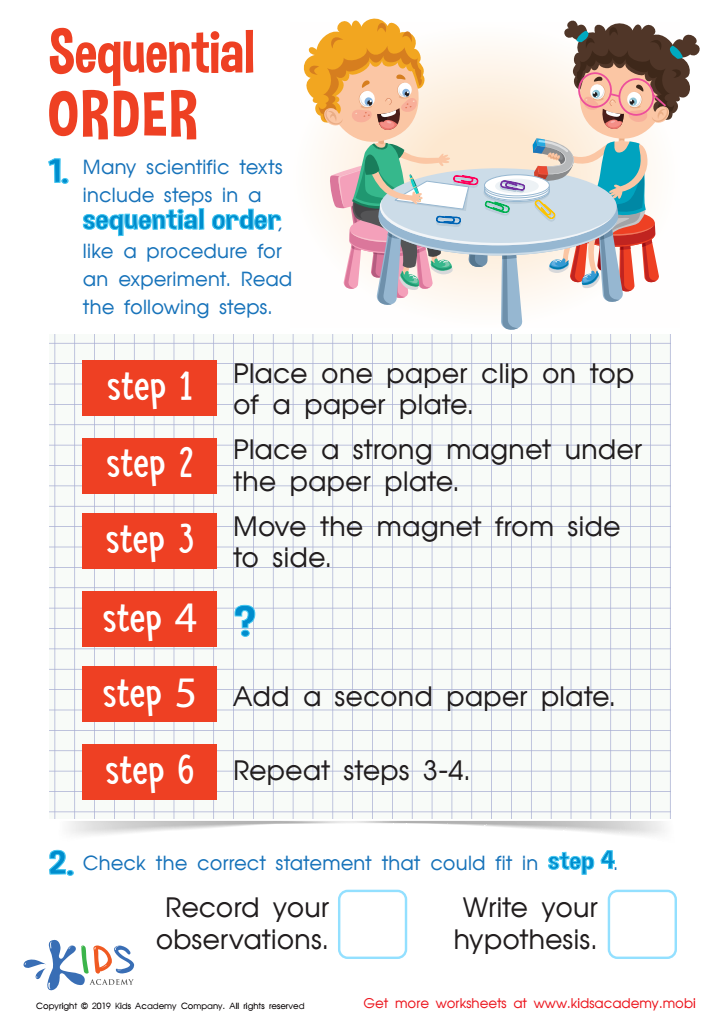
Sequencential Order Worksheet








Understanding sequences is fundamental for children aged 7-9, as it builds a foundation for their cognitive development and critical thinking skills. At this stage, children are not only learning to read fluently but are also beginning to comprehend the structure of narratives and the progression of ideas. Teaching them to recognize sequences enhances their ability to follow stories, identify main events, and understand cause-and-effect relationships. This skill supports their overall reading comprehension, enabling them to connect the dots within texts and predict outcomes.
For parents and teachers, investing time in helping children understand sequences can significantly improve their academic performance across various subjects. Sequences lay the groundwork for mastering more complex concepts in math, science, and history. Furthermore, mastering this skill can empower young learners, boosting their confidence as they engage with more intricate materials in the future.
Moreover, understanding sequences enhances children’s abilities in everyday situations—like following multi-step instructions or organizing their thoughts coherently. Overall, prioritizing this skill fosters greater literacy, independence, and problem-solving abilities, creating a robust framework for lifelong learning. Thus, both parents and teachers play an essential role in guiding children through this critical aspect of literacy development.








