Critical Thinking Normal Reading Comprehension Worksheets for Ages 7-9 - Page 2
27 filtered results
-
From - To
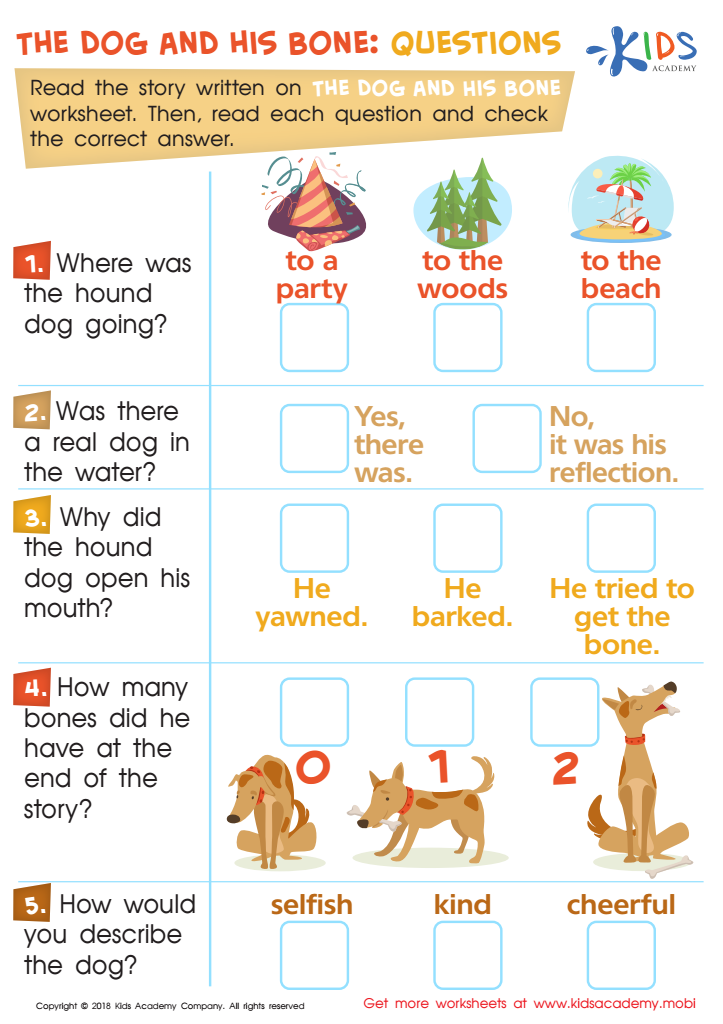
The Dog and His Bone: Questions Worksheet
 Assign to My Students
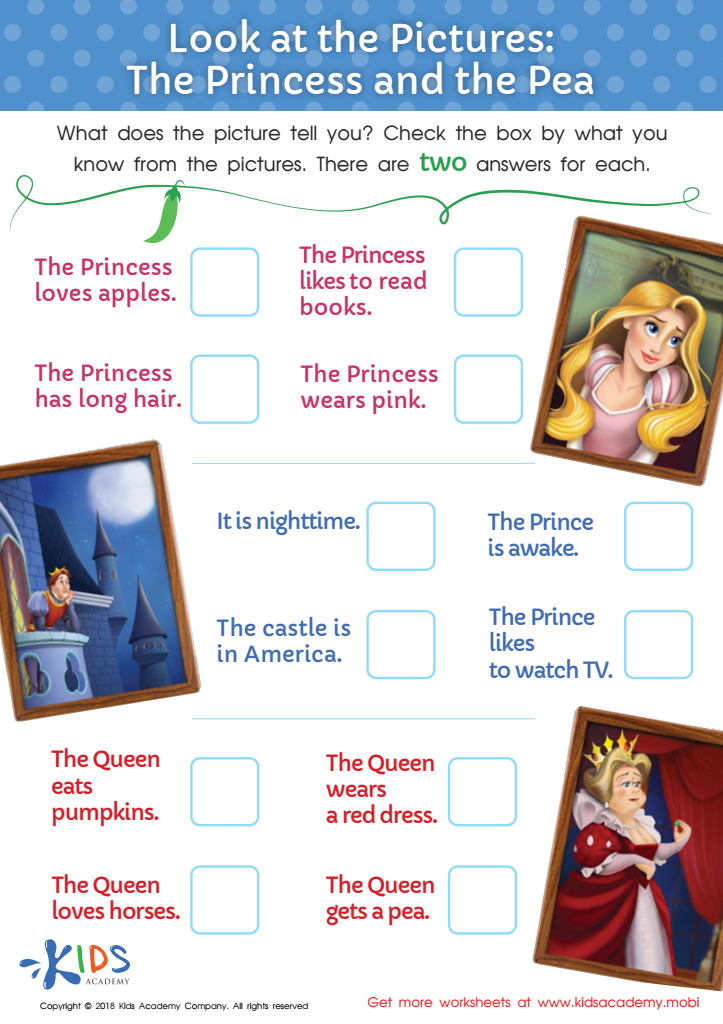
Look at the Pictures: The Princess and the Pea Worksheet
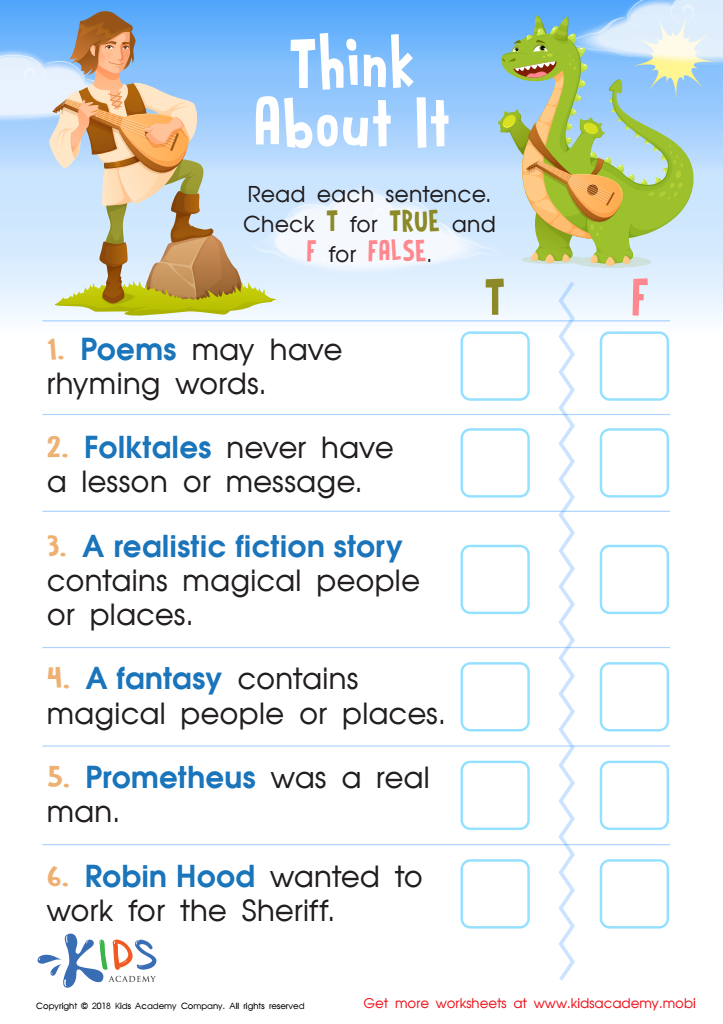
Think About It: Assessment Worksheet








Critical thinking and reading comprehension are essential skills for children ages 7-9, significantly impacting their academic success and life beyond the classroom. During these formative years, children are developing foundational abilities to evaluate information, analyze situations, and make informed decisions. Cultivating critical thinking skills helps children to not merely absorb information but to question, interpret, and synthesize it, empowering them to engage actively with the world around them. This skill set goes hand-in-hand with reading comprehension, enabling children to understand texts deeply and critically respond to ideas.
For parents and teachers, promoting critical thinking through reading is particularly crucial, as it helps children build the ability to link their knowledge with real-world experiences. This integration fosters creativity, problem-solving, and improved academic performance. Additionally, effectively comprehending what they read enhances children's confidence, motivating them to explore diverse subjects and perspectives.
Encouraging thought-provoking discussions about texts enhances verbal expression and supports social-emotional development, crucial at this stage. By nurturing these skills, parents and teachers lay a strong foundation for lifelong learning, resilience, and adaptability, ensuring students are not just passive learners but active participants in their education and communities. Ultimately, developing critical thinking and reading comprehension empowers children to navigate their futures with confidence.








