Analytical thinking Normal Reading Fiction Worksheets for Ages 7-9
4 filtered results
-
From - To
Help young readers enhance their comprehension skills with our "Analytical Thinking Normal Reading Fiction Worksheets for Ages 7-9." Specially designed to stimulate young minds, these worksheets encourage children to dive deep into the world of fiction, asking thought-provoking questions and promoting critical thinking. By exploring characters, settings, and plots, kids can improve their ability to analyze and understand various aspects of stories. Perfect for use at home or in the classroom, these engaging activities not only foster a love for reading but also equip children with essential analytical skills that will benefit their academic journey.
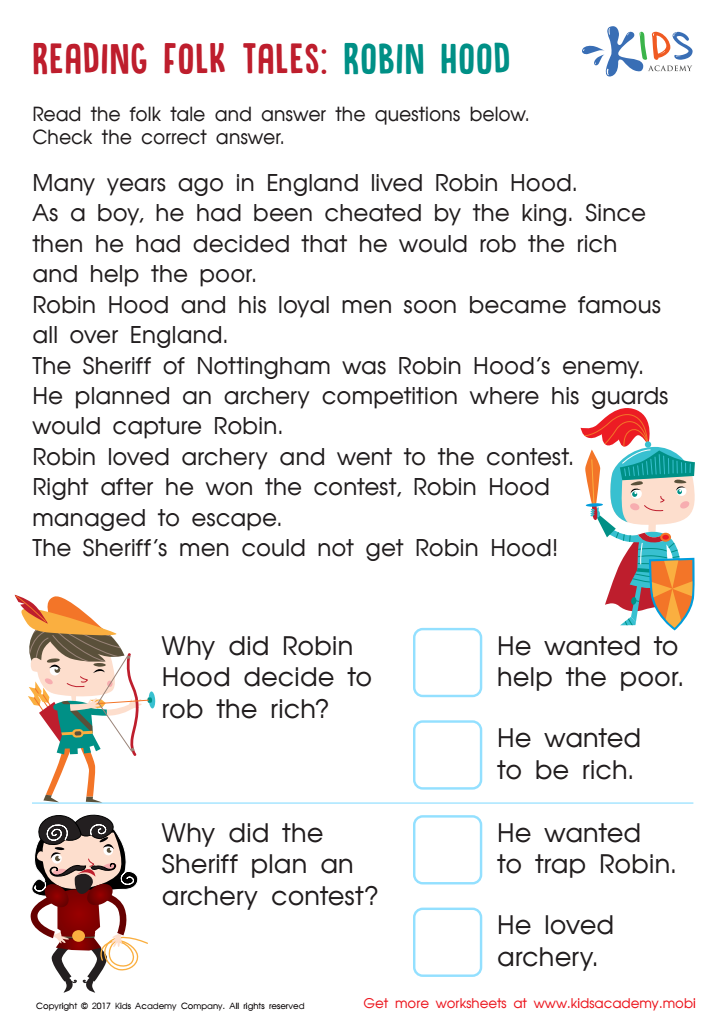
Robin Hood Folktale Worksheet
 Assign to My Students
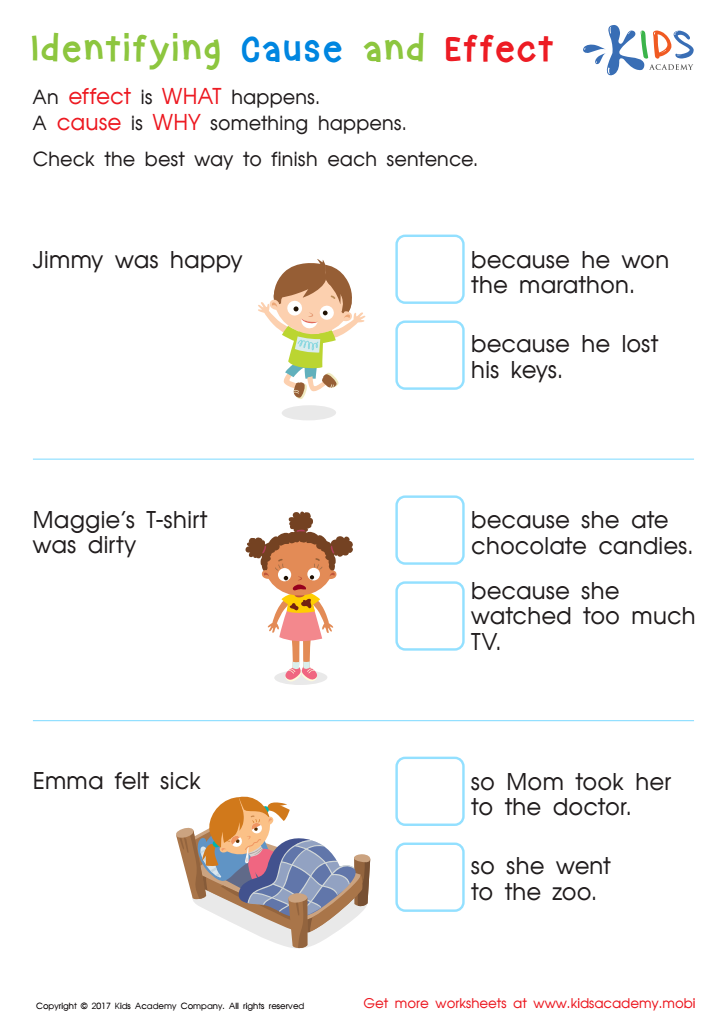
Indentifying Cause and Effect Worksheet
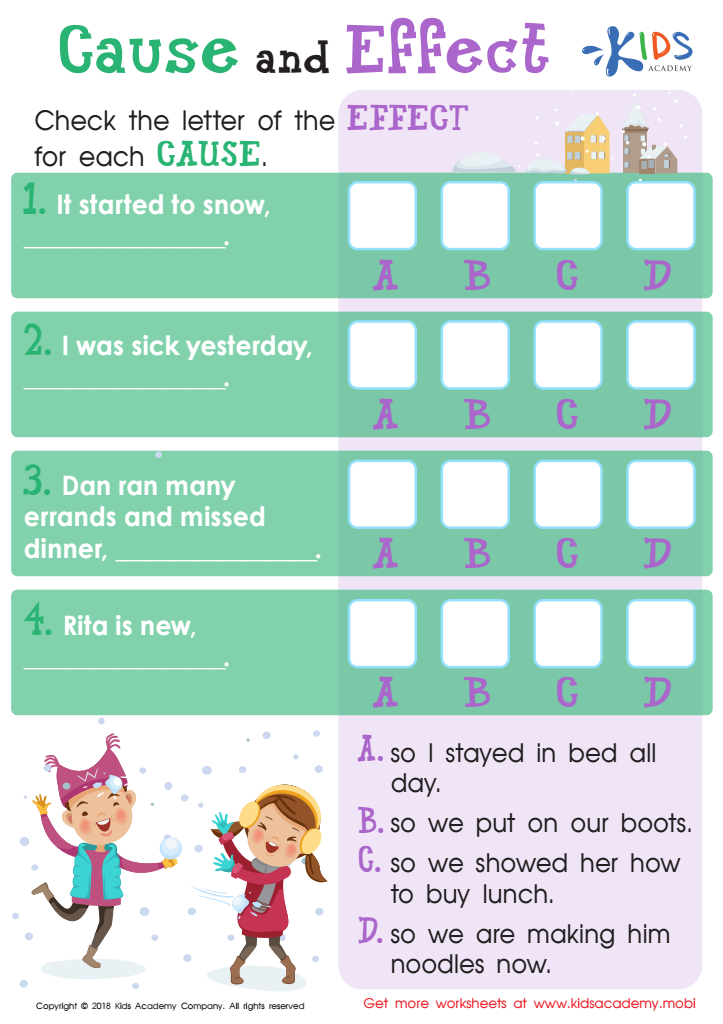
Cause and Effect Worksheet
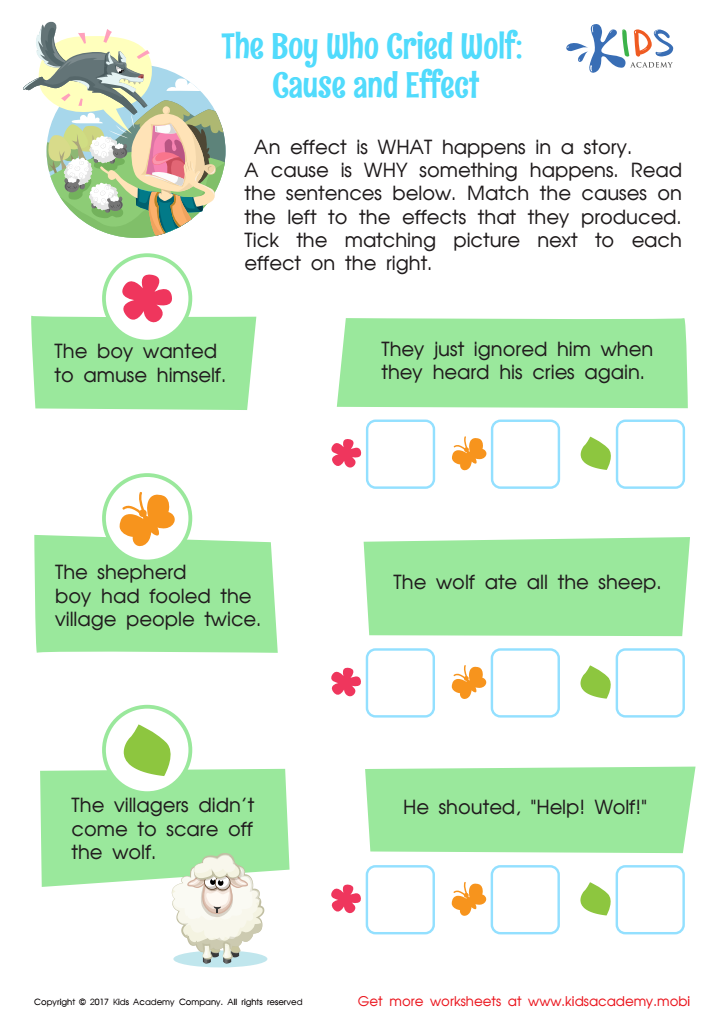
The Boy Who Cried Wolf: Cause and Effect Worksheet




.jpg)



Parents and teachers should prioritize fostering analytical thinking and normal reading of fiction for children aged 7-9 because it sets a critical foundational stage for lifelong cognitive and emotional skills. This age is pivotal for developing cognitive abilities, and engaging with fiction hones children's analytical thinking by encouraging them to think critically about narratives, characters, and plot developments. Such skills are essential not just in academic success but in everyday problem-solving and decision-making.
Reading fiction at a normal, consistent pace also enhances children's comprehension abilities and empathy. Fiction typically introduces children to a variety of characters and viewpoints, helping them understand different perspectives and emotions. This empathetic understanding is crucial for social interactions and emotional intelligence.
Moreover, regular reading habits contribute significantly to vocabulary expansion and language skills. Children regularly exposed to well-written stories enhance their language comprehension, articulate better, and develop sophisticated ways to express themselves. Fiction serves as a gateway to creativity and imagination, fueling a child’s creative thinking and leading to more innovative ideas.
Altogether, these critical skills gained through reading fiction—analytical thinking, empathy, language development, and creativity—are invaluable in shaping well-rounded, capable, and thoughtful individuals. Hence, encouraging children to read fiction thoughtfully in these early years is an investment in their holistic future development.







