Problem-Solving Skills Normal Reading Fiction Worksheets for Ages 7-9
5 filtered results
-
From - To
Enhance your child's problem-solving abilities with our specially designed reading fiction worksheets for ages 7-9! These engaging resources encourage critical thinking and creativity through fun narratives that challenge young readers to analyze situations and propose solutions. Each worksheet integrates captivating stories with thought-provoking questions, making learning enjoyable and effective. By working through these problems, children develop essential skills that are vital for academic success and everyday life. Perfect for classrooms or at-home learning, these worksheets will inspire children to think independently and enhance their reading comprehension. Start fostering your child's problem-solving skills today! Try these worksheets and watch them thrive!
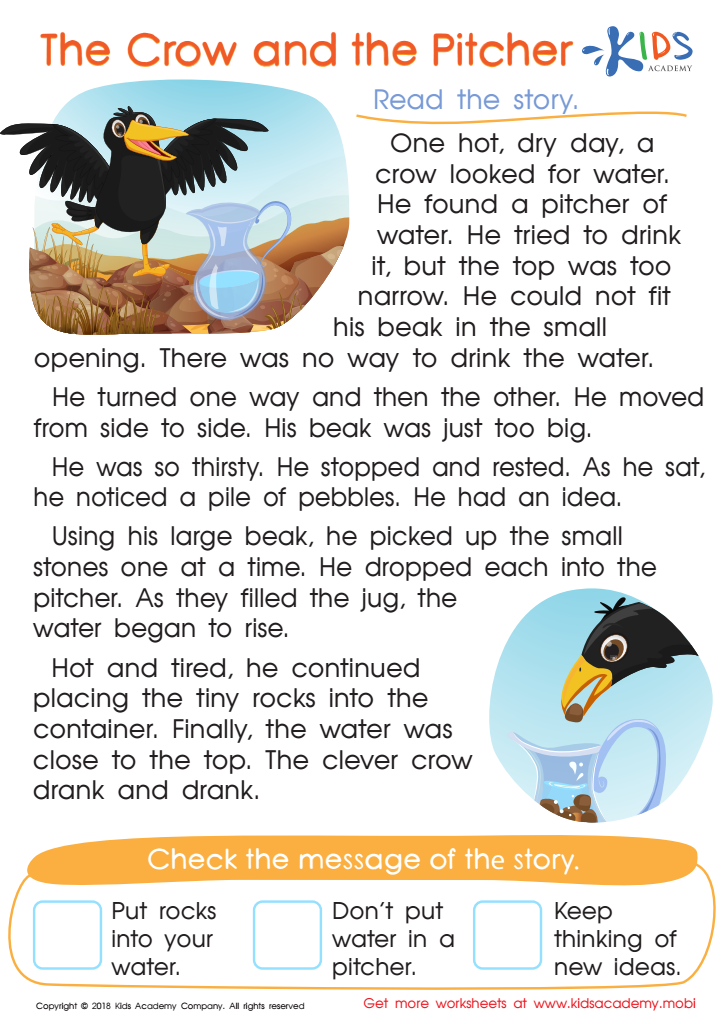
The Crow and the Pitcher Worksheet
 Assign to My Students
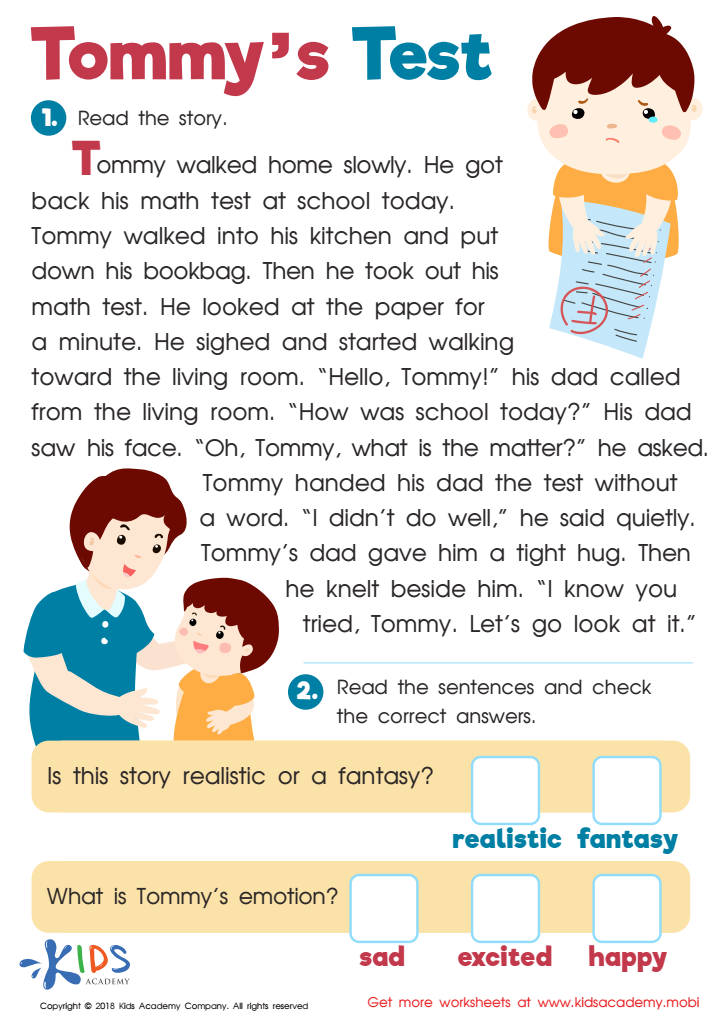
Tommys Test Worksheet
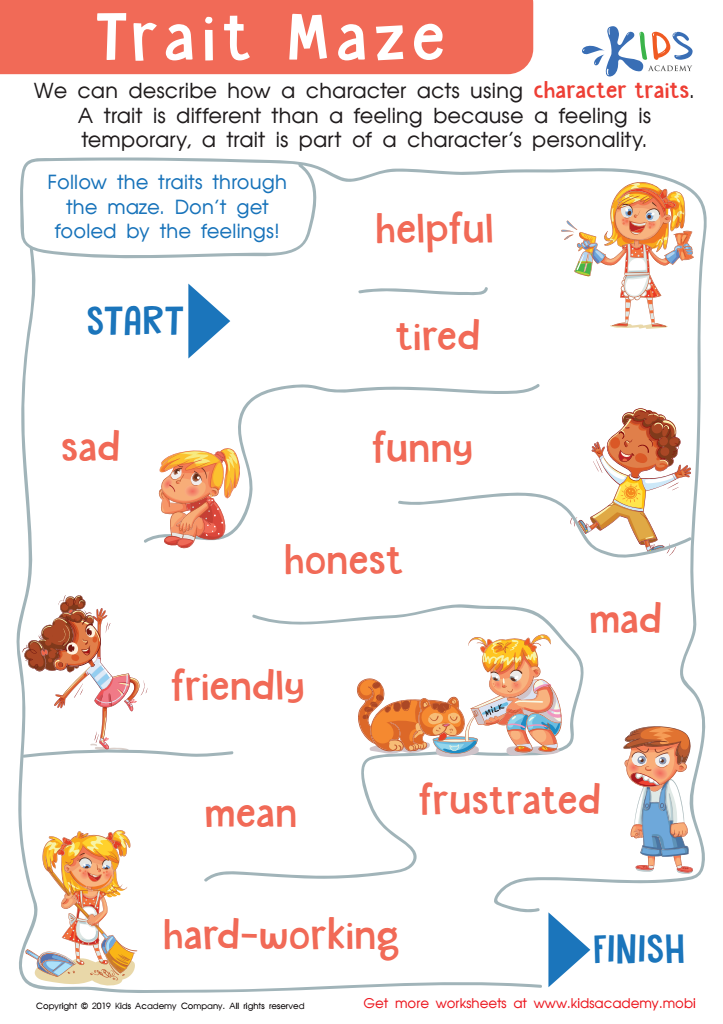
Trait Maze Worksheet
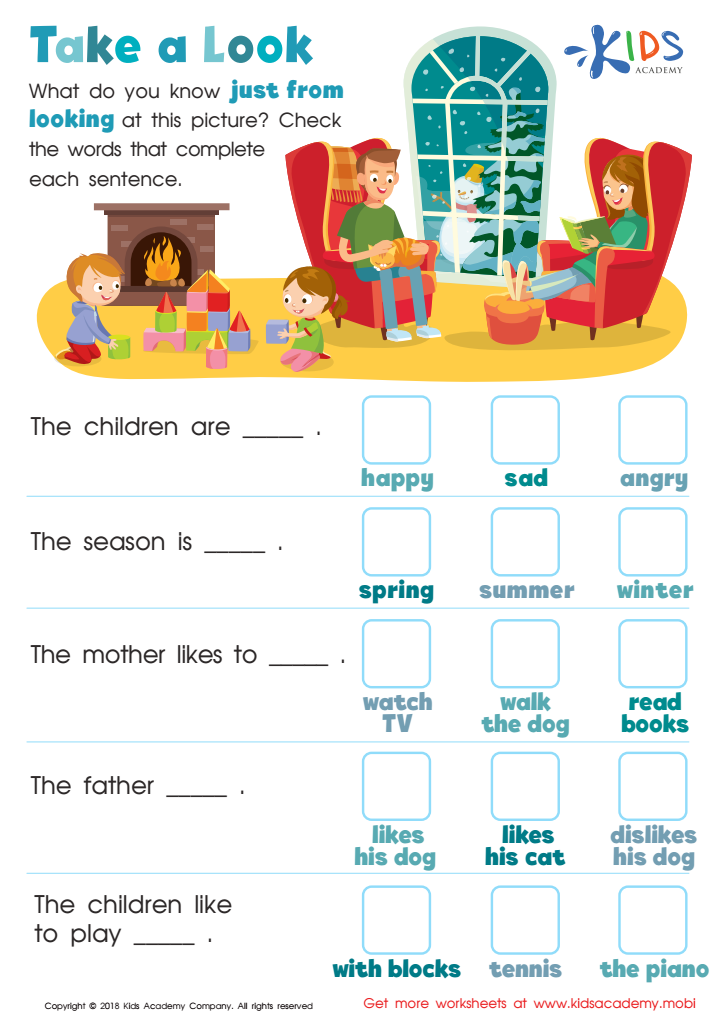
Take a Look - Part 1 Worksheet
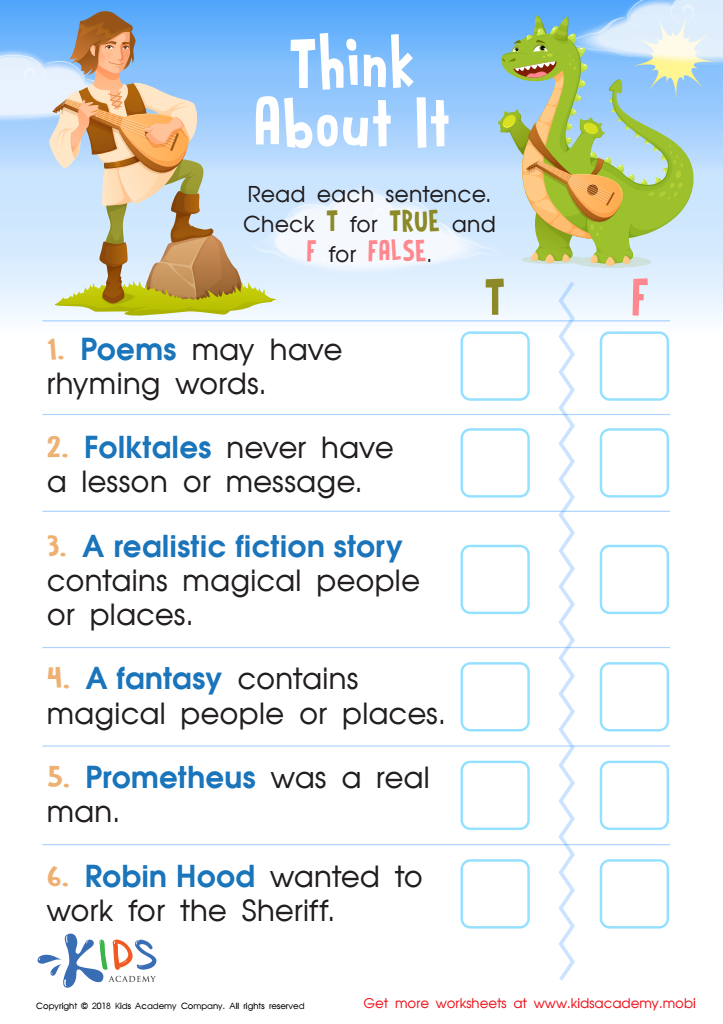
Think About It: Assessment Worksheet





.jpg)


Problem-solving skills are crucial for children aged 7-9, as they navigate both academic and social challenges in their development. When parents and teachers encourage problem-solving through normal reading fiction, they engage children in narrative situations that require critical thinking and creativity. Fictional stories often present characters faced with dilemmas, allowing young readers to empathize, analyze scenarios, and explore different perspectives.
These reading experiences help children learn to identify problems, brainstorm potential solutions, and evaluate outcomes—all essential cognitive skills in their personal and academic lives. Furthermore, literature can inspire resilience as characters overcome obstacles, teaching children that setbacks are a natural part of the problem-solving process.
Involving parents and teachers in this process enhances its effectiveness. Parents can discuss character choices and outcomes during reading sessions, while teachers can incorporate storytelling into lessons, fostering an environment that values inquiry and exploration. By emphasizing problem-solving through reading fiction, both parents and teachers prepare children not just for academic success, but for real-world situations they will face throughout their lives. Ultimately, investing in these skills ensures that children become imaginative thinkers and confident decision-makers, empowered to address challenges in various aspects of their future endeavors.







