Understanding perspectives Normal Reading Fiction Worksheets for Ages 7-9
3 filtered results
-
From - To
"Understanding Perspectives: Normal Reading Fiction Worksheets for Ages 7-9" from Kids Academy is designed to help children explore different viewpoints within stories. These engaging worksheets foster critical thinking by encouraging kids to identify and compare characters’ motivations and reactions. Through fun reading exercises, young learners enhance their comprehension skills and gain deeper empathy. Each worksheet is crafted to align with educational standards, making it a valuable resource for both parents and teachers. By using these tools, children can better understand narrative dynamics, leading to improved literacy and a love for reading. Make learning enjoyable and insightful today!
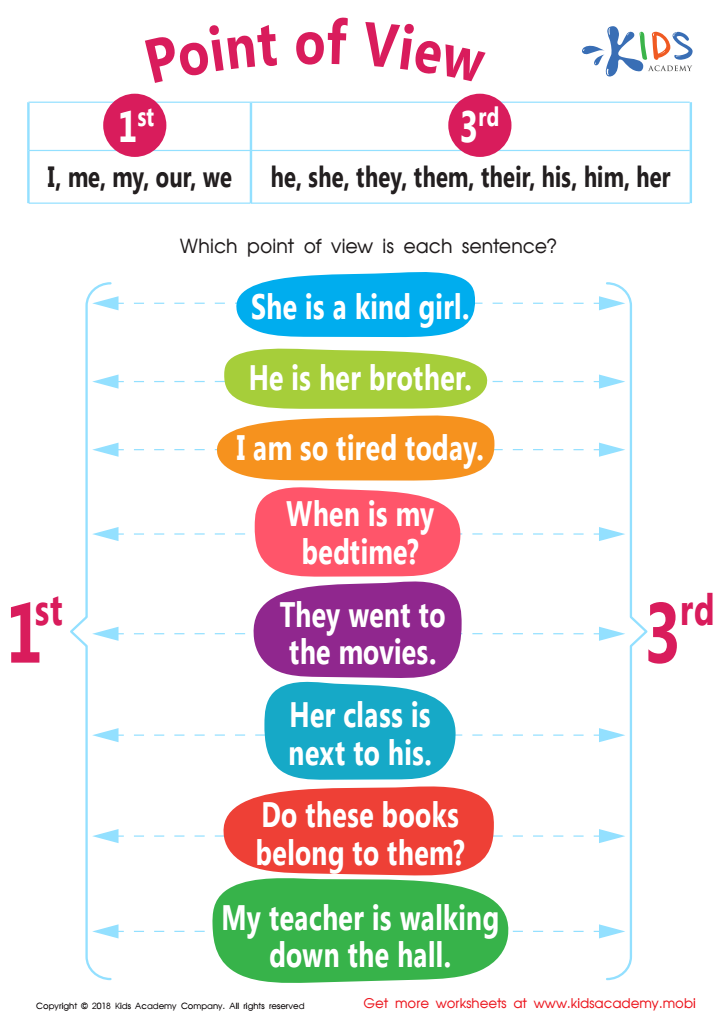
Point of View Worksheet
 Assign to My Students
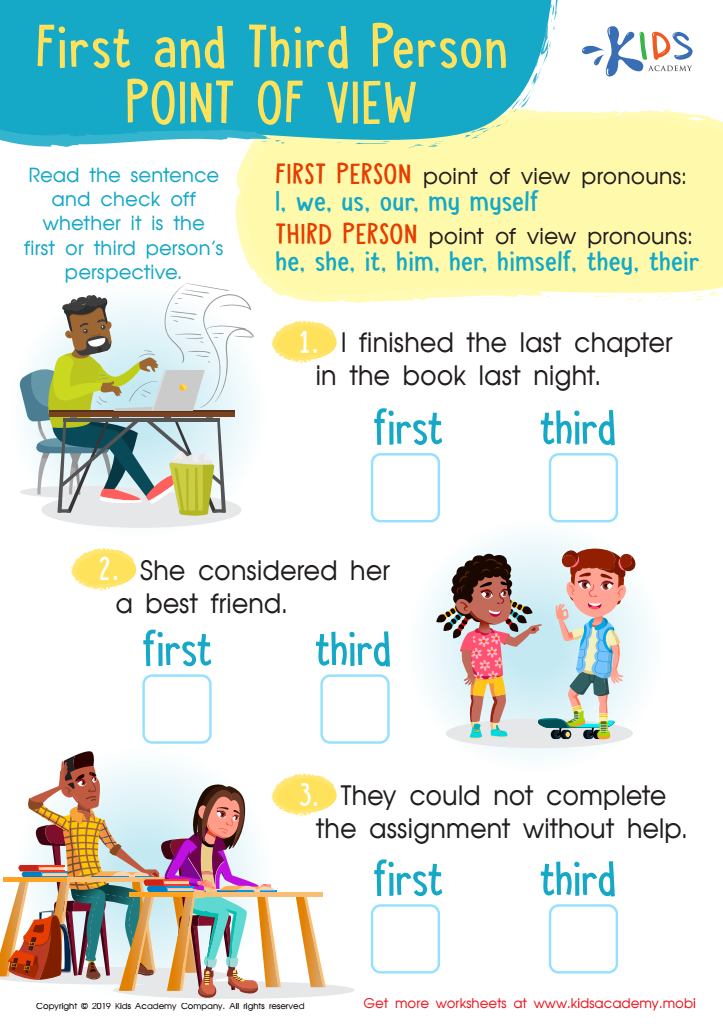
First and Third Person Point of View Worksheet
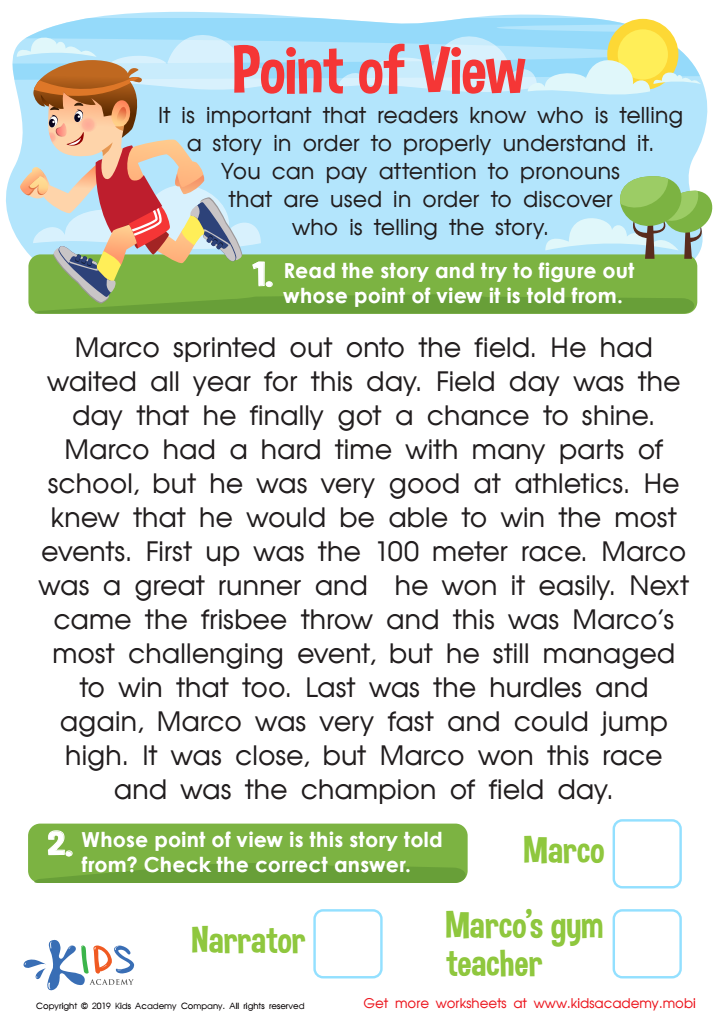
Point of View Worksheet








Understanding different perspectives through reading fiction is crucial for children ages 7-9 as it fosters emotional and cognitive development. At this developmental stage, children begin to navigate social interactions and develop empathy, a vital skill for forming healthy relationships and understanding others' feelings and viewpoints. Fictional stories expose them to diverse characters, situations, and cultures, helping them recognize and appreciate differences.
Parents and teachers should prioritize and encourage diverse reading because it broadens a child's worldview beyond their immediate environment, promoting tolerance and respect. As children see characters dealing with varied predicaments, they learn how to cope with similar issues in real life, which enhances emotional intelligence. Additionally, understanding different perspectives enhances critical thinking skills. Children become adept at analyzing motivations, consequences, and moral dilemmas, which prepares them for more complex analytical thinking in later academic and social situations.
Normal reading habits facilitate this exposure, creating consistent opportunities for children to experience new ideas and viewpoints. It also aids language development and improves concentration and focus. Ultimately, fostering a love for fiction and an appreciation for diverse perspectives equips children with the social and cognitive tools necessary for successful and empathetic engagement in their expanding world.







