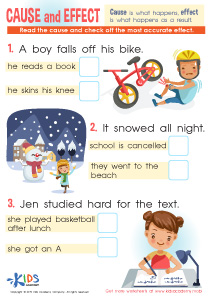
Historical Knowledge Normal Reading Non-Fiction Worksheets for Ages 7-9
5 filtered results
-
From - To
Introduce young learners to the fascinating world of history with our "Historical Knowledge Normal Reading Non-Fiction Worksheets for Ages 7-9". These engaging worksheets are designed to enhance reading skills while sparking curiosity about historical events and figures. Carefully curated for children aged 7-9, each worksheet includes age-appropriate non-fiction passages accompanied by questions to build comprehension and retention. Perfect for use in both classroom settings and at home, our worksheets provide a fun, interactive way to strengthen historical knowledge while developing essential reading abilities. Discover a wealth of resources that bring history to life and support academic growth today!
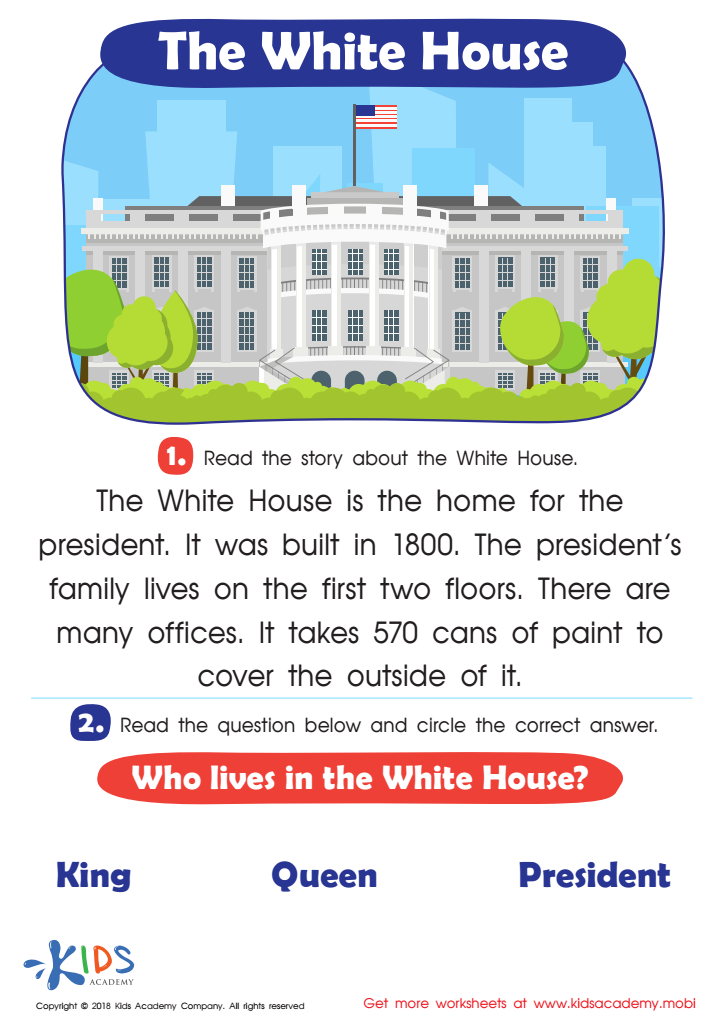
White House Worksheet
 Assign to My Students
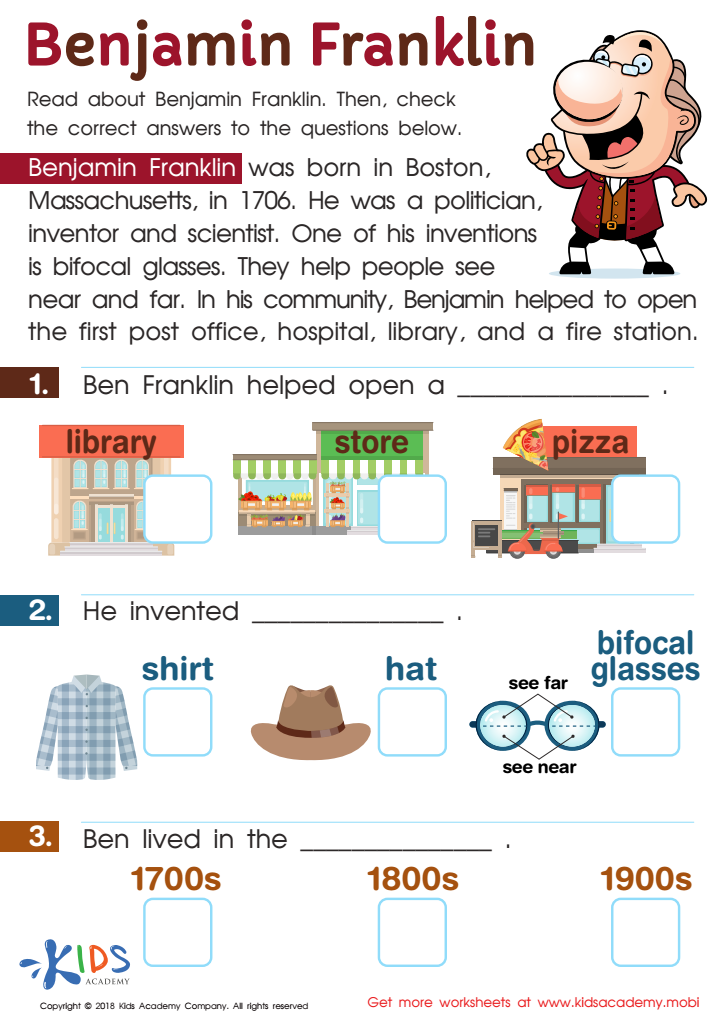
Benjamin Franklin Worksheet
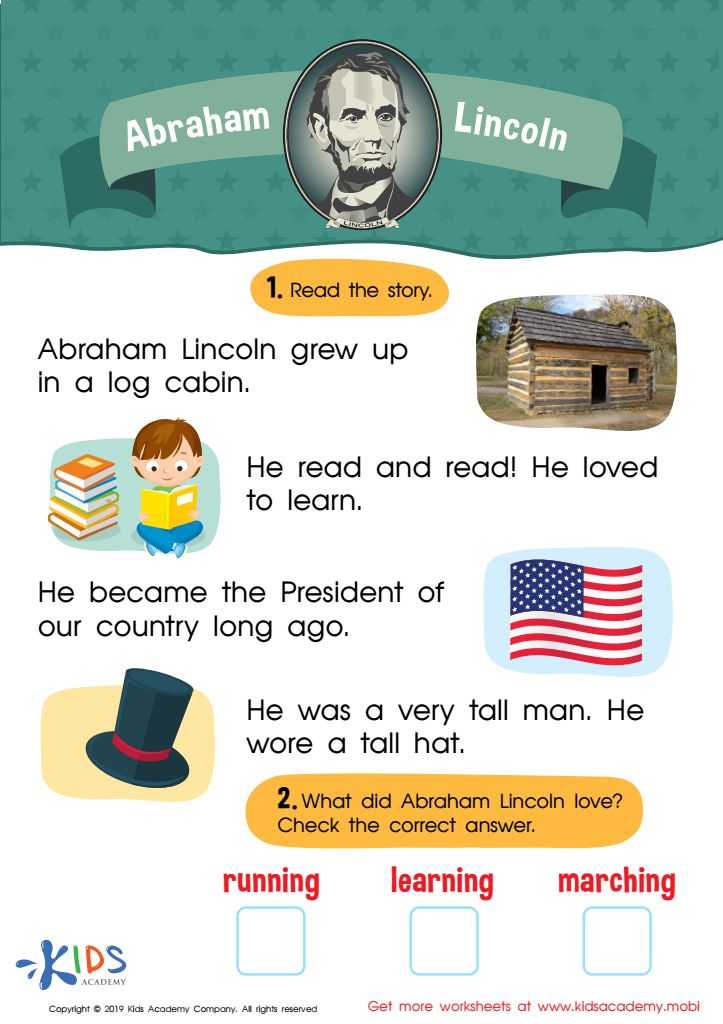
Abraham Lincoln Worksheet
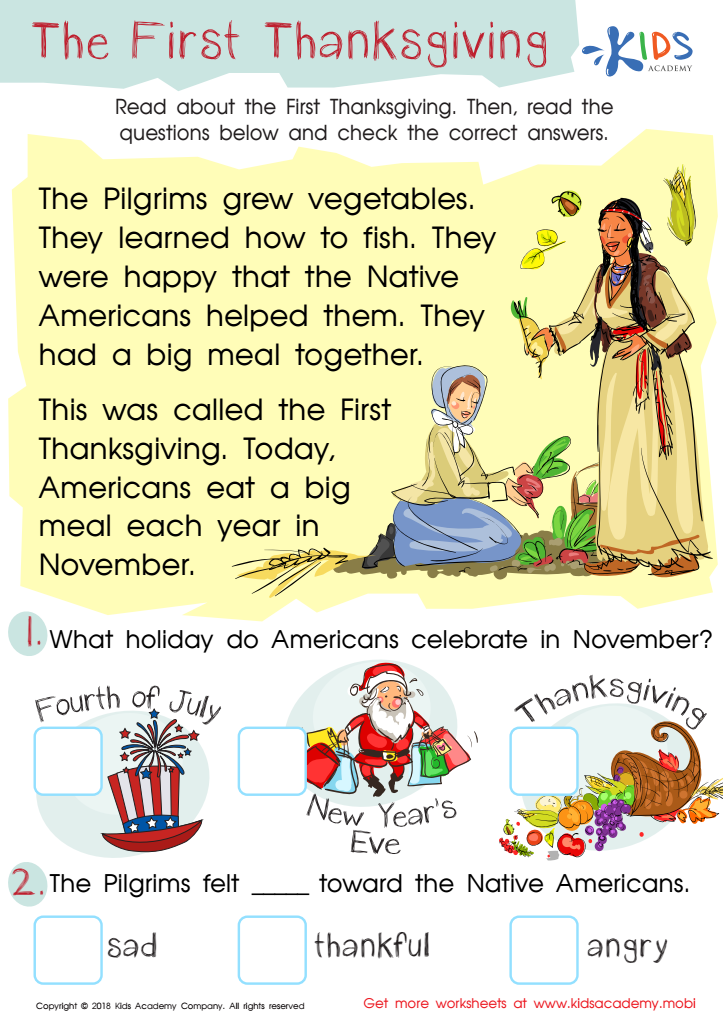
Assessment: First Thanksgiving Worksheet
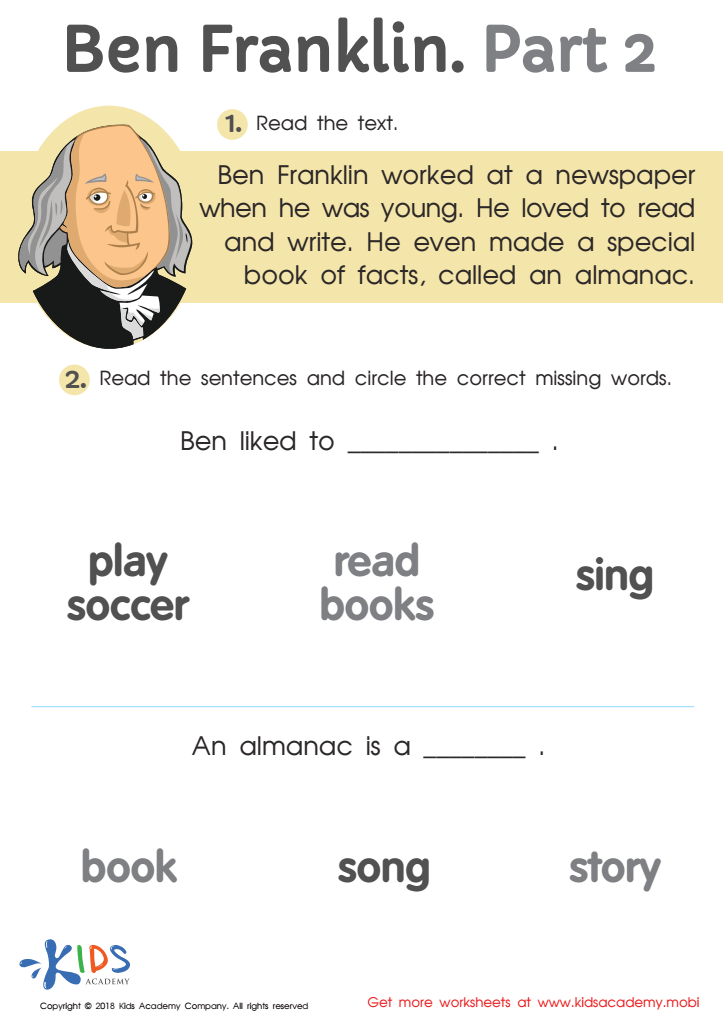
Ben Franklin Part 2 Worksheet








Parents and teachers should value historical knowledge and encourage normal reading of non-fiction for children ages 7-9, as it lays a vital foundation for their academic and personal development. At this age, children are naturally curious and ready to explore the world beyond their immediate surroundings. Teaching history through engaging, age-appropriate non-fiction helps them understand the broader context of their own lives.
Historical knowledge fosters critical thinking and analytical skills by allowing children to examine cause and effect, understand different perspectives, and develop informed opinions. It also cultivates empathy as they learn about the lives and struggles of people from the past. Furthermore, a well-rounded historical understanding enhances cultural awareness and global citizenship, promoting respect for diversity.
Reading non-fiction supports literacy development, expanding vocabulary and comprehension skills. Unlike fictional stories, non-fiction requires children to process factual information, boosting their cognitive abilities and reasoning. This genre introduces them to structured, expository writing, which is prevalent in academic settings.
By prioritizing historical knowledge and non-fiction reading, parents and teachers are empowering children to become well-informed, empathetic, and thoughtful individuals. It not only enriches their education but also shapes them into capable and conscientious members of society.