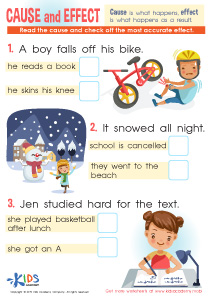
Improve reading comprehension Normal Reading Non-Fiction Worksheets for Ages 7-9
4 filtered results
-
From - To
Enhance your child's reading comprehension skills with our expertly designed Normal Reading Non-Fiction Worksheets for Ages 7-9. These thoughtfully crafted worksheets are perfect for young learners eager to develop a deeper understanding of non-fiction texts. Each worksheet offers engaging activities that promote critical thinking, information retention, and analytical skills. Through a variety of topics and exercises, children will learn to extract key information, summarize content, and make connections to real-world concepts. Boost your child's confidence and proficiency in reading with these valuable educational tools, tailored to support their academic growth and lifelong love for learning. Try them today!
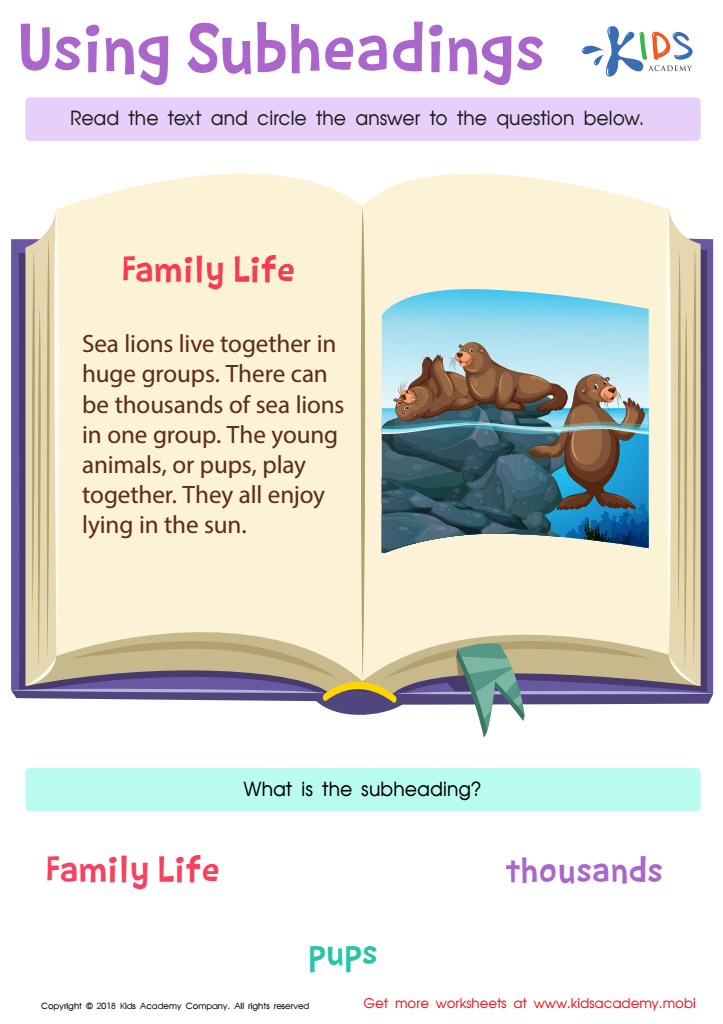
Using Subheadings Worksheet
 Assign to My Students
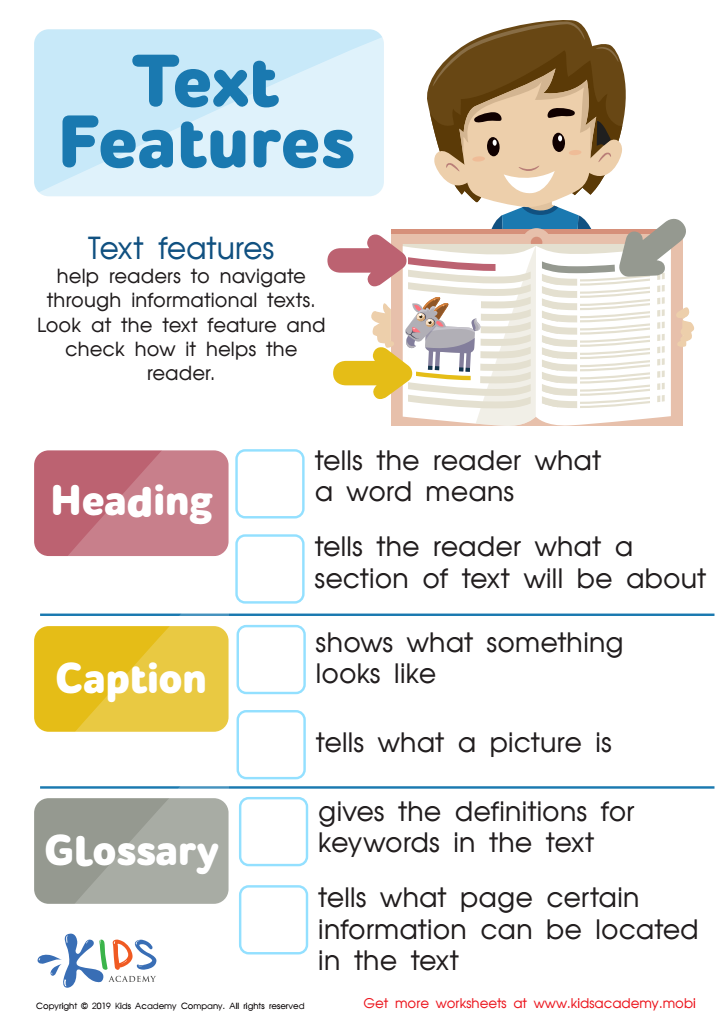
Text Features Worksheet
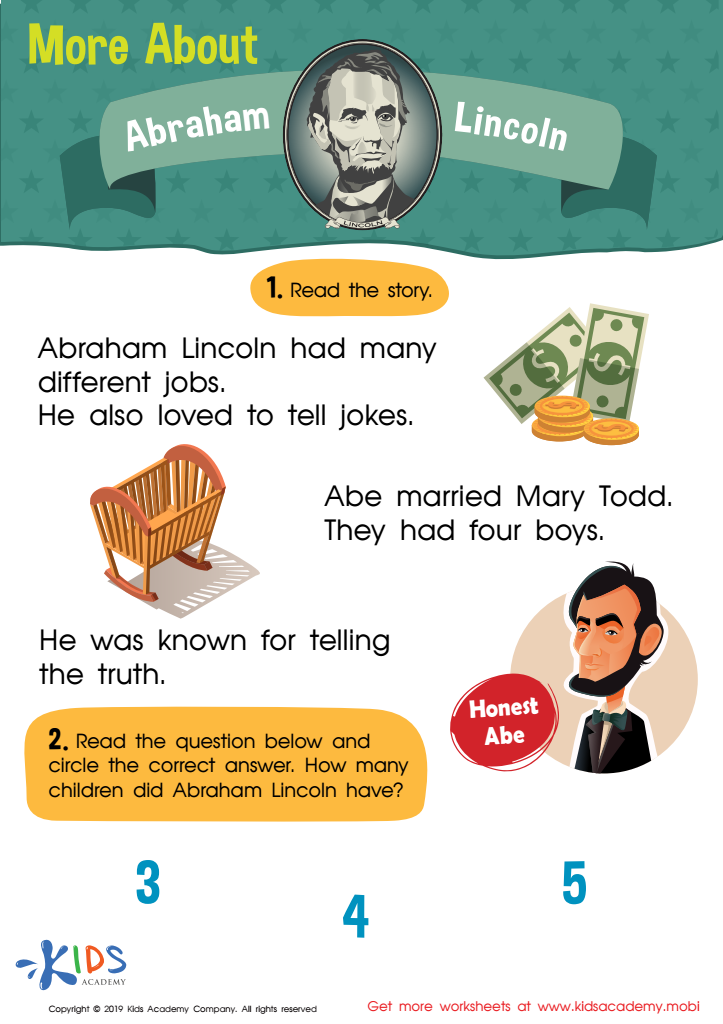
More About Abraham Lincoln Worksheet
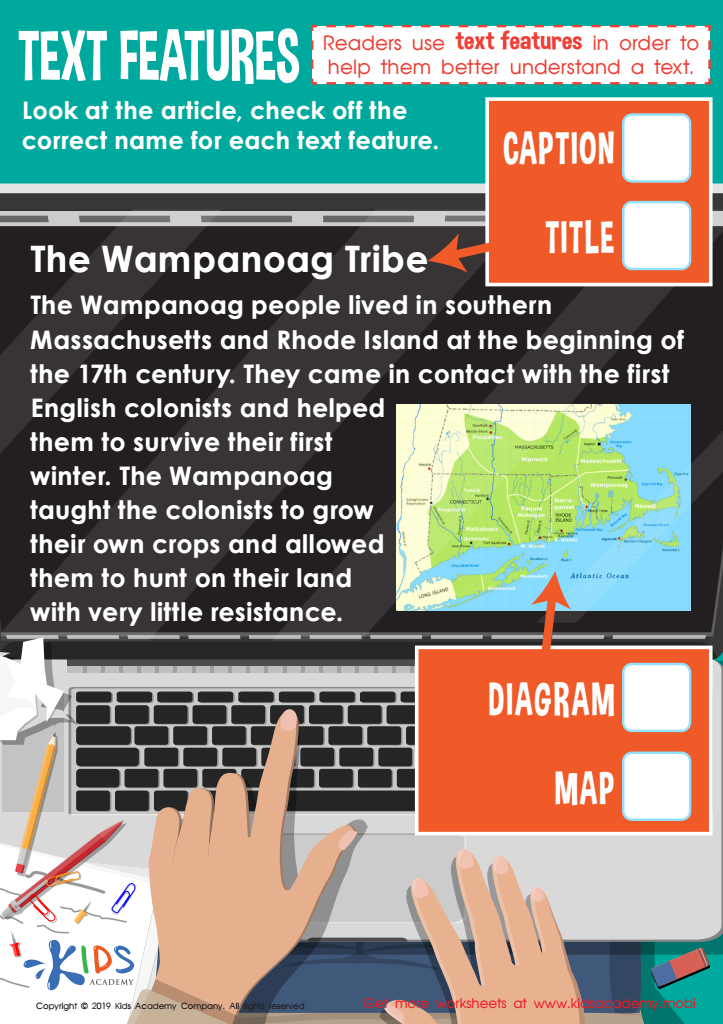
Text Features Worksheet








Reading comprehension is crucial for children aged 7-9 because it influences their overall academic success and lifelong learning abilities. This age range is pivotal; students transition from learning to read to reading to learn. Normal reading of non-fiction texts, particularly, introduces young readers to facts, opinions, and real-world knowledge, broadening their perspective and also helping them to develop critical thinking and information-processing skills.
For parents and teachers, investing in improved reading comprehension means equipping children with the tools to understand, question, and apply the information they come across. Strong reading comprehension fosters improved vocabulary, enhanced memory, and an ability to make connections between previously known and newly acquired information.
Beyond academics, good comprehension is tied to better problem-solving abilities and increased self-confidence, as children navigate not just texts, but social cues and instructions in everyday life. Moreover, non-fiction appeals to children's curiosity and factual interests, which can motivate reluctant readers by tapping into their natural curiosity about the world around them.
Parents and educators should encourage regular practice with varied non-fiction materials, fostering comprehension through discussions, follow-up activities, and inquisitive questioning. By nurturing these skills early on, we set the foundation for a lifetime of engaged and thoughtful learners.