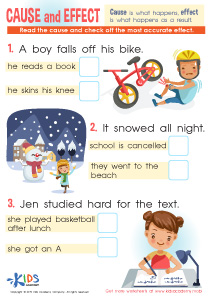
Logical Reasoning Normal Reading Non-Fiction Worksheets for Ages 7-9
3 filtered results
-
From - To
Enhance your child's critical thinking with our "Logical Reasoning Normal Reading Non-Fiction Worksheets" designed for ages 7-9. These engaging worksheets combine reading comprehension with logical reasoning challenges, promoting analytical skills while keeping learning fun. Perfect for reinforcing students' abilities to extract facts and draw conclusions from informative texts, each worksheet features age-appropriate content that aligns with curriculum standards. Encourage your child to think deeply and logically about various topics, fostering a love for reading and understanding the world around them. Unlock their potential with resources that inspire curiosity and boost confidence in reading comprehension!
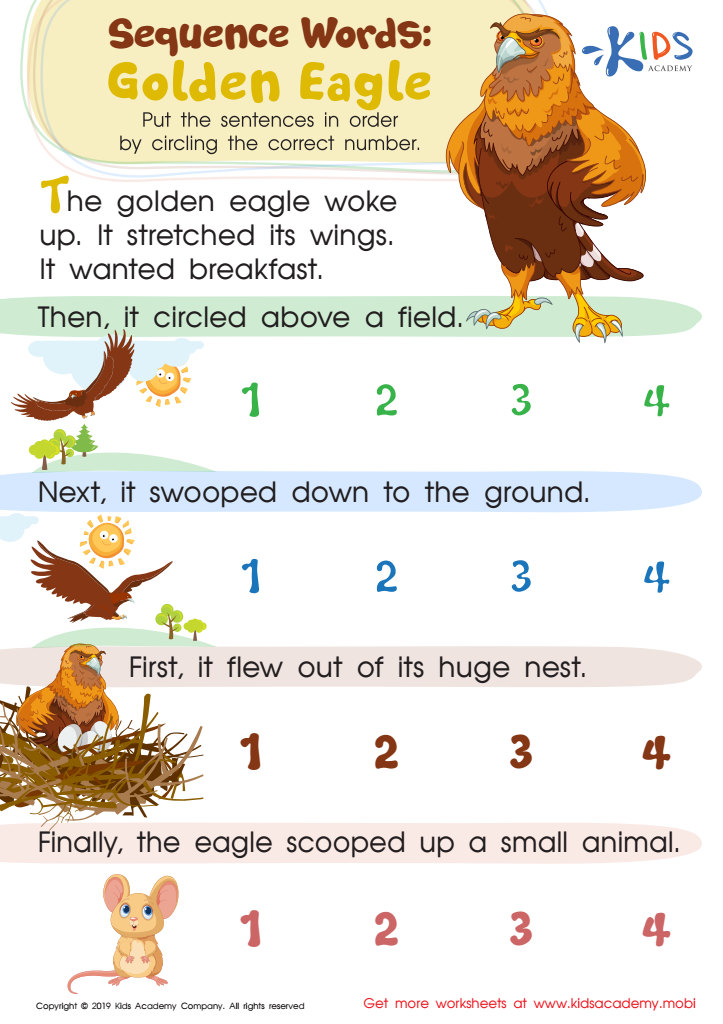
Sequence Word Eagle Worksheet
 Assign to My Students
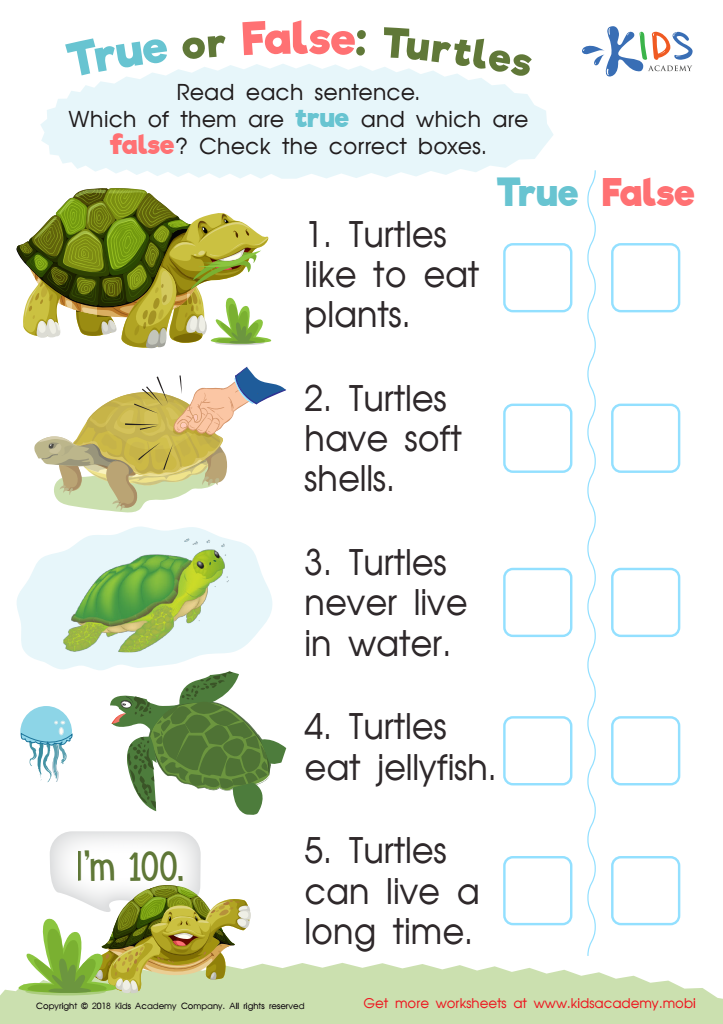
True or False: Turtles Worksheet
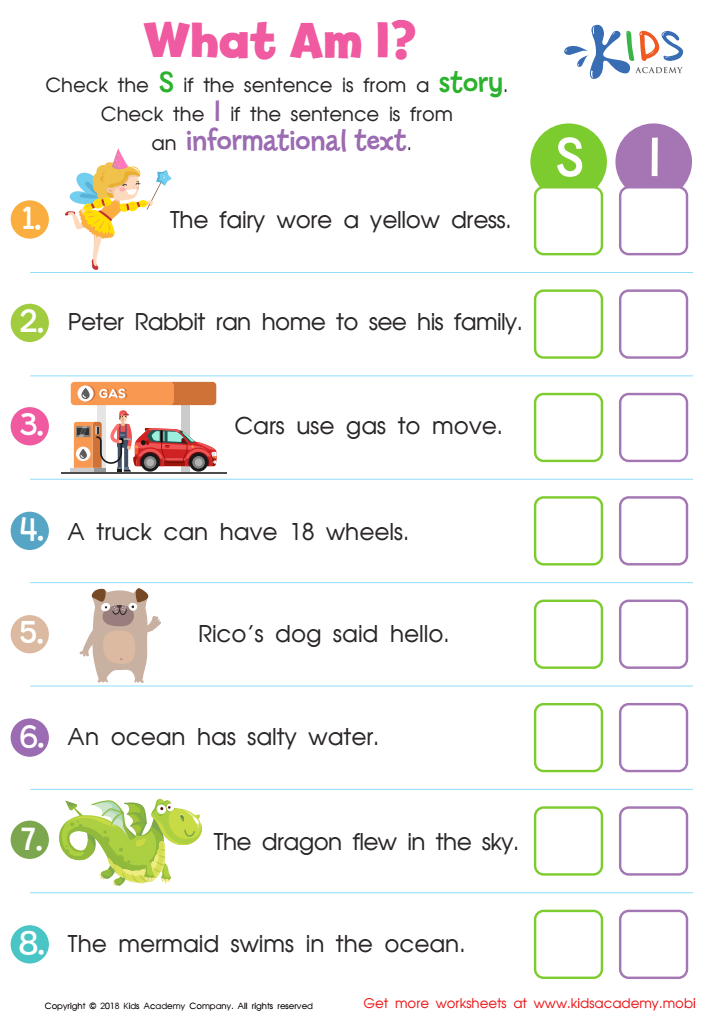
What Am I? Worksheet








Parents and teachers should prioritize Logical Reasoning Normal Reading Non-Fiction for Ages 7-9 as it plays a crucial role in developing children's cognitive, analytical, and reading comprehension skills. At this age, children are naturally curious and eager to learn about the world around them. Engaging with non-fiction texts promotes critical thinking by challenging them to analyze facts, draw conclusions, and make connections to real-world scenarios.
Logical reasoning is essential for academic success, as it equips children with the skills to solve puzzles and answer questions methodically. By interacting with content that encourages logical reasoning, children learn to assess information critically, discern bias, and build informed opinions—skills that are vital in today's information-saturated society.
Moreover, reading about diverse topics broadens children’s knowledge base and vocabulary, enhancing their ability to express themselves clearly and effectively. Since these foundational years influence lifelong learning habits, parents and teachers can cultivate a love for reading and continuous inquiry by providing access to engaging non-fiction texts. In summary, fostering logical reasoning and comprehension through non-fiction at this pivotal developmental stage supports children's overall educational growth and prepares them for future academic challenges.