Rhyming skills development Normal Rhyming Words Worksheets for Ages 7-9
3 filtered results
-
From - To
Boost your child's literacy with our Rhyming Words Worksheets designed for ages 7-9! These engaging and entertaining worksheets help young learners enhance their rhyming skills while promoting phonemic awareness. Each activity features familiar words and playful prompts, making it easy for children to understand and practice the concept of rhyme. As they connect sounds and words, they'll improve their reading fluency and vocabulary. Perfect for homework, classroom use, or fun at home, our worksheets are crafted to foster a love for language and creativity. Explore our collection today and watch your child excel in their reading journey!
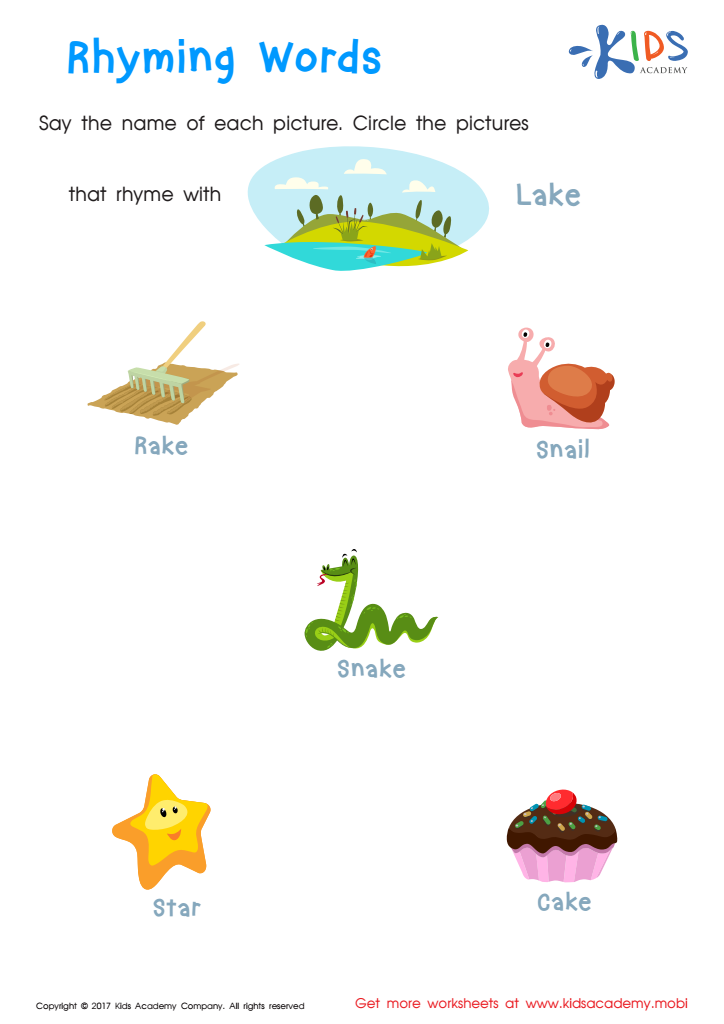
Rhyming Words Rhyming Worksheet
 Assign to My Students
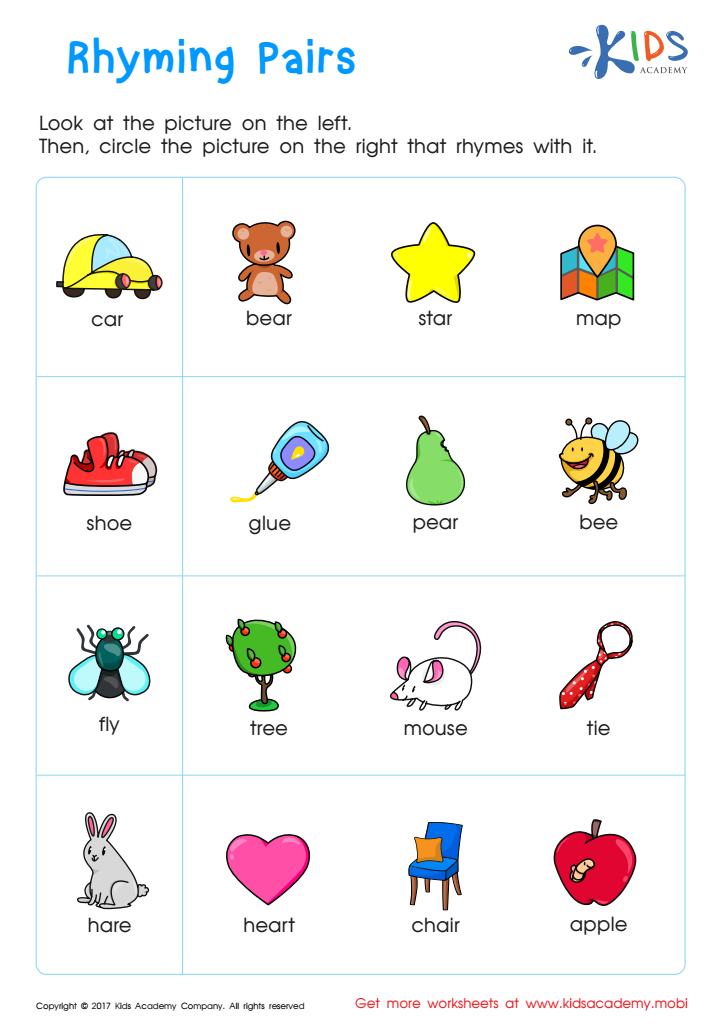
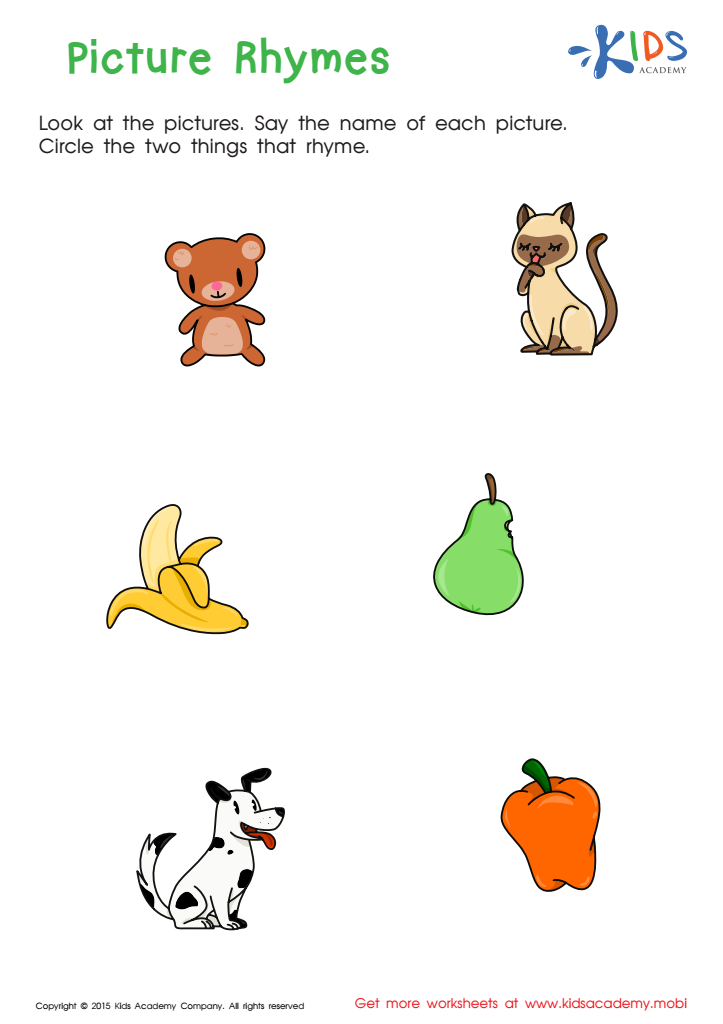
First Words: Picture Rhymes Worksheet







Parents and teachers should prioritize the development of rhyming skills in children aged 7 to 9 because it plays a crucial role in their overall literacy development and cognitive growth. Rhyming enhances phonemic awareness, which is the ability to hear, identify, and manipulate individual sounds in words. This skill is fundamental for reading and writing, as children begin to recognize patterns in language, build vocabulary, and improve their spelling abilities.
Moreover, engaging with rhymes encourages creative thinking through fun and engaging activities like poetry, songs, and games. Children delight in the musical quality of rhymes, fostering an appreciation for language and rhythm. Such exposure promotes a love for reading, laying a strong foundation for their future educational success.
Additionally, rhyming can improve memory and recall. Children often remember stories better when they are structured in a rhythmic pattern. Overall, by nurturing rhyming skills, educators and parents empower children to express themselves confidently, improve their language skills, and develop critical listening abilities—essential components for academic achievement and social interaction. Therefore, promoting rhyming activities and practices in early education is a smart investment in a child's holistic development.








