Basic astronomy knowledge Normal Science Worksheets for Ages 7-9
3 filtered results
-
From - To
Explore the wonders of space with our "Basic Astronomy Knowledge" Science Worksheets designed for ages 7-9. Our engaging activities encourage young space enthusiasts to learn about the solar system, stars, planets, and more. Each worksheet combines fun illustrations with age-appropriate facts, promoting curiosity and understanding through interactive exercises. Perfect for both classroom and home use, these worksheets align with educational standards to build foundational astronomy skills. Inspire your child to embark on a cosmic adventure, unlocking the mysteries of the universe while sharpening their scientific knowledge. Download now and begin your young astronomer's galactic journey!
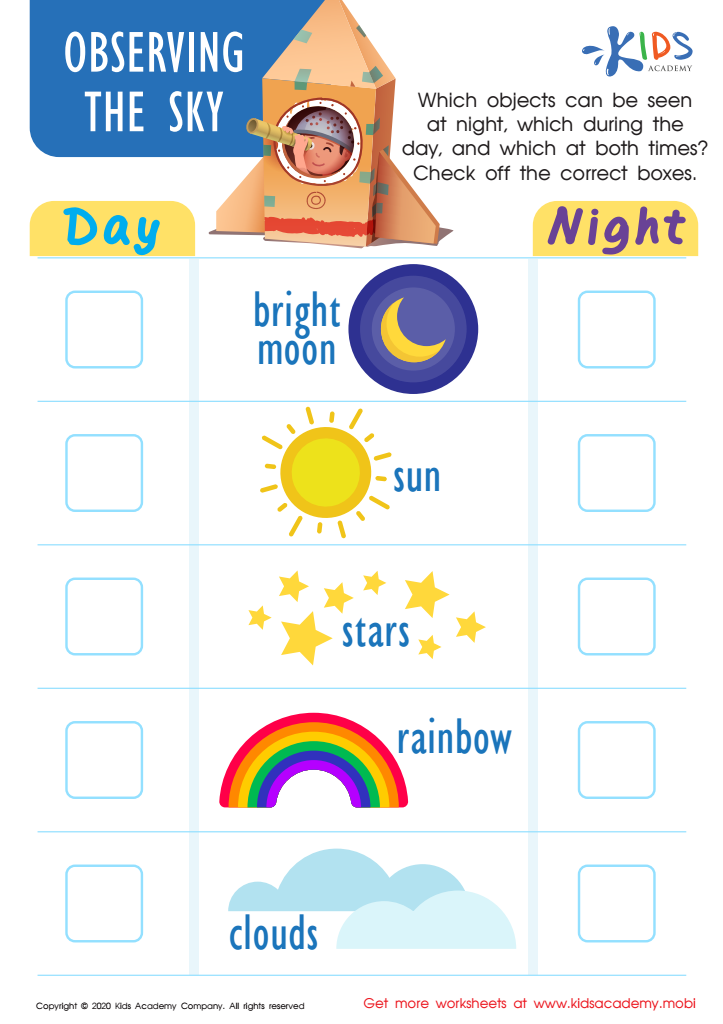
Observing the Sky Worksheet
 Assign to My Students
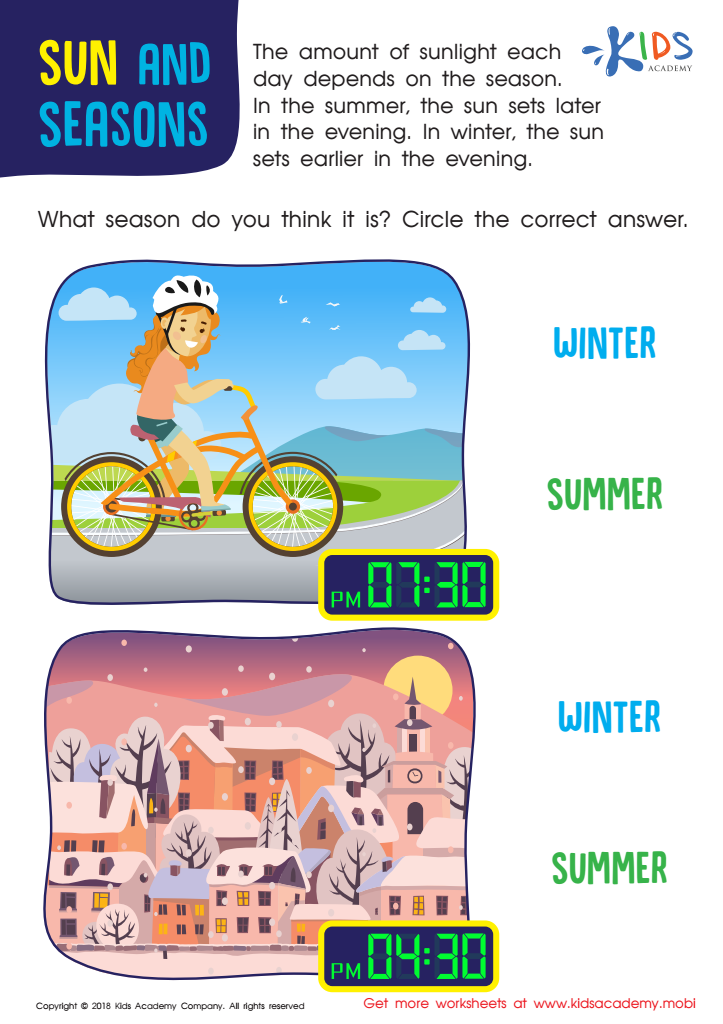
Sun and Seasons Worksheet
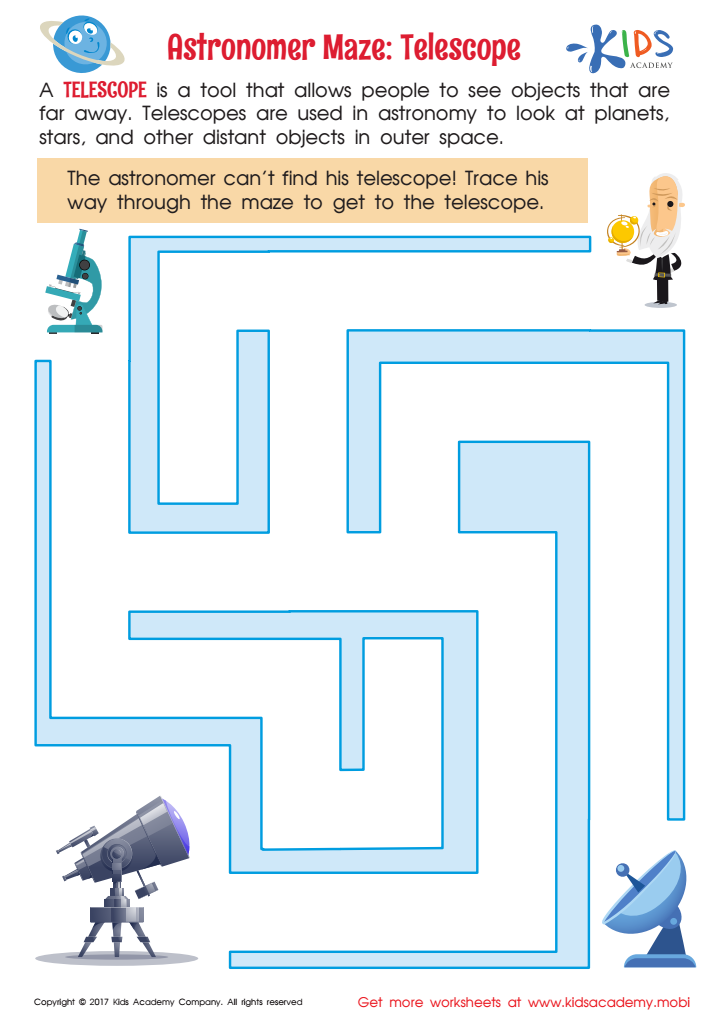
Astronomer Maze: Telescope Worksheet


%20(1).jpg)

.jpg)
.jpg)


Basic astronomy knowledge is fundamental for young children, ages 7-9, because it sparks curiosity and lays the groundwork for a lifelong interest in science. For parents and teachers, introducing these concepts not only enriches the educational experience but also aids in the development of critical thinking and observational skills.
Astronomy teaches children about the vastness of the universe, helping them understand their place within it. This can foster a sense of wonder and humility. By studying the movements of celestial objects, kids learn basic principles like cause and effect, enhancing their analytical abilities. Observing the night sky, identifying constellations, and recognizing phases of the moon can be particularly captivating and can cultivate patience and attentiveness.
Moreover, basic astronomy intersects with other key subjects such as math, physics, and geography. Counting stars, calculating distances, or understanding time zones integrates seamlessly into a broader curriculum, enhancing comprehension in these areas. Hands-on activities, like building simple models of the solar system, make learning interactive and enjoyable, further solidifying understanding.
In essence, fostering an early interest in astronomy can inspire awe and an excitement for learning, equipping children with foundational skills that are valuable across various disciplines. This holistic approach to education ensures that kids are not just learning to memorize facts, but to think critically and integrate knowledge meaningfully.







