Counting skills Normal Science Worksheets for Ages 7-9
4 filtered results
-
From - To
Enhance your child's understanding of counting through our engaging Normal Science Worksheets designed for ages 7-9. These worksheets seamlessly blend scientific concepts with essential counting skills, providing a fun and interactive way for young learners to practice. With diverse activities, including visual aids, problem-solving exercises, and real-life scenarios, students will build confidence in their counting abilities while exploring fascinating scientific topics. Perfect for both classroom use and at-home learning, these worksheets are tailored to meet curriculum standards and ignite a passion for science and mathematics. Boost your child's learning journey today with these informative and enjoyable resources!
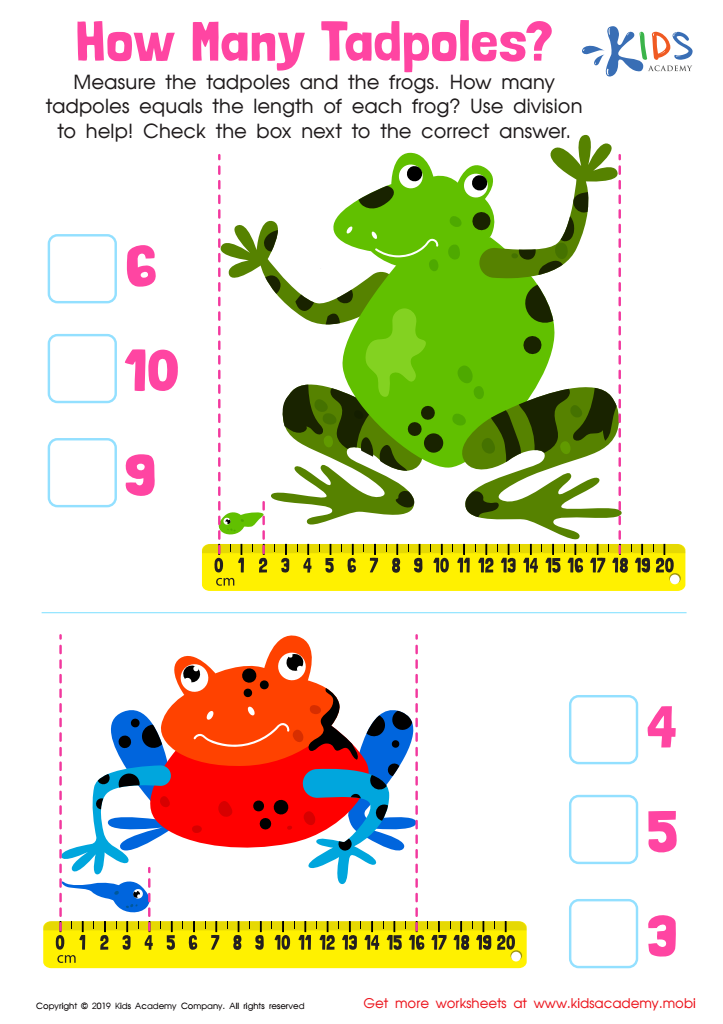
How Many Tadpoles Worksheet
 Assign to My Students
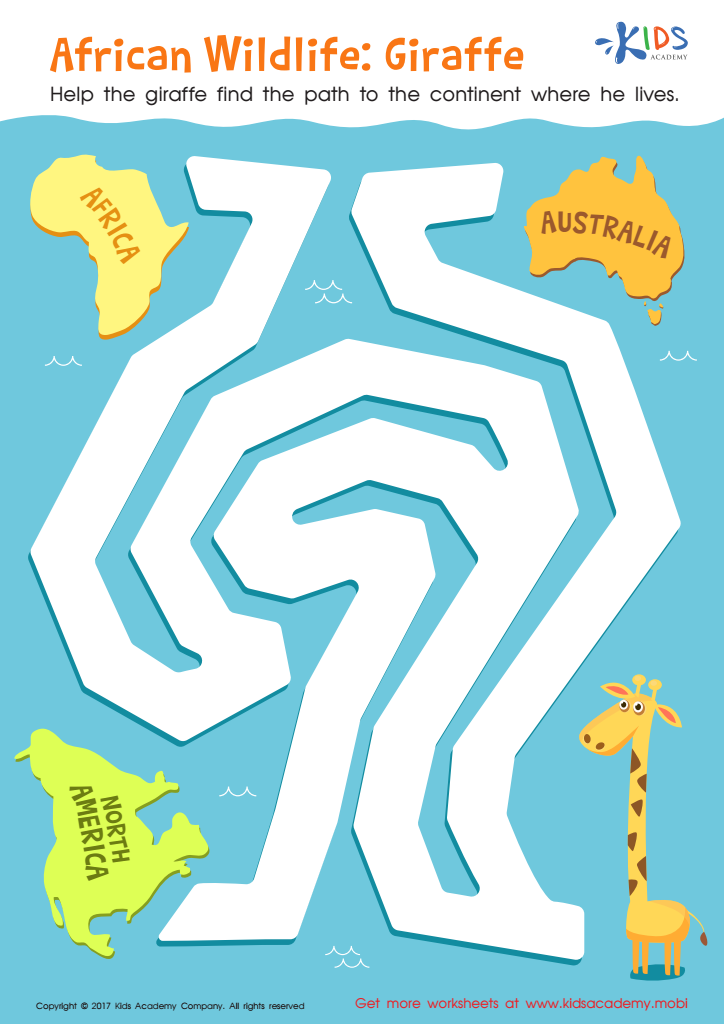
African Wildlife: Giraffe Worksheet
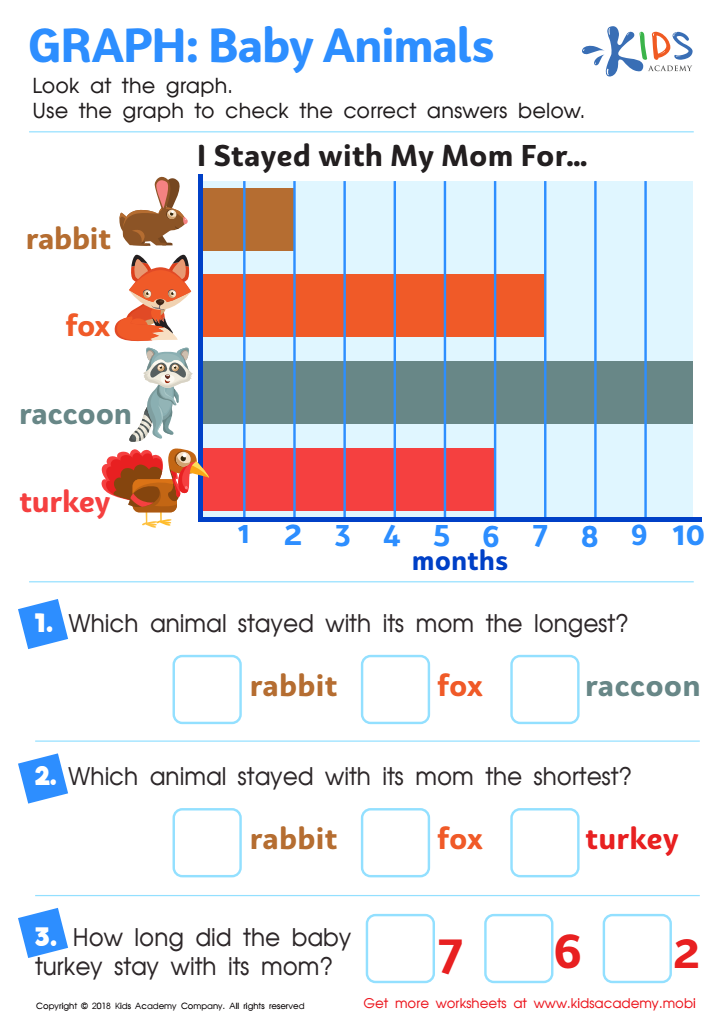
Graph: Baby Animals Worksheet
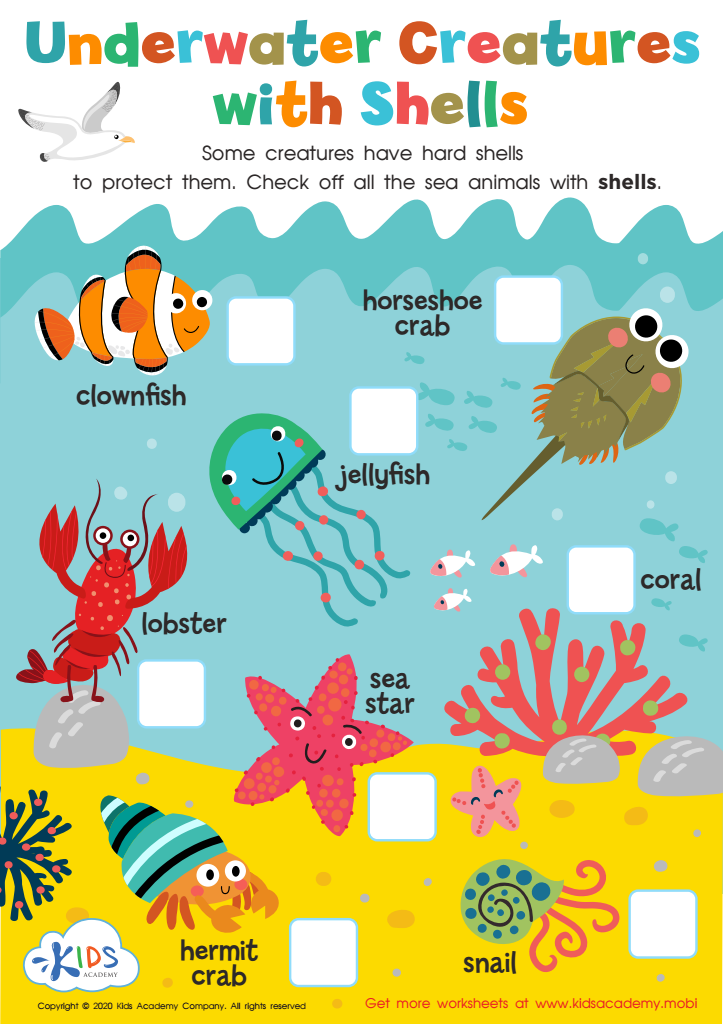
Underwater Creatures with Shells Worksheet







Counting skills are fundamental in developing a child's mathematical understanding, especially for ages 7-9, during which cognitive abilities and problem-solving skills rapidly evolve. These skills foster not only mathematical proficiency but also encourage critical thinking, logical reasoning, and confidence in handling numerical information.
During this age, children transition from simple counting to more complex concepts like addition, subtraction, and problem-solving. When educators and parents emphasize counting skills, they establish a strong foundation for future learning in subjects such as mathematics, science, and economics. Furthermore, mastery in counting also benefits everyday tasks, such as measuring ingredients in cooking or managing time and money.
The "Normal Science" approach highlights the importance of relatable, hands-on experiences that connect counting to real-world situations, making learning relevant and engaging. Parents and teachers should integrate practical activities—like counting objects, grouping items, or playing number games—into daily routines. In doing so, children learn to appreciate the value of numbers, enhance their ability to engage with larger mathematical concepts in the future, and develop a lifelong love for learning. By investing in counting skills during these formative years, adults can help children become more enthusiastic and capable learners.







