Information retention Normal Science Worksheets for Ages 7-9
3 filtered results
-
From - To
Enhance your child’s scientific understanding with our Information Retention Normal Science Worksheets designed for ages 7-9. Our engaging worksheets foster crucial skills such as memory recall and comprehension through interactive activities and thought-provoking exercises. Each worksheet is curated to align with educational standards, ensuring it complements classroom learning while making science fun and accessible. Whether exploring life cycles, weather patterns, or material properties, these worksheets boost retention of key concepts, laying a solid foundation for future scientific inquiry. Perfect for both classroom use and home practice, Kids Academy’s science worksheets keep young learners motivated and curious about the world around them.
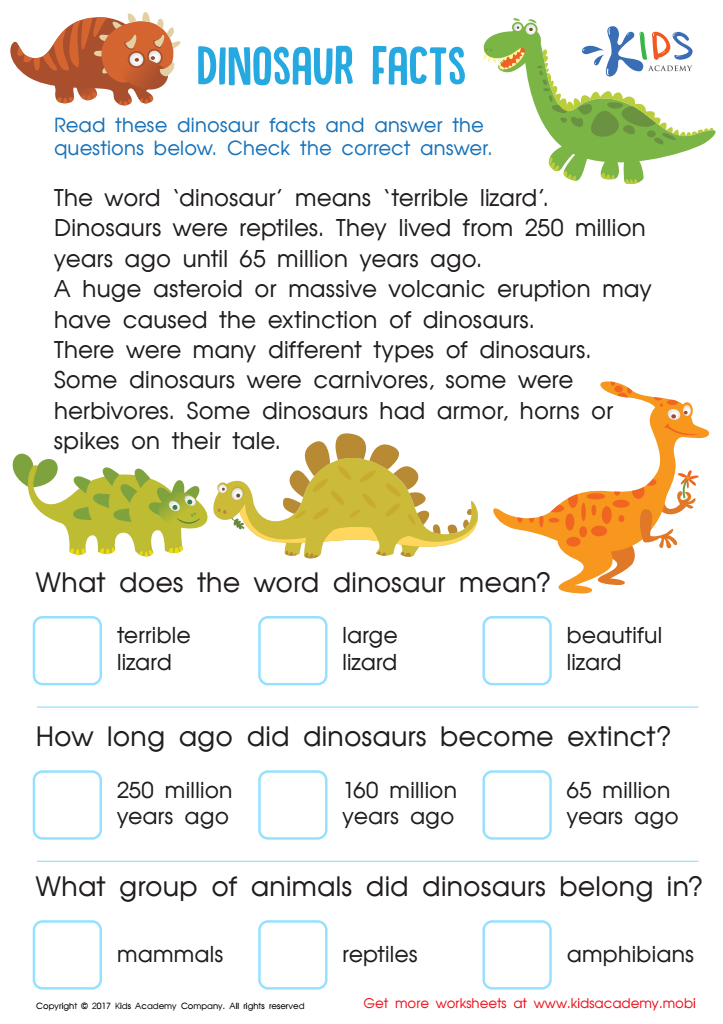
Dinosaur Facts Worksheet
 Assign to My Students
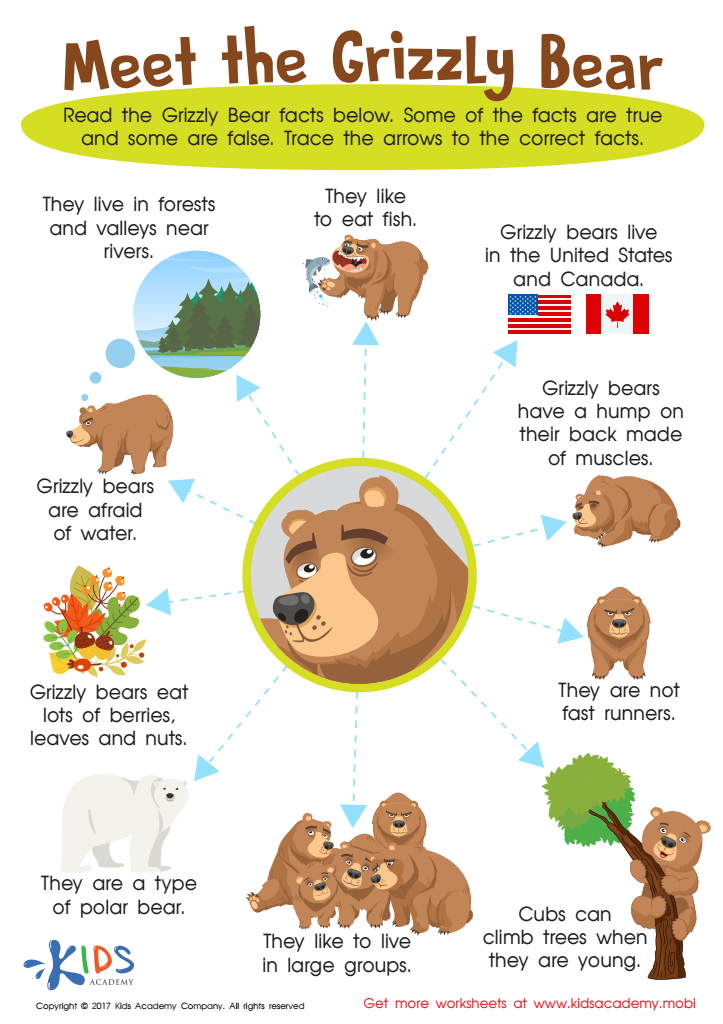
Grizzly Bear Facts Worksheet
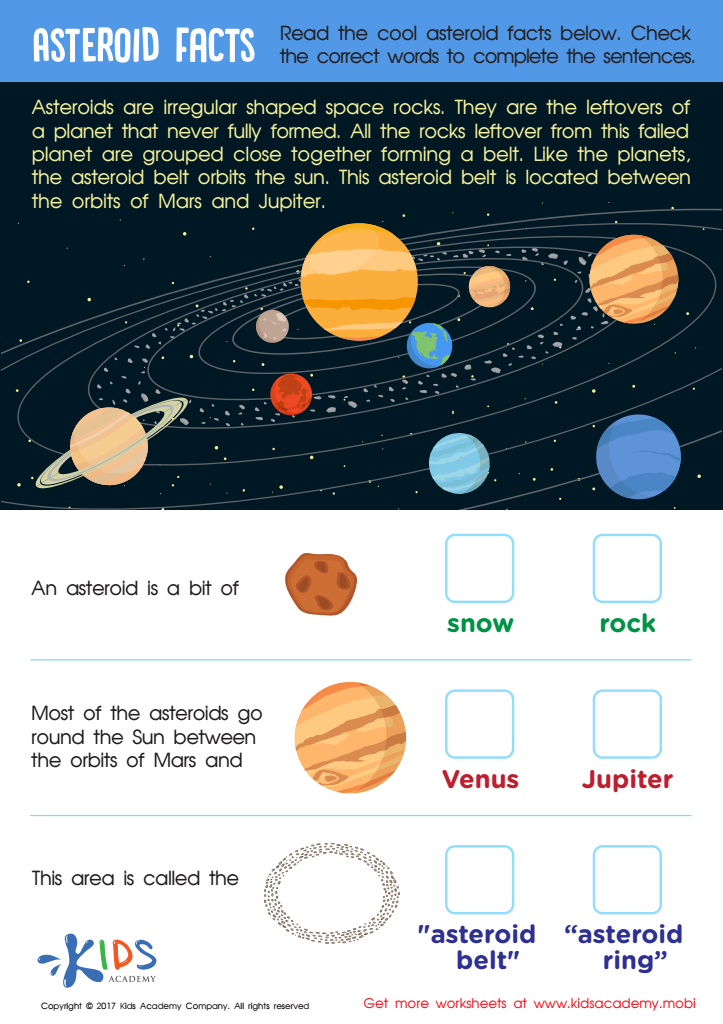
Asteroid Facts Worksheet








For children aged 7-9, effective information retention in subjects like science is foundational to their academic and personal development. At this age, kids are highly impressionable and are just beginning to understand and organize the world around them. When parents and teachers focus on ensuring that children retain scientific information, they cultivate a solid base for future learning and critical thinking.
Firstly, early retention of science knowledge stimulates curiosity. Young minds are naturally curious, and science nurtures this trait by encouraging them to ask questions, make observations, and engage in hands-on activities. This excitement for learning then transfers to other subjects and fosters a lifelong love of discovery.
Secondly, understanding basic scientific concepts helps children develop important life skills such as problem-solving and logical reasoning. When kids grasp basic principles in physics, biology, and chemistry, they learn to apply this knowledge in practical situations—like understanding weather patterns or identifying plants and animals.
Moreover, retaining science information at an early age sets the stage for more complex learning in later grades. It creates a scaffolding effect, where new knowledge builds on a strong, retained foundation. This preparation proves crucial when students encounter advanced concepts, experiments, and innovations as they grow.
In conclusion, ensuring children retain scientific information between the ages of 7-9 isn’t just about memorizing facts; it’s about equipping them with critical skills, nurturing their innate curiosity, and laying the groundwork for a successful future in academia and beyond.







